Dr. Bank from Reva Clinic Joins WCAM 2026 as a Speaker, Sharing Insights on PLLA and Biostimulators
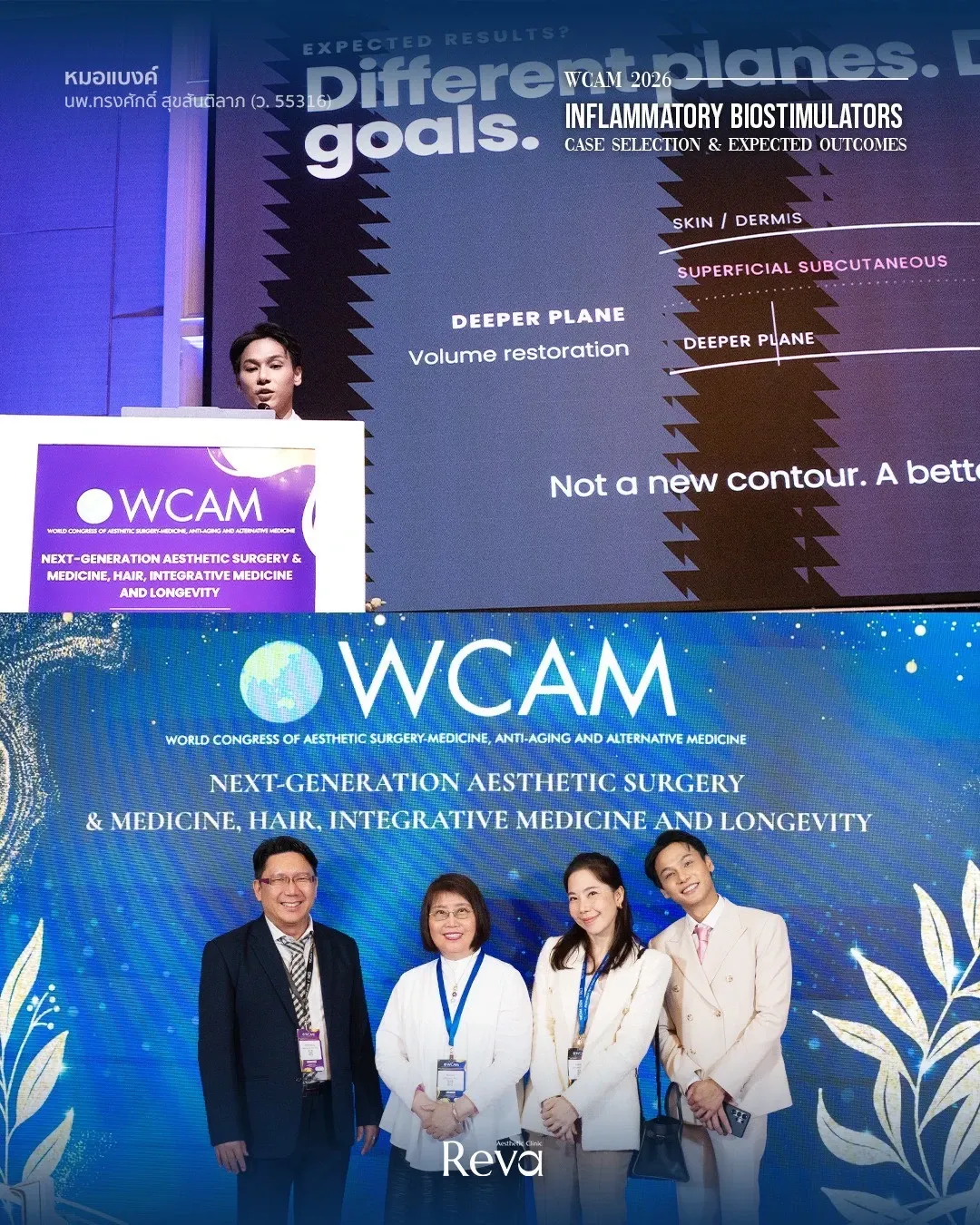
Dr. Bank (Dr. Songsak Suksantilapt), Medical License No. 55316, from Reva Clinic, participated as a speaker at WCAM 2026 in the session “Inflammatory Biostimulators: Case Selection & Expected Outcomes.” He shared insights on PLLA and exchanged perspectives on case selection and the evaluation of expected outcomes with biostimulators.
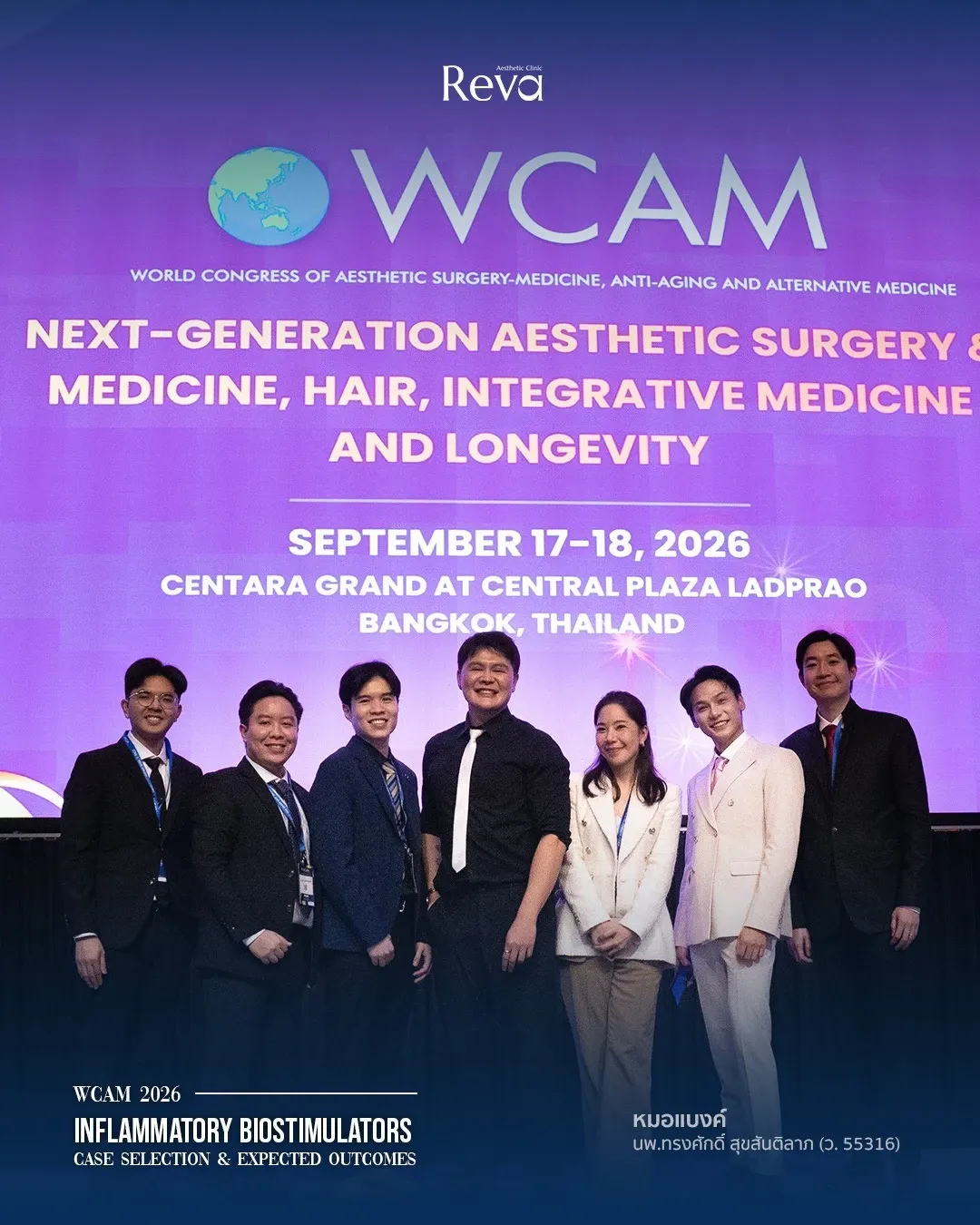
On September 17, 2026, Dr. Bank (Dr. Songsak Suksantilapt), Medical License No. 55316, from Reva Clinic, participated as a speaker at WCAM 2026, held at Centara Grand, Bangkok, in the session “Inflammatory Biostimulators: Case Selection & Expected Outcomes.”
The session focused on knowledge and insights related to biostimulators, with particular emphasis on Case Selection—assessing the suitability of each individual case—and Expected Outcomes—evaluating the anticipated treatment results. These are key considerations in developing an appropriate and individualized treatment plan for each patient.
Dr. Bank Shares Insights on PLLA at WCAM 2026
During this session, Dr. Bank was assigned to present on PLLA (Poly-L-Lactic Acid), one of the materials used in biostimulation, sharing his knowledge on stage at WCAM 2026.
The session focused not only on understanding the different types of materials, but also on considering which approach is appropriate for each case and what outcomes can reasonably be expected, helping ensure that treatment approaches are selected according to each individual’s characteristics and specific needs.
Why Is Case Selection Important in Biostimulator Treatment Planning?
The selection of a biostimulator should not be based solely on the product name or type of material used. Instead, treatment planning should begin with a systematic assessment of each patient, including their skin condition, facial structure, specific concerns, and treatment goals.
The concept of Case Selection therefore plays an important role in helping physicians determine the most appropriate treatment approach for each individual case, while also communicating Expected Outcomes the results that can reasonably be anticipated from treatment.
In aesthetic medicine, where individualized care is essential, understanding the unique characteristics and needs of each patient is a key part of developing a Personalized Treatment Plan, rather than applying the same treatment approach to everyone.
PLLA and Its Role in Biostimulation
PLLA, or Poly-L-Lactic Acid, is a material used in aesthetic medicine to stimulate the body’s natural collagen production. Appropriate treatment planning and outcomes require a physician’s assessment of several factors, including the indication, technique, treatment area, and suitability of each individual patient.
Understanding the properties of PLLA alongside Case Selection and Expected Outcomes helps ensure that treatment planning does not begin solely with the question, “Which product should be used?” Instead, it begins by identifying the patient’s specific concerns and determining which treatment approach is most appropriate for that individual case.
From the Academic Stage to Personalized Care at Reva Clinic
The participation of Dr. Bank (Dr. Songsak Suksantilapt) as a speaker at WCAM 2026 represents another academic contribution that reflects a continued commitment to knowledge exchange and the advancement of understanding in aesthetic medicine.
At Reva Clinic, treatment planning emphasizes an individualized assessment of each patient, including facial structure, skin condition, treatment goals, and the suitability of different approaches, in order to develop a treatment plan tailored to each person’s specific needs.
Choosing the appropriate aesthetic treatment does not begin with selecting a product. It begins with a thorough assessment of the patient before determining the most appropriate treatment approach.