
Morpheus8 Burst vs รุ่นเก่า ต่างกันอย่างไร? รุ่นใหม่ดีกว่าไหม | REVA Clinic
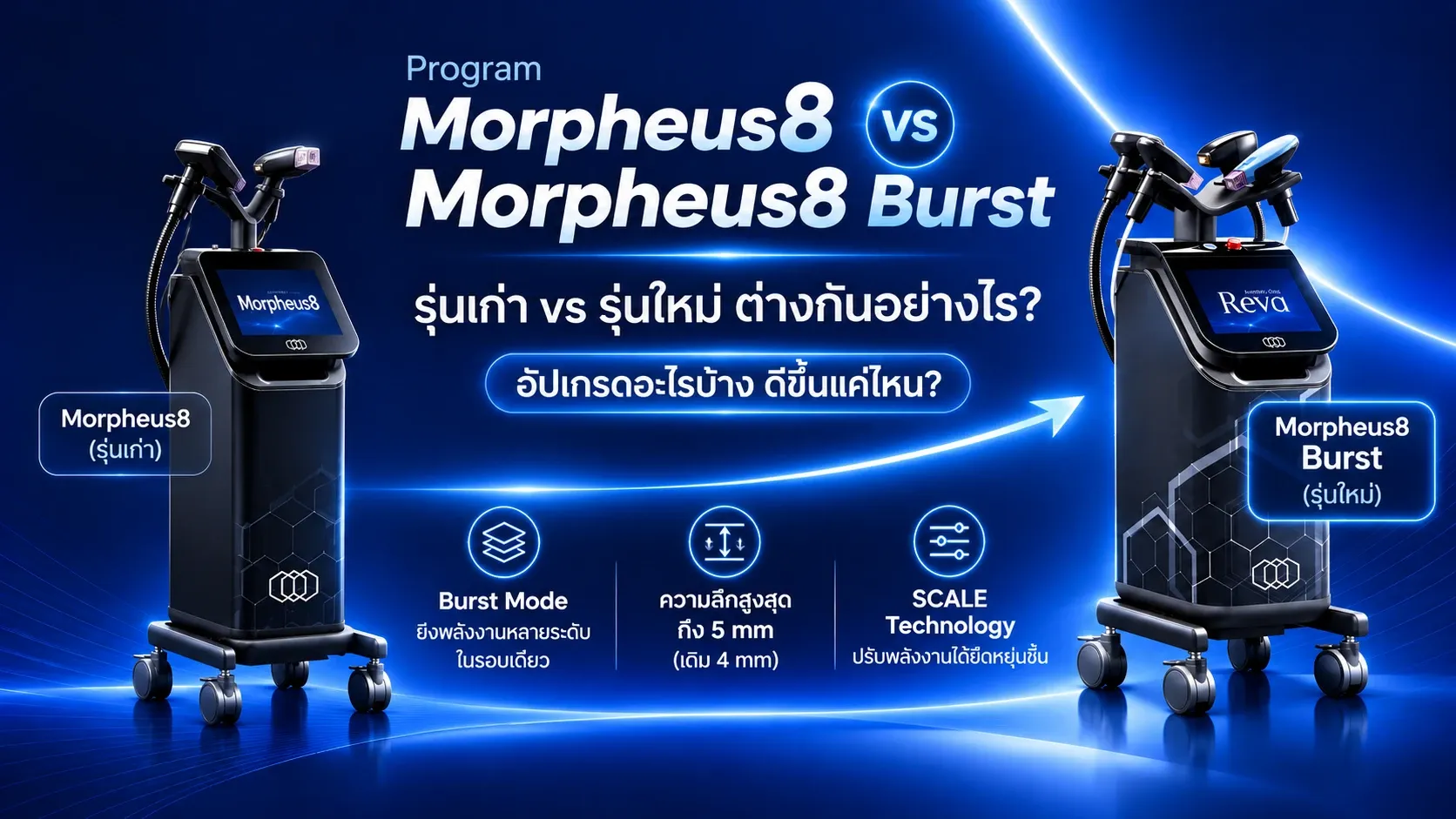
Morpheus8 Burst vs Original: What's New? | REVA Clinic

Morpheus8 Burst vs Original Morpheus8: What's New and Is the Latest Technology Better?
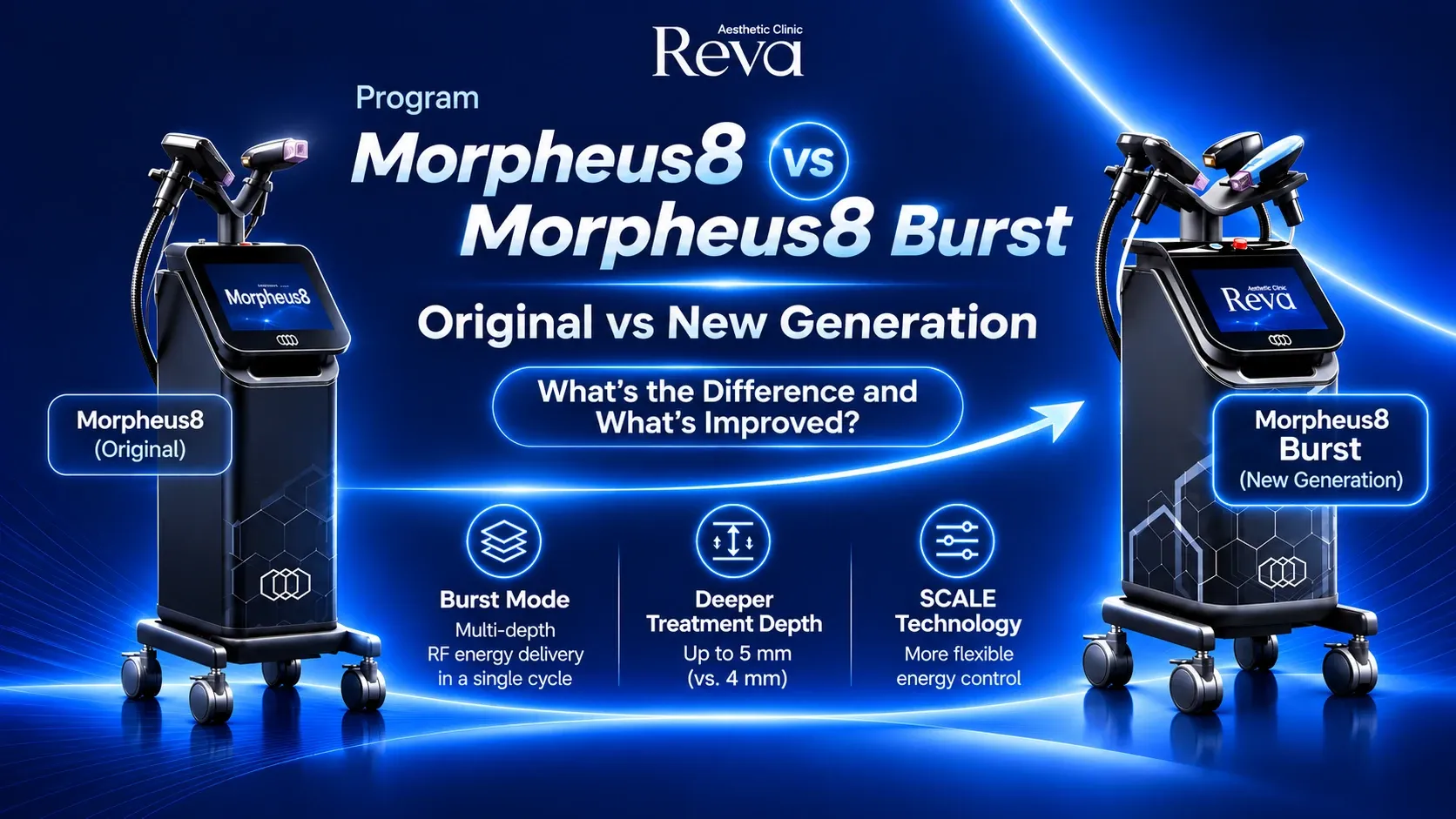
Morpheus8 has become a widely recognized technology in aesthetic medicine for addressing skin laxity, wrinkles, uneven skin texture, and certain types of acne scars. By combining microneedling with radiofrequency (RF) energy, Morpheus8 delivers controlled thermal energy into the skin to stimulate collagen remodeling and improve skin quality.
With the introduction of Morpheus8 Burst, the technology has evolved to offer greater flexibility in treating multiple tissue depths within a single treatment cycle.
But what exactly is the difference between Morpheus8 Burst and the original Morpheus8? Does the newer technology provide better skin tightening results? And which version is more suitable for different skin concerns?
In this article, REVA Clinic explores the key technological upgrades, treatment capabilities, and potential benefits of Morpheus8 Burst.
What Is Morpheus8? Understanding RF Microneedling Technology
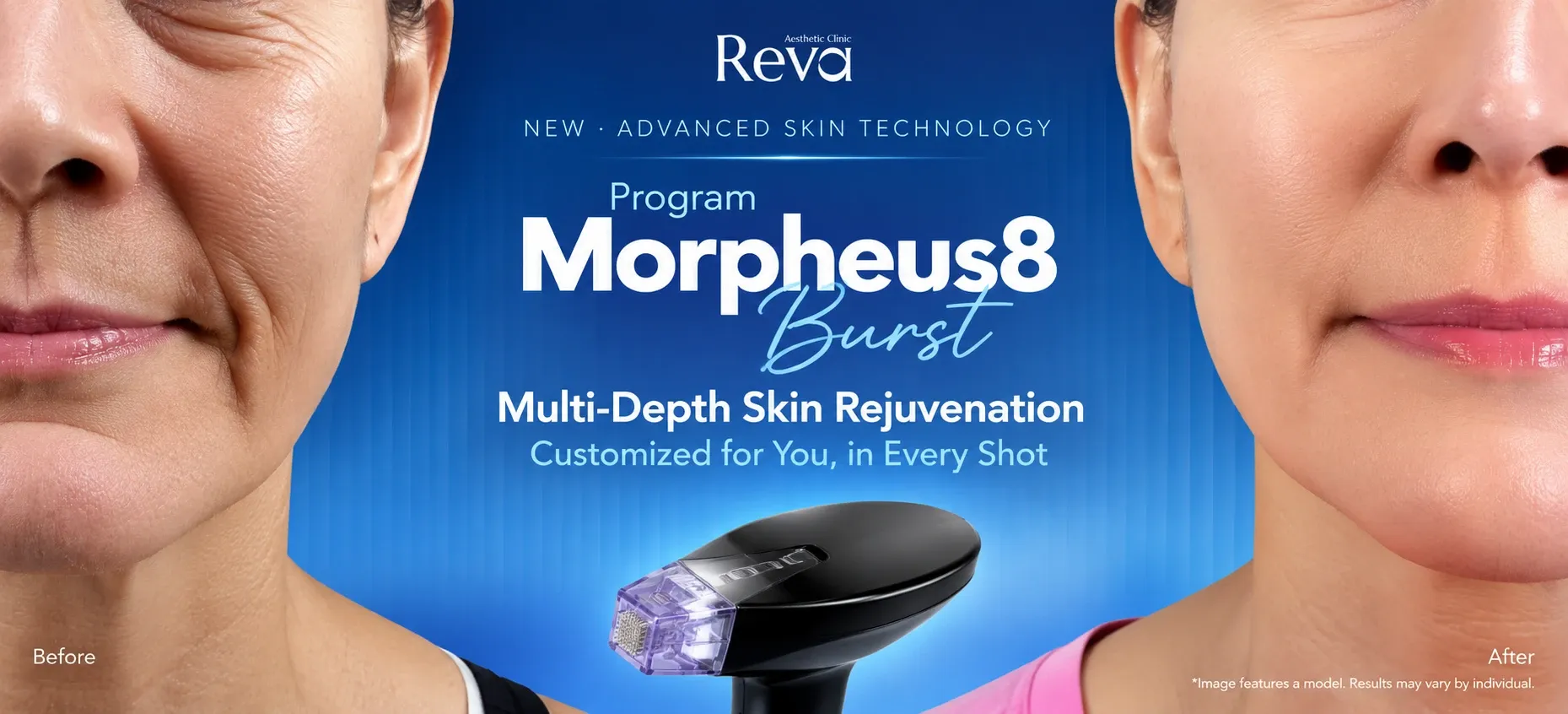
Morpheus8 is a fractional radiofrequency microneedling technology that combines two mechanisms:
Microneedling: Fine needles penetrate the skin at controlled depths.
Bipolar Radiofrequency (RF): Thermal energy is delivered into targeted tissue layers.
The controlled thermal effect can stimulate collagen remodeling and tissue contraction, potentially improving skin firmness and texture over time.
Morpheus8 may be used to address several concerns, including:
Mild to moderate skin laxity
Fine lines and wrinkles
Enlarged pores and uneven skin texture
Certain types of acne scars
Skin laxity affecting the lower face and neck
Selected concerns involving subdermal tissue
The original Morpheus8 already allowed physicians to adjust needle penetration depth according to the treatment area.
However, when treating multiple tissue depths, the conventional approach may require separate treatment passes with different depth settings.
This is where Morpheus8 Burst introduces an important technological advancement.
What Is Morpheus8 Burst?
Morpheus8 Burst is an advanced generation of fractional RF microneedling technology developed by InMode.
It builds upon the original Morpheus8 platform by introducing new energy delivery capabilities, including Burst Mode and SCALE Technology.
One of its key features is the ability to deliver RF energy sequentially at multiple tissue depths within a single treatment cycle.
This provides physicians with greater flexibility when targeting different layers of the skin and underlying tissue.
Rather than focusing on only one treatment depth per cycle, Morpheus8 Burst can address multiple selected depths using its specialized energy delivery system.
However, treating more tissue layers does not automatically mean better clinical outcomes. Appropriate treatment settings must be selected based on individual anatomy, skin thickness, facial fat distribution, and treatment goals.
Morpheus8 Burst vs Original Morpheus8: Key Differences
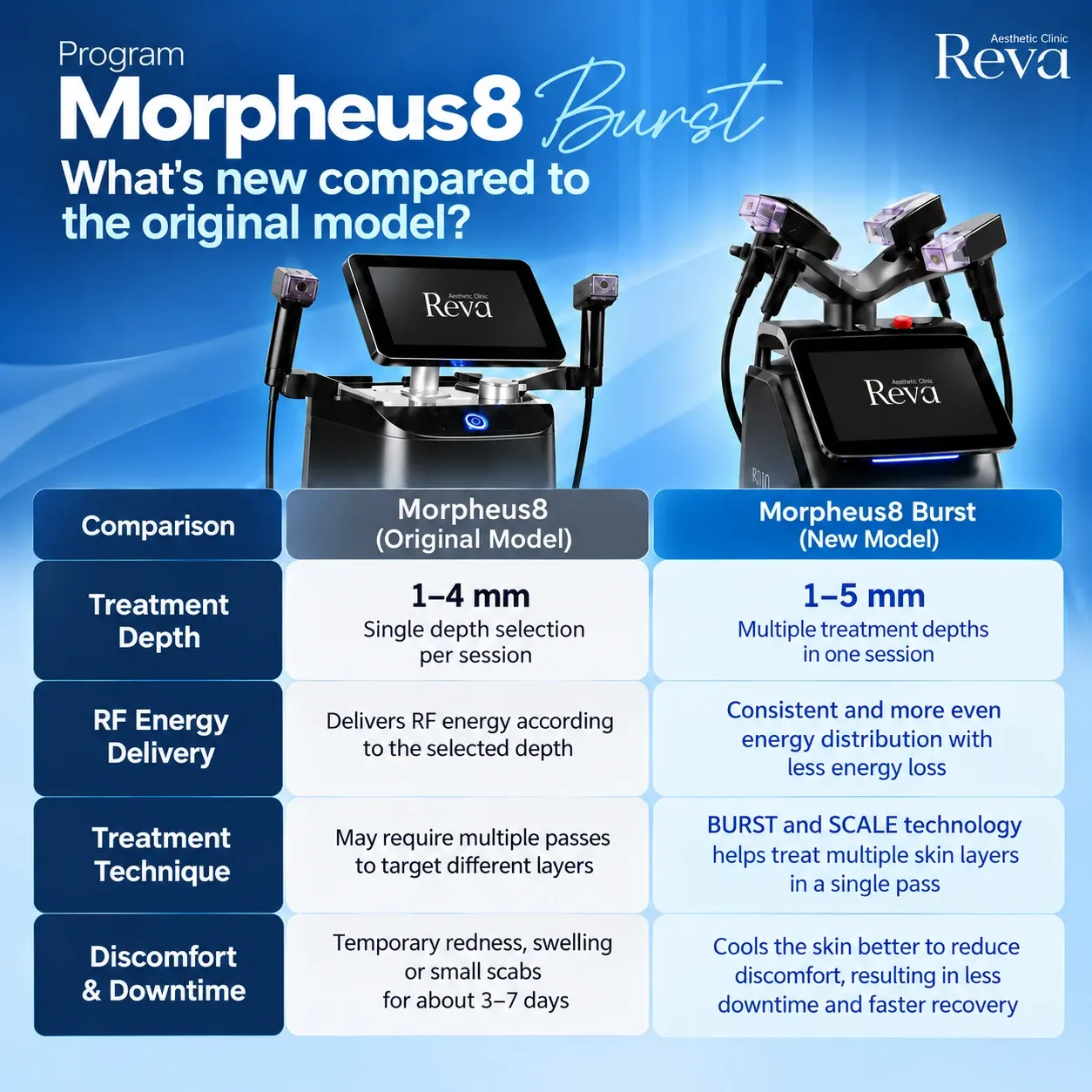
4 Key Technological Upgrades of Morpheus8 Burst
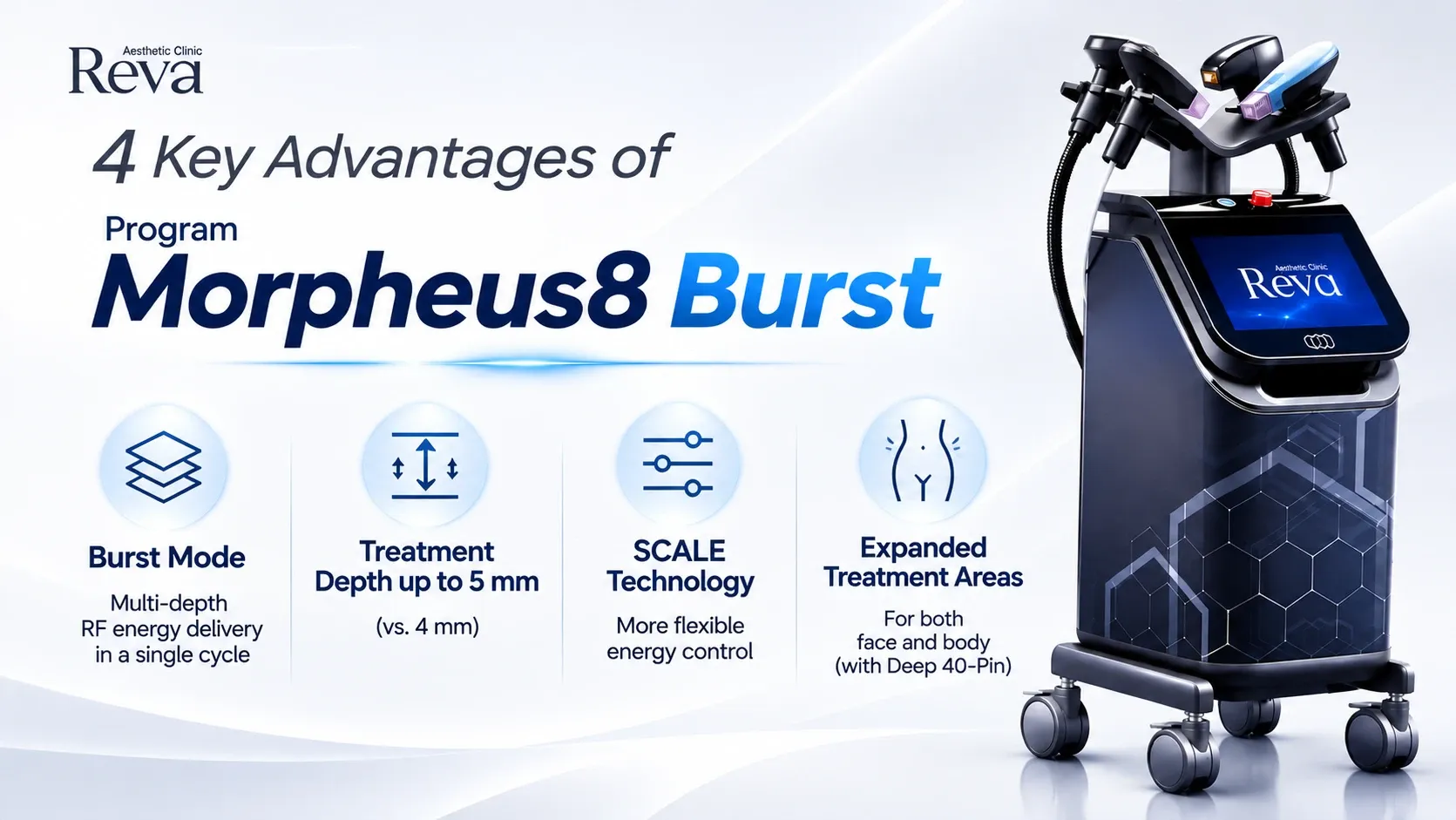
1. Burst Mode: Multi-Depth RF Energy Delivery in a Single Treatment Cycle
One of the most significant advancements in Morpheus8 Burst is its Burst Technology.
With the original standard Morpheus8 facial applicator, treating different tissue depths may require adjusting the needle depth and performing additional passes.
Morpheus8 Burst introduces the ability to deliver RF energy sequentially at multiple selected depths during a single treatment cycle.
This technology may offer several procedural advantages:
Greater flexibility in targeting different tissue layers
Reduced need for repeated needle insertions solely to change treatment depth in certain protocols
More efficient delivery of multi-depth treatment patterns
Additional options for customizing treatment according to tissue characteristics
For example, a physician may select treatment parameters to address superficial skin texture and deeper tissue laxity within an individualized treatment plan.
Nevertheless, fewer treatment passes do not necessarily translate into less pain, shorter downtime, or superior clinical results.
These outcomes depend on the treatment settings, number of passes, tissue response, and individual patient factors.
2. Increased Facial Treatment Depth: Up to 5 mm
Another important difference is the maximum needle penetration depth.
The original standard Morpheus8 facial applicator provides adjustable depths of approximately 1–4 mm.
The newer Morpheus8 Burst facial applicator extends the adjustable depth range to 1–5 mm.
This additional depth gives physicians more flexibility when targeting deeper tissues, particularly in selected patients with lower-face laxity or concerns involving subdermal tissue.
Potential treatment areas may include:
Lower cheeks
Jawline
Submental region
Selected areas of the neck
However, deeper treatment is not always better.
Patients with thin skin, low facial fat volume, or naturally hollow facial contours may require more conservative settings to minimize the risk of unwanted tissue changes.
The goal is not to treat as deeply as possible, but to deliver the appropriate amount of energy to the correct tissue layer.
3. SCALE Technology: More Flexible RF Energy Delivery
Morpheus8 Burst also incorporates SCALE Technology, which works alongside its multi-depth energy delivery capabilities.
This technology provides additional options for controlling how RF energy is delivered across selected tissue depths.
By combining treatment depth, energy settings, and delivery patterns, physicians can tailor the procedure to different anatomical areas and treatment objectives.
For example, treatment planning for superficial skin texture may differ significantly from treatment planning for deeper tissue laxity.
The appropriate settings depend on the thickness of the skin, underlying tissue characteristics, and the patient's aesthetic goals.
Importantly, SCALE Technology is a technical advancement rather than independent proof of superior clinical outcomes.
4. Expanded Treatment Options for the Face and Body
In addition to the facial applicator, the Morpheus8 Burst platform offers specialized applicators designed for different treatment areas.
These include:
Morpheus8 Burst 24-Pin Applicator: Designed for facial and selected neck treatments.
Morpheus8 Burst Deep 40-Pin Applicator: Designed for selected body treatments requiring greater tissue depth.
The Morpheus8 Burst Deep applicator offers needle penetration depths of up to 7 mm, with an additional thermal effect extending beyond the needle tips under specified treatment conditions.
This provides physicians with options for addressing selected concerns involving skin laxity and underlying tissue in body areas such as:
Abdomen
Upper arms
Thighs
Other suitable body areas
The suitability of Morpheus8 Burst Deep depends on individual anatomy, tissue thickness, and treatment goals.
It should not be considered a substitute for surgical skin removal or a guaranteed fat-reduction procedure.
Who Is Morpheus8 Burst Suitable For?
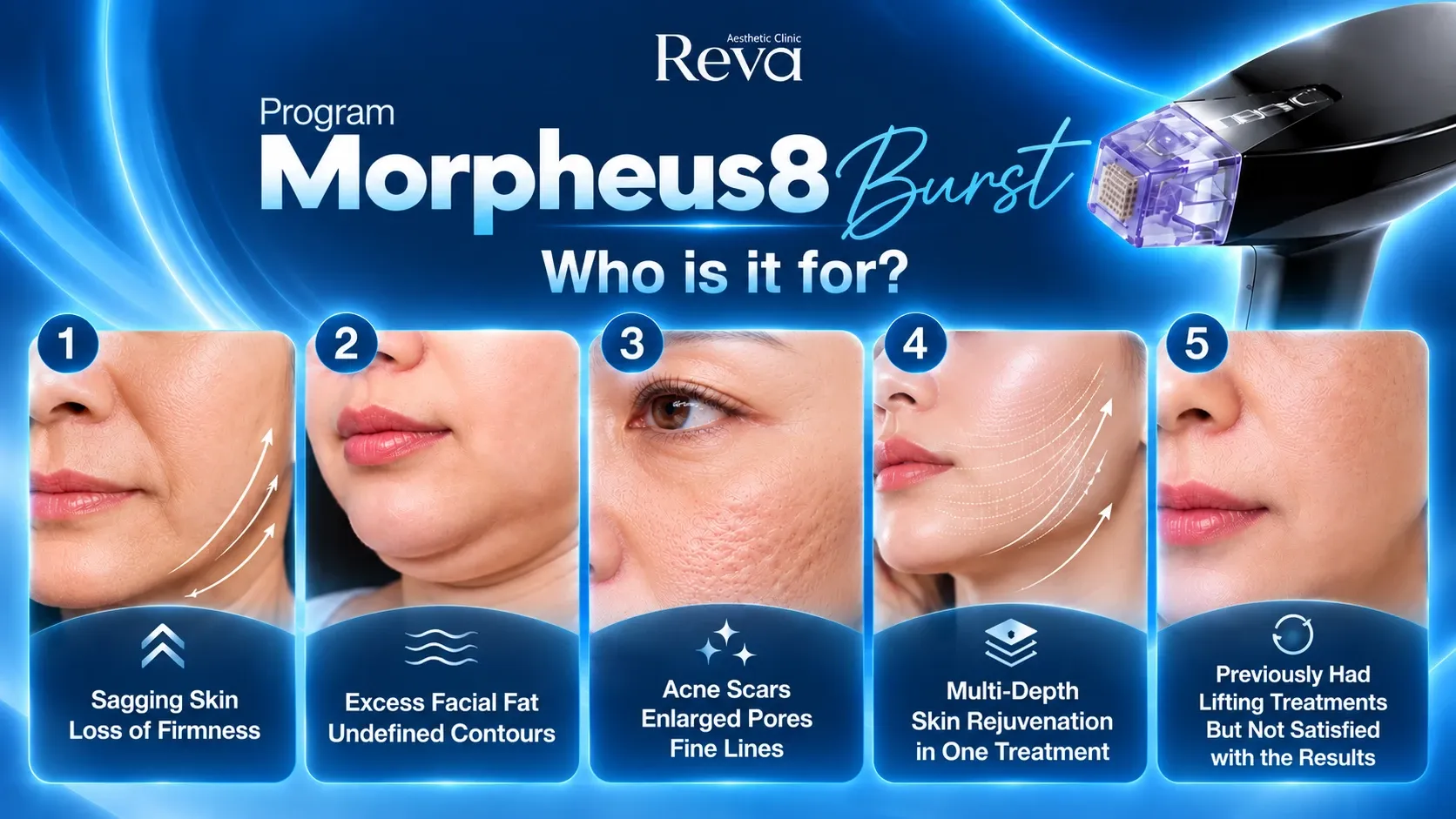
Morpheus8 Burst may be considered for patients with several types of skin concerns.
1. Patients With Skin Laxity and Wrinkles
Patients experiencing mild to moderate skin laxity, fine lines, and uneven skin texture may benefit from a treatment approach that targets multiple tissue depths.
The technology can be incorporated into a personalized plan focused on skin firmness and collagen remodeling.
2. Patients With Lower-Face and Jawline Concerns
Morpheus8 Burst may be considered for selected patients experiencing tissue laxity around the lower cheeks, jawline, or submental area.
However, facial fat distribution must be evaluated carefully, especially in patients with naturally slim or hollow faces.
3. Patients With Neck Skin Laxity
The neck is another area where skin laxity, wrinkles, and changes in skin texture may become more noticeable with age.
RF microneedling may help improve selected concerns when appropriate treatment parameters are used.
4. Patients With Enlarged Pores or Certain Types of Acne Scars
Fractional RF microneedling can support skin remodeling and may improve certain textural concerns.
For acne scars, treatment selection should depend on scar type, depth, and the pre
Not sure what kind of care your skin needs?
Consult a dermatologist at Reva Clinic. We’re here to provide personalized guidance, helping you understand your skin and care for it with confidence.


