What Causes Oily Skin? How to Reduce Excess Oil – 2026 Update | Reva Clinic
Oily skin is a common concern, particularly around the forehead, nose, and chin (T-zone). Some people notice that their skin becomes shiny again shortly after cleansing, makeup does not last well, or their pores appear more noticeable.
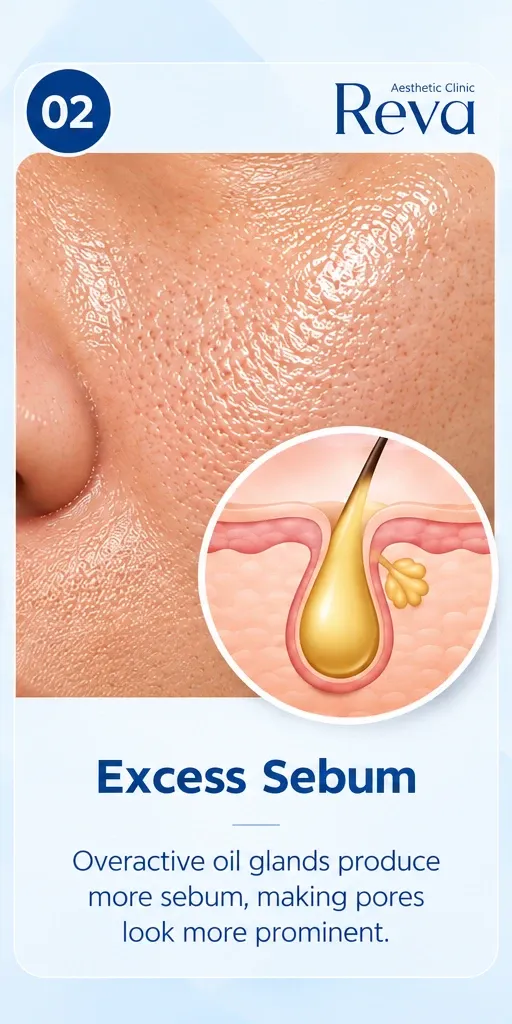
Facial oil is primarily related to sebum, an oily substance produced by the sebaceous glands. Sebum itself is not harmful—it is a normal part of healthy skin function. However, when more sebum reaches the skin surface, the face may appear oily, pores may become more noticeable, and acne may be more likely to develop in some people.
Key Takeaways
Oily skin is primarily related to higher levels of sebum on the skin and does not necessarily mean that the skin is dirty.
Hormones, genetics, age, environment, and individual skin characteristics can influence oiliness.
Oily skin can still be dehydrated.
Higher sebum secretion is associated with more visible facial pores. PubMed
Retinoids are particularly useful when comedonal acne or clogged pores are also present, but Retinol or Tretinoin should not automatically be considered direct sebum-reducing treatments. PubMed
Oily-skin management should consider Sebum + Congestion + Acne + Skin Barrier rather than simply trying to make the skin dry.
What Is Oily Skin?
The skin contains sebaceous glands, which produce sebum and release it onto the skin surface.
When more sebum is present, the skin may appear shiny or oily, particularly around the T-zone.
Therefore, oily skin does not necessarily mean unclean skin, and frequently washing or aggressively drying the face does not necessarily control sebaceous gland activity.
What Causes Oily Skin?
Several factors can contribute to oily skin.
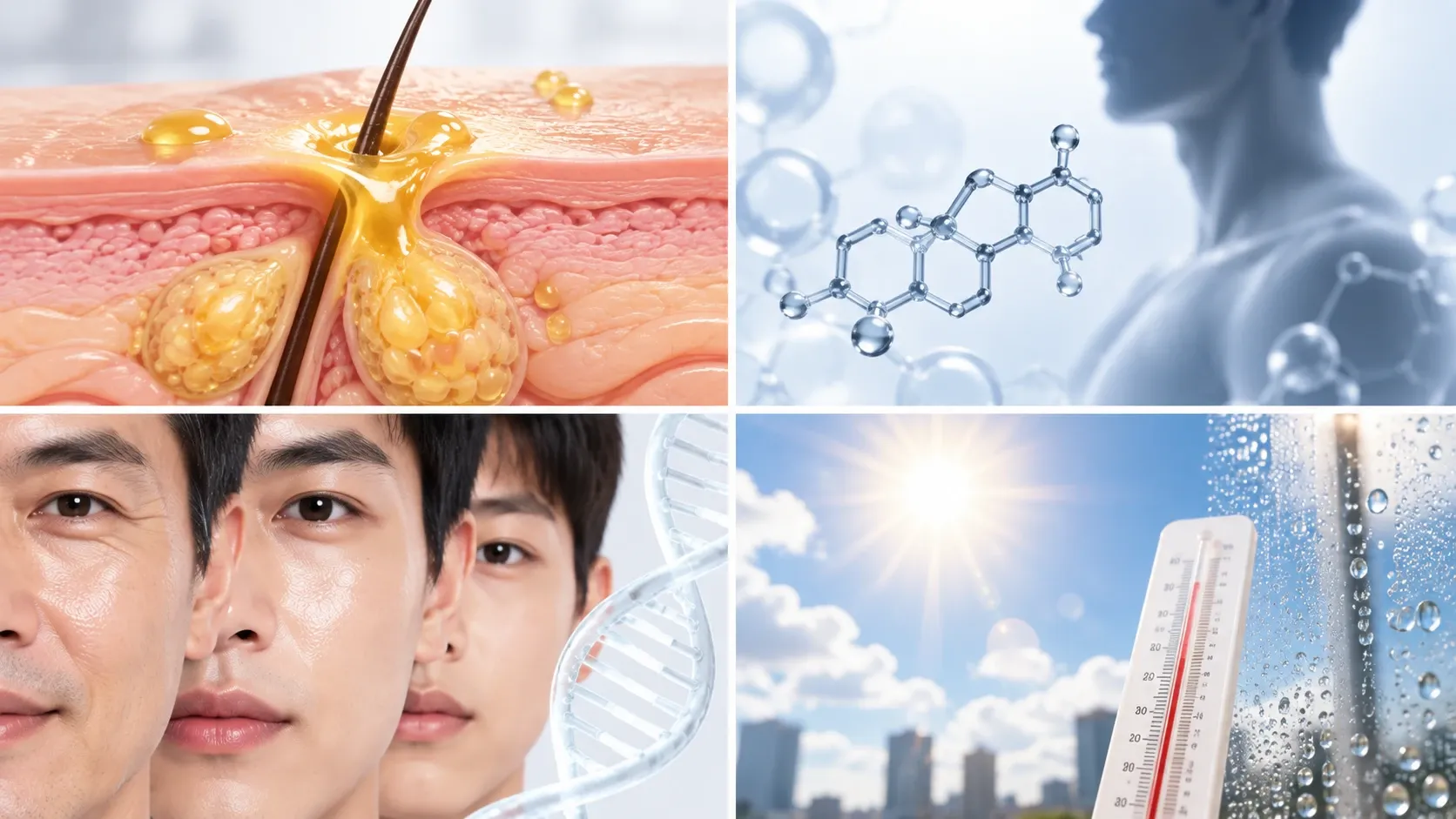
1. Increased Sebum Production
This is the primary mechanism behind oily skin. More active sebaceous glands can result in more sebum reaching the skin surface.
2. Hormones
Androgens influence sebaceous gland activity and are one of the factors that can affect oil production throughout different stages of life.
3. Genetics and Skin Type
Some people naturally tend to have more active sebaceous glands and therefore experience more oiliness than others.
4. Environment
Temperature, humidity, and environmental conditions can influence how oily the skin feels at different times.
Can You Have Oily but Dehydrated Skin?
Yes.
Oiliness and hydration describe different aspects of the skin.
Someone can therefore have oily skin while also experiencing dehydration or an impaired skin barrier.
This is why oily-skin care should not focus on making the skin as dry as possible.
Does Oily Skin Cause Enlarged Pores?
There is an association, but sebum is not the only factor.
Higher sebum secretion has been associated with more visible facial pores. Other important factors include reduced elasticity around the pores and increased hair-follicle volume. PubMed
Therefore, enlarged pores should not be treated in exactly the same way for every patient.
Patients can read more in “What Causes Enlarged Pores? How to Minimize the Appearance of Pores – 2026 Update | Reva Clinic.”
Does Oily Skin Make You More Prone to Acne?
Sebum plays a role in acne development, but acne is not caused by oil alone.
Acne involves multiple processes, including follicular obstruction, inflammation, and other biological factors.
Therefore, not everyone with oily skin develops acne. However, when oily skin and clogged pores occur together, both issues should be considered in the treatment plan.
How to Reduce Oily Skin with Skincare
The main principle is to manage excess oil without unnecessarily damaging the skin barrier.
Choose a cleanser that removes excess oil and impurities without causing excessive dryness or irritation.
People with oily skin can still use moisturizer. The texture and formulation should simply be appropriate for oily or acne-prone skin.
Aggressive scrubbing or repeatedly cleansing until the skin feels “squeaky clean” should be avoided. Temporarily removing surface oil is not the same as controlling sebum production.
Can Retinol or Retinoic Acid Reduce Oily Skin?
Retinoids, including Retinol, Tretinoin (Retinoic Acid), Adapalene, and Tazarotene, may be useful—particularly for people who have oily skin together with clogged pores or comedonal acne.
Topical retinoids have a well-established role in acne treatment because they target microcomedones and follicular obstruction. Their evidence is therefore stronger for Acne and Comedones than for simply reducing facial oil. PubMed
Some studies have reported improvements in facial shine or patient-perceived oiliness with certain topical retinoid formulations, including Tretinoin and Tazarotene. However, this does not mean that every retinoid or formulation directly reduces sebum production to the same degree. PubMed
Therefore, if you have oily skin + comedonal acne, a topical retinoid may be part of the treatment plan. If the main concern is high sebum production and significant oiliness, additional sebum-control strategies may need to be considered.
Retinol, Tretinoin, and Adapalene are not interchangeable. They differ in strength, clinical evidence, indications, and irritation potential. Prescription retinoids should be used appropriately for the individual's skin condition and indication.
What Treatments Can Help with Oily Skin?
There is no single treatment that is suitable for everyone. The treatment plan should consider whether clogged pores, acne, enlarged pores, or skin-quality concerns are also present.
Oily Skin + Clogged Pores + Uneven Texture
When oiliness occurs together with clogged pores, comedones, or uneven skin texture, a doctor may consider Program LHALA Peel according to the individual's skin condition.
When the Main Goal Is Sebum Control
For patients with noticeable excess oil who want to focus specifically on Sebum Control, Program Oil Control may be considered.
At Reva Clinic, the degree of oiliness is assessed together with pore appearance, acne, and overall skin quality before developing an individualized treatment plan.
Oily Skin + Enlarged Pores
It is important to determine whether enlarged pores are primarily related to Sebum or whether Collagen/Elasticity and Facial Hair are also contributing.
Because enlarged pores have multiple possible causes, reducing sebum alone may not completely address their appearance. PubMed
Why Is My Skin Still Oily After Trying to Reduce Oil?
One possible reason is that the approach does not address the main contributing factor.
Some people naturally have higher sebum production. Others have acne and clogged pores at the same time, while some describe their concern as oily skin when the more noticeable issue is actually enlarged pores or uneven skin texture.
The goal does not necessarily need to be completely oil-free skin. A more practical approach is to control excess oil while addressing other skin concerns that may be present.
FAQ: Oily Skin
Should I Wash My Face More Often If I Have Oily Skin?
Not necessarily. Excessive or aggressive cleansing can contribute to dryness and irritation.
Does Oily Skin Still Need Moisturizer?
Yes, it can. This is particularly important when the skin is dry or irritated or when active ingredients or acne treatments are being used.
Can Retinol Reduce Oily Skin?
It may improve perceived oiliness in some patients, particularly when comedonal acne is also present. However, the evidence for retinoids is stronger for acne and comedones than for their use as direct sebum-reducing treatments. PubMed
Does Oily Skin Make Pores Look Larger?
Higher sebum secretion is associated with more visible pores, but skin elasticity and hair-follicle characteristics can also contribute. PubMed
Can Oily Skin Be Permanently Cured?
Sebum production is part of normal skin physiology. The goal is generally to manage excess sebum and related skin concerns, rather than eliminate sebum completely.
Should I Choose Program LHALA Peel or Program Oil Control?
If you have oiliness + clogged pores + uneven texture, Program LHALA Peel may be considered. If the main concern is Sebum Control, Program Oil Control may be more relevant. The appropriate option depends on the individual's skin condition.