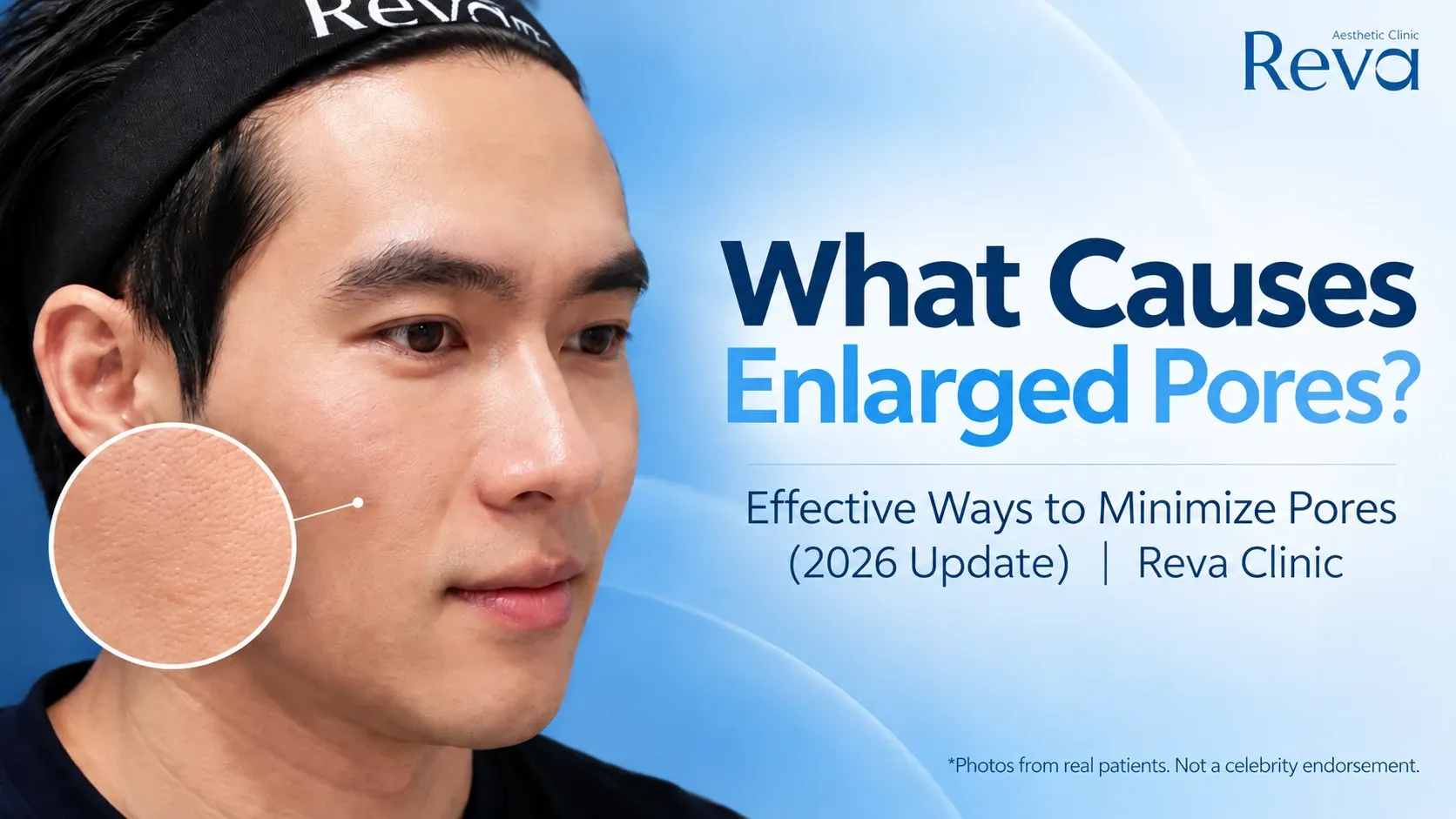
What Causes Enlarged Pores? How to Minimize the Appearance of Pores – 2026 Update | Reva Clinic
Enlarged pores are a common skin concern. Some people notice visible pores from a young age, especially if they have oily skin, while others find that their pores become more noticeable as they get older.
The reason enlarged pores can be difficult to manage is simple: they do not have just one cause.
Research suggests that important factors associated with visible facial pores include high sebum production, reduced skin elasticity, and larger hair follicle volume. Other factors such as acne, hormones, aging, and sun exposure may also contribute.
Therefore, the first question should not be:
“Which treatment is best for pores?”
Instead, it should be:
“What is making my pores look enlarged?”
Once the cause is identified, treatment can be selected more appropriately.
Key Takeaways
Enlarged pores can have several different causes.
Three important factors are excess sebum, reduced skin elasticity, and hair follicles/facial hair.
More than one cause can occur at the same time.
Younger patients with oily skin may benefit from focusing on sebum control.
As we age, collagen and skin elasticity may become increasingly important.
Treatment should therefore be personalized according to the underlying cause rather than using the same treatment for everyone.
What Are Pores?
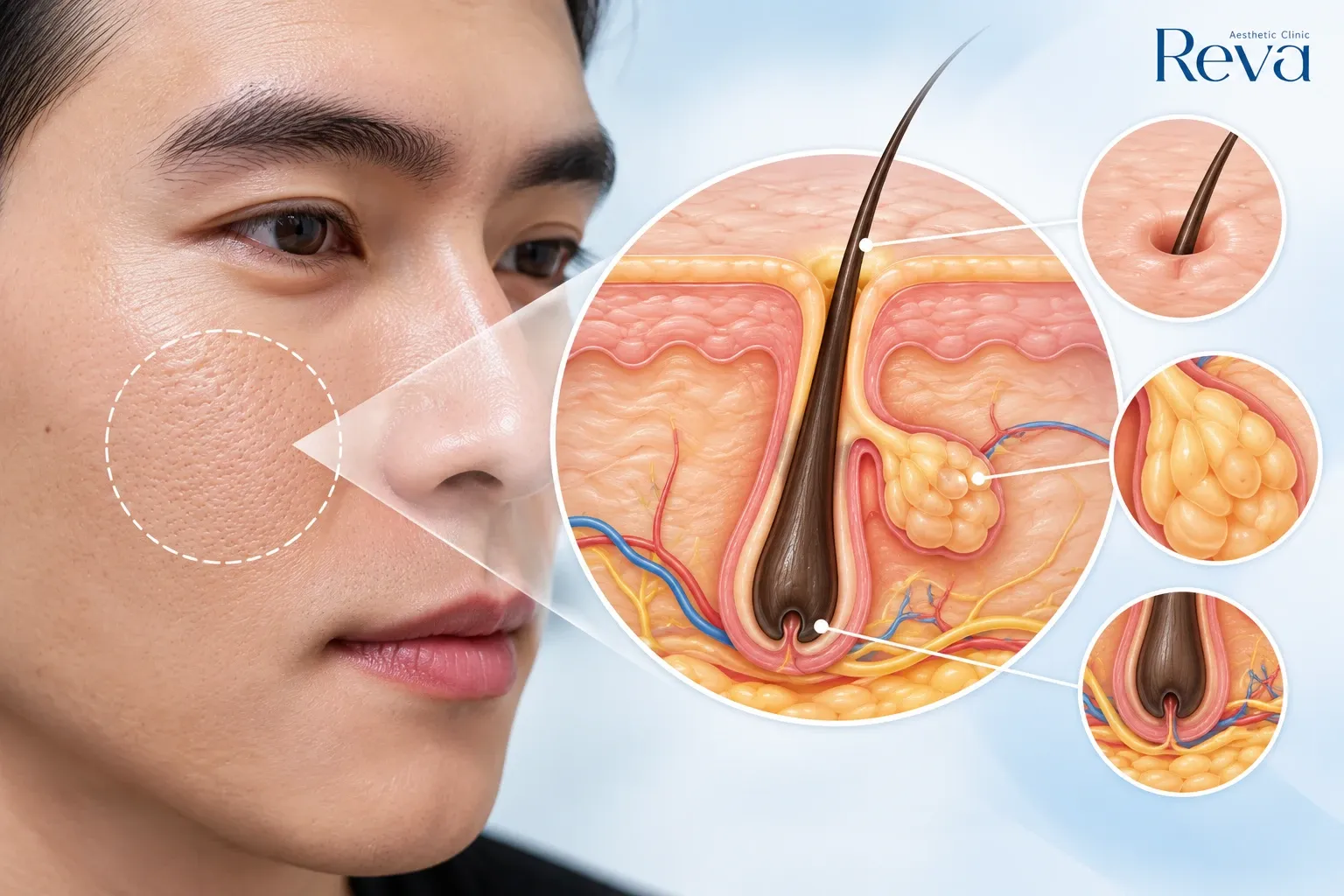
The pores we see on the face are mainly openings associated with the pilosebaceous unit, which includes the hair follicle, hair shaft, and sebaceous gland.
Pores are therefore a normal part of the skin and cannot simply be “closed” or permanently removed.
Instead, treatment aims to reduce the factors that make pores appear larger or more noticeable, helping the overall skin texture look smoother and more refined.
What Causes Enlarged Pores?
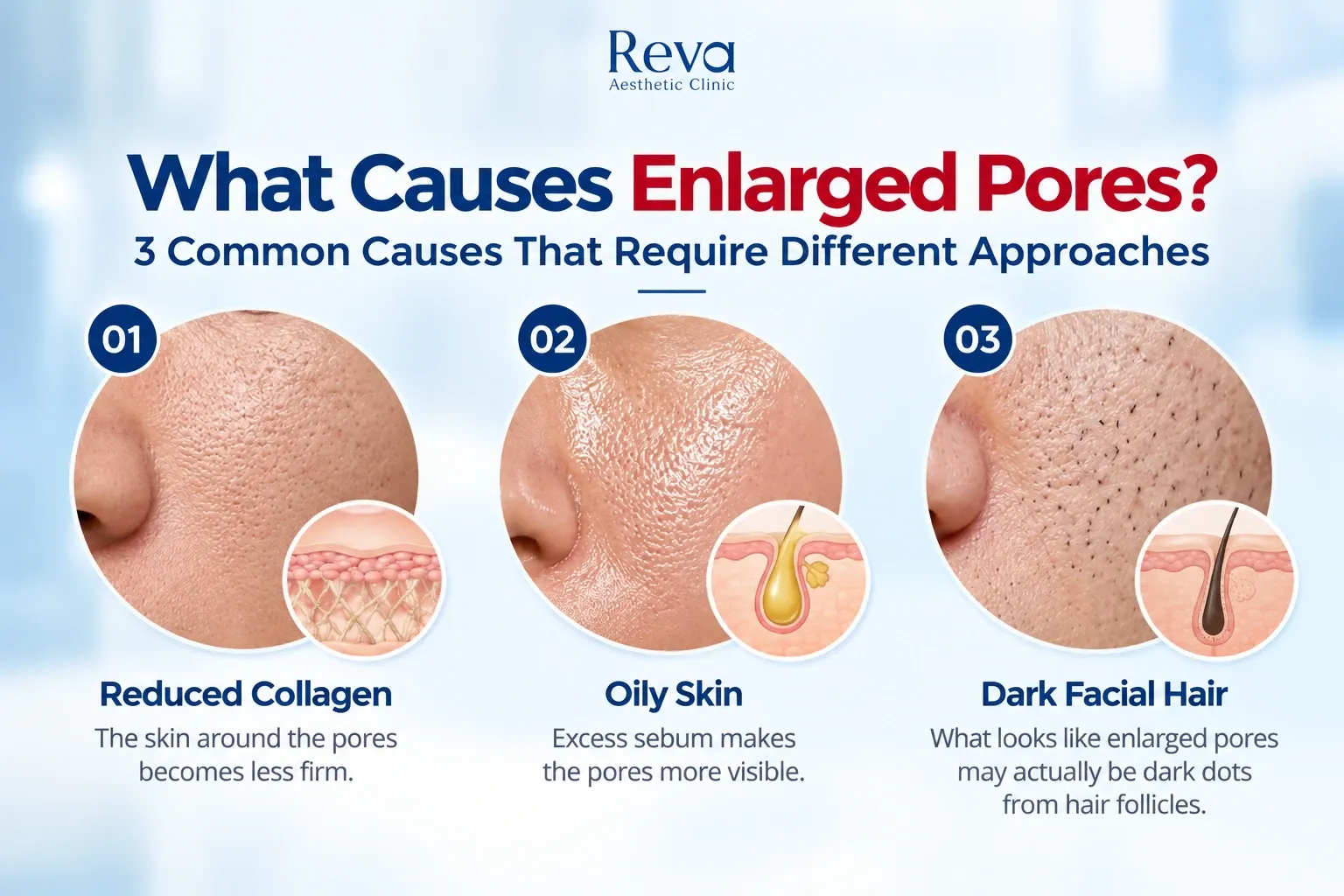
For easier understanding, enlarged pores can be divided into three major groups.
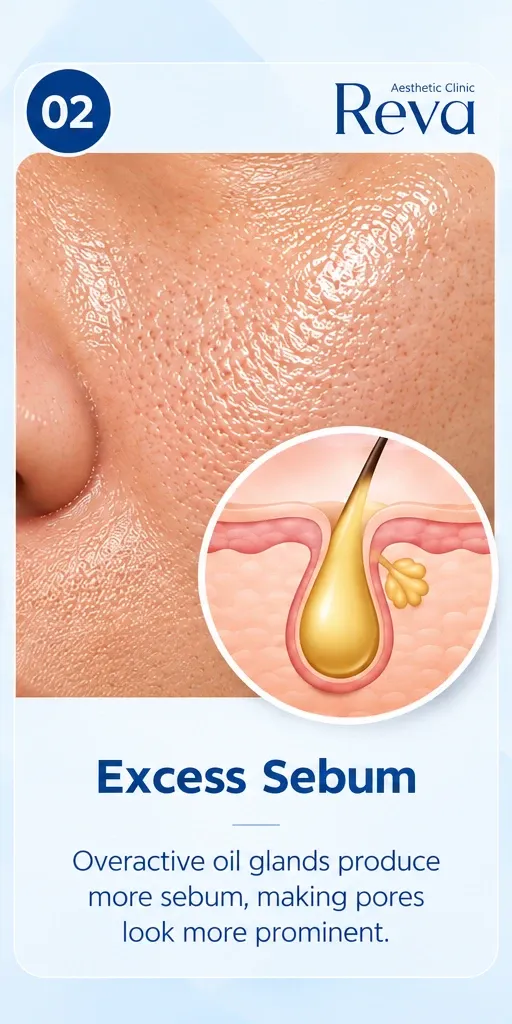
1. Enlarged Pores from Oily Skin
People with oily skin often notice more visible pores around the nose, inner cheeks, and T-zone.
Sebaceous glands produce sebum, and research has found an association between higher sebum production and more visible facial pores.
If you are relatively young and your skin is still firm but you experience:
Excessively oily skin
Skin becoming oily quickly after applying makeup
Visible pores around the T-zone or inner cheeks
Blackheads or clogged pores
the main issue may not necessarily be skin laxity. Sebum production may be an important contributing factor.
Treatment should therefore consider oil control rather than focusing only on collagen stimulation.
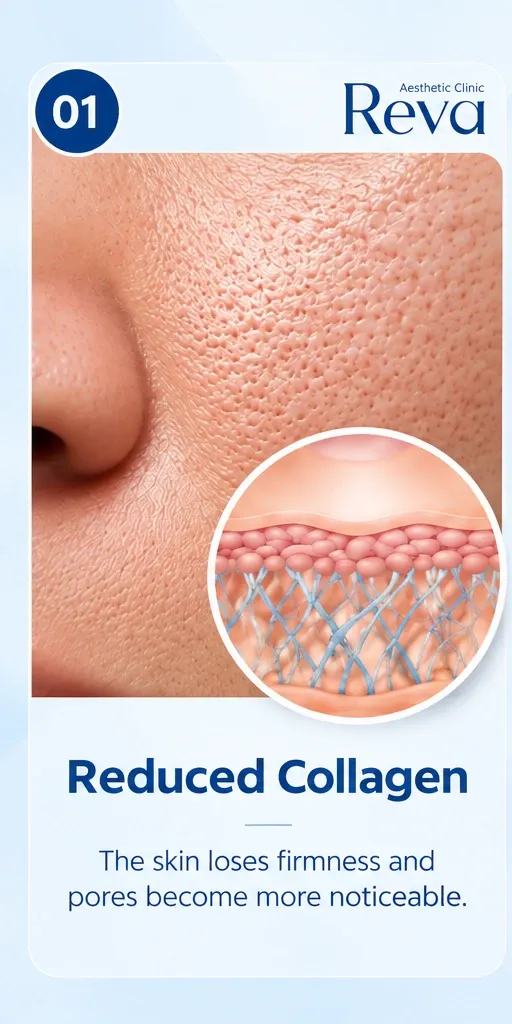
2. Enlarged Pores from Reduced Collagen and Skin Elasticity
Some people have relatively small pores when they are younger but begin to notice:
“Why are my pores becoming more visible as I get older?”
One possible explanation is a change in the supporting structure and elasticity of the skin surrounding the pores.
As collagen and skin elasticity decline, the surrounding skin may provide less structural support, making pores appear more noticeable.
Studies have reported an association between reduced skin elasticity and visible facial pores.
You may notice:
More visible pores on the cheeks
Skin that feels less firm than before
Fine lines
Rougher or less smooth skin texture
Early signs of skin laxity
In this group, simply reducing oil may not be enough. Treatments targeting collagen, skin elasticity, and overall skin quality may also need to be considered.
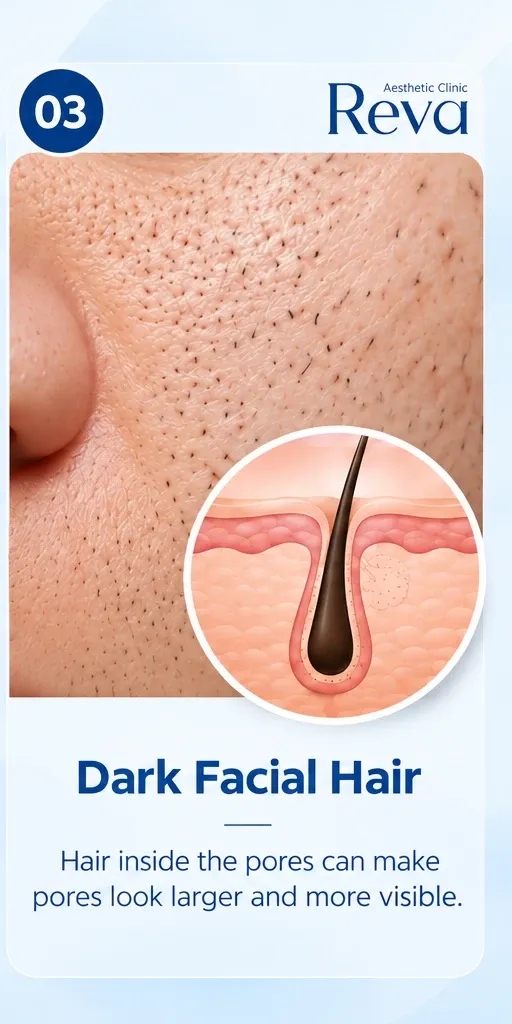
3. Enlarged-Looking Pores from Hair Follicles and Facial Hair
Another commonly overlooked factor is facial hair.
Medical reviews have identified increased hair follicle volume as one of the factors associated with enlarged facial pores.
In some people, the dark dots or visible pores they notice may not be caused solely by oil or collagen loss. Dark or thicker facial hair can make individual follicles appear more noticeable.
Possible signs include:
Small dark dots within the pores
Noticeable facial or cheek hair
Visible pores despite not having particularly oily skin
Hair visible in the center of the follicle when viewed closely
In these cases, collagen stimulation alone may not address the main cause. Laser hair removal may be considered when appropriate.
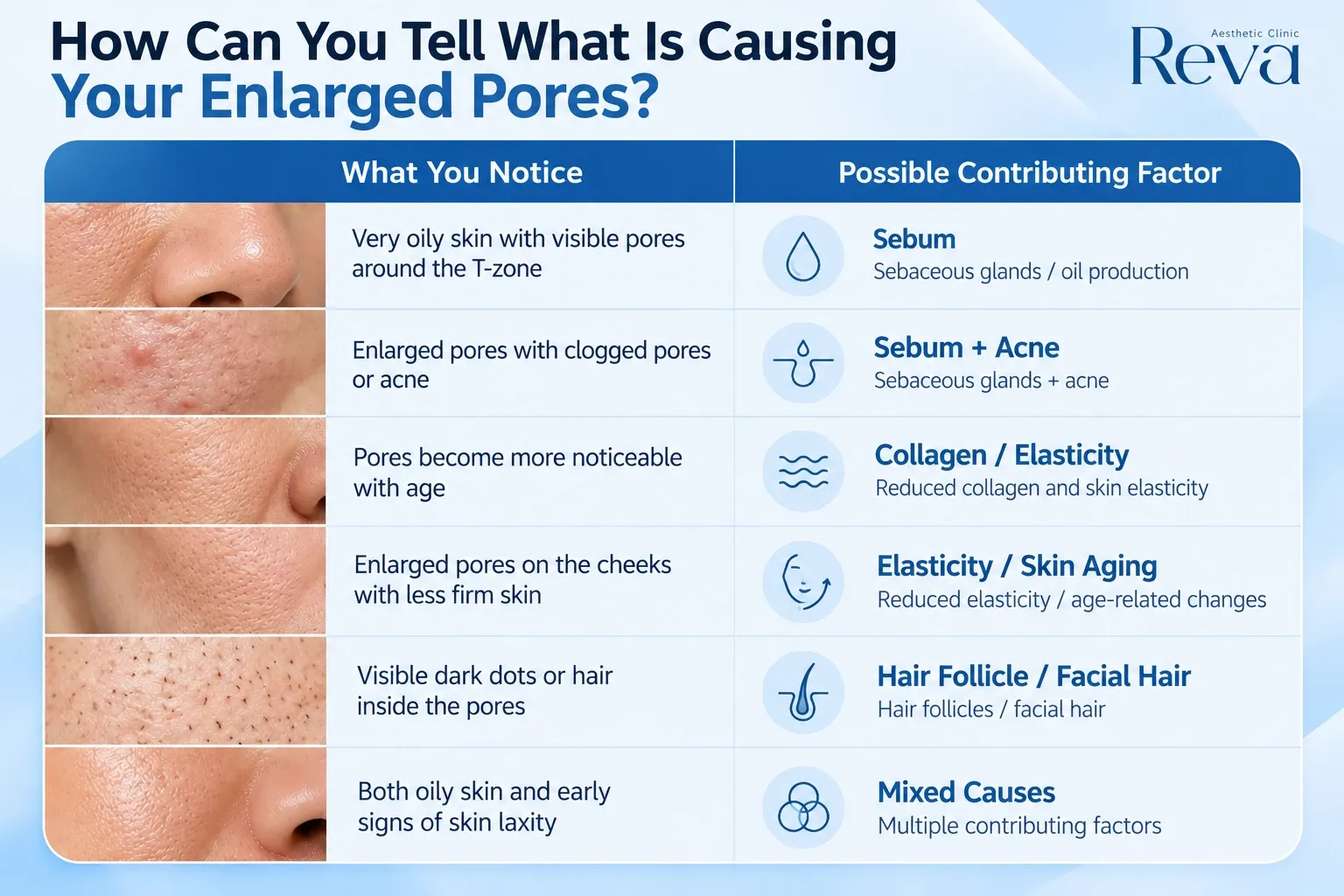
How Can You Tell What Is Causing Your Enlarged Pores?
What You NoticePossible Contributing FactorVery oily skin + visible T-zone poresSebum / sebaceous glandsEnlarged pores + clogged poresSebum + acnePores becoming more visible with ageCollagen / skin elasticityCheek pores + early skin laxityElasticity / skin agingDark dots or visible hair inside poresHair follicles / facial hairOily skin + reduced firmnessMultiple causes
This table is intended only as a general guide.
In reality, one person may have several contributing factors at the same time.
Can Enlarged Pores Be Permanently Removed?
The term “pore tightening” can sometimes create the impression that pores can be completely closed or permanently removed.
However, pores are part of the normal structure of the skin.
The realistic goal is to address the factors that make them appear more noticeable, such as:
Reducing excess sebum → improving skin quality and elasticity → addressing facial hair → treating acne or other contributing conditions
When treatment targets the underlying cause, pores may appear less noticeable and the overall skin texture may look smoother.
What Treatments Are Best for Enlarged Pores?
There is no single treatment that is best for every type of enlarged pore.
If the Main Problem Is “Reduced Collagen and Elasticity”
The treatment goal shifts toward improving Skin Quality and Skin Elasticity.
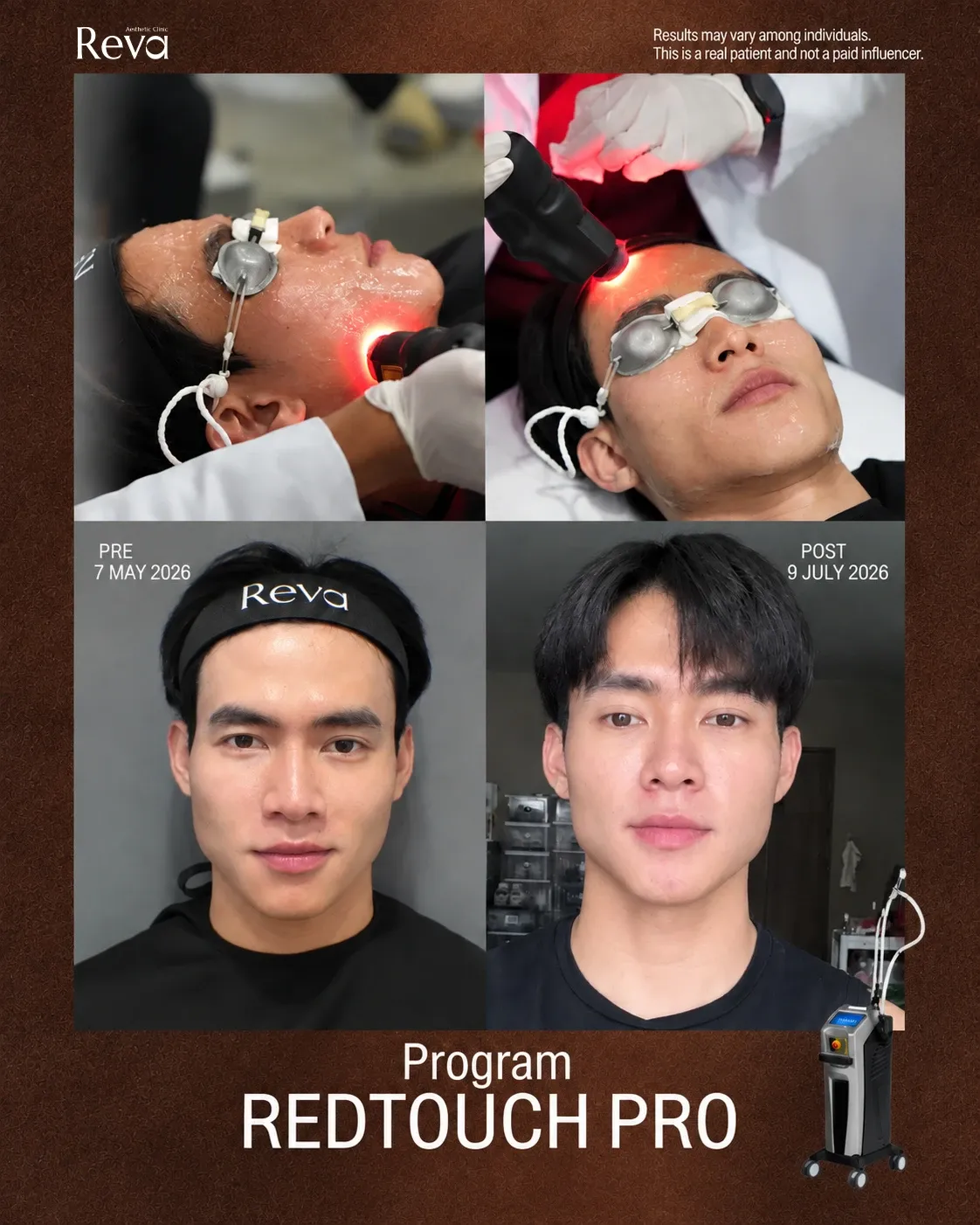
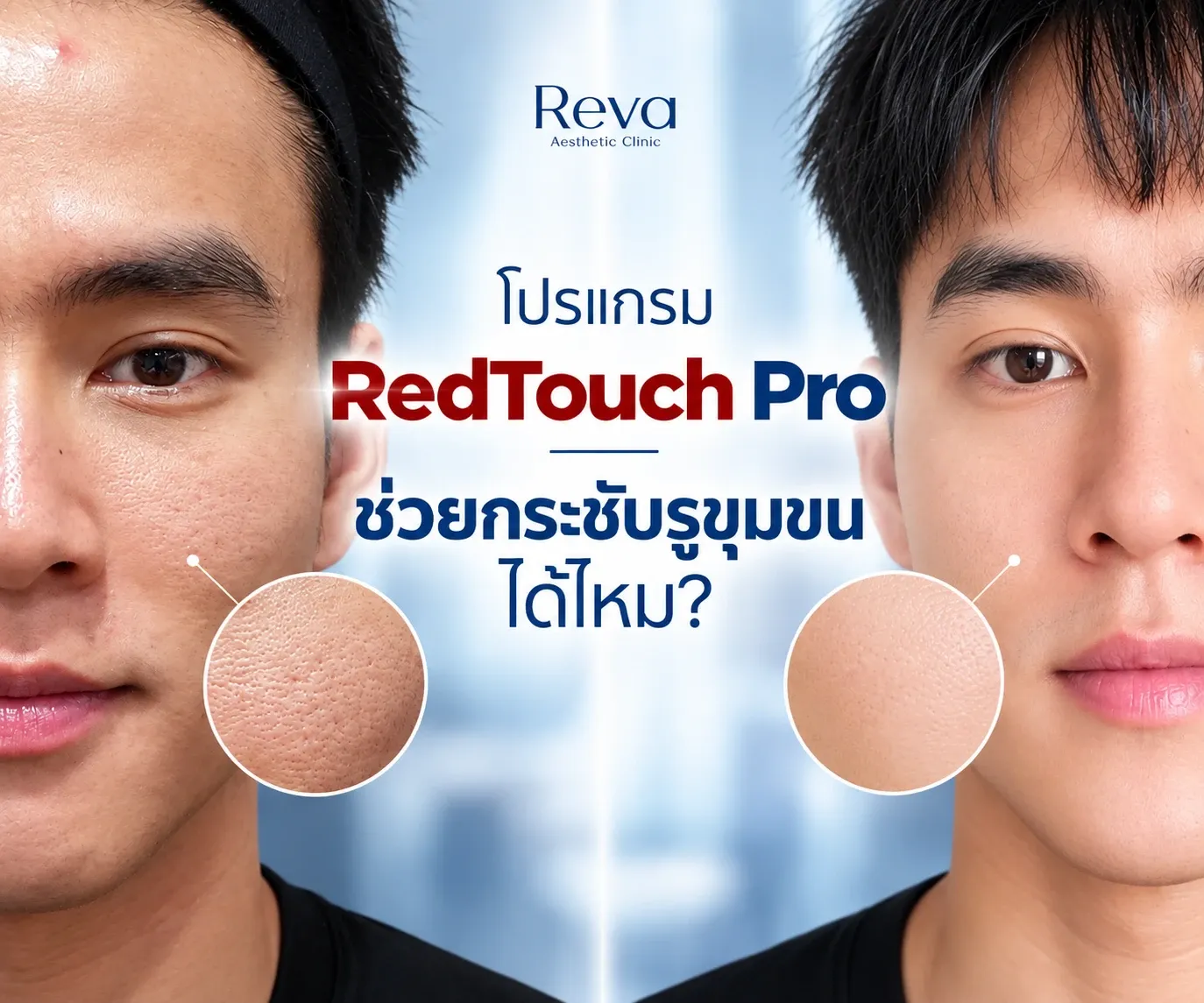
Options may include energy-based devices or injectable treatments designed to support skin remodeling. For example, Program RedTouch Pro focuses on collagen, skin texture, and overall skin quality, while REVA ICONIC SKIN may be considered for patients who require a more comprehensive skin-quality treatment plan.
The appropriate treatment should be selected according to the degree of skin laxity, pore appearance, and individual skin condition.
If the Main Problem Is “Oily Skin”
The main goal is Sebum Control. The most appropriate approach may vary depending on the degree of oiliness, clogged pores, acne, and overall skin condition.
If you have oily skin together with clogged pores, comedones, or uneven skin texture, a doctor may consider Program LHALA Peel. LHA helps gently exfoliate the skin and reduce buildup within the pores while supporting the skin barrier.
For those with more noticeable excess oil who want to focus specifically on sebum control, Program Oil Control may be considered. At Reva Clinic, the treatment plan is tailored according to the degree of oiliness, pore appearance, and overall skin quality.
Therefore, if enlarged pores are associated with oily skin, there is no single treatment that is suitable for everyone. For oiliness with clogged pores, Program LHALA Peel may be considered; for patients who need a greater focus on Sebum Control, Program Oil Control may be more relevant. The appropriate treatment should be selected after an individual skin assessment.
If the Main Problem Is “Facial Hair”
If enlarged pores appear more noticeable because of facial hair, Laser Hair Removal may be more relevant than treating the pores in the same way as those caused by oily skin or reduced skin elasticity.
For patients with noticeable facial hair or dark dots within the pores, Program Triplex Diode Laser may be considered. At Reva Clinic, the device combines three wavelengths—755, 808, and 1064 nm—to accommodate different hair characteristics and skin types.
If There Are Multiple Causes
This is actually quite common. For example, a 35-year-old patient may have a combination of:
Oily skin + Early collagen loss + Facial hair on the cheeks
In this situation, using only one device or treatment may address only part of the problem. A doctor may therefore design a combination treatment plan targeting multiple contributing factors, such as Sebum Control + Skin Quality Improvement + Facial Hair Reduction, based on the individual assessment.
Can Program RedTouch Pro Help with Enlarged Pores?
Program RedTouch Pro may be considered as part of a skin-quality treatment plan, particularly when the treatment goal involves collagen and skin texture.
However, not everyone with enlarged pores necessarily needs Program RedTouch Pro.
If the main contributing factor is excessive oil production, facial hair, acne, or another condition, a different treatment approach may be more appropriate.
At Reva Clinic, we therefore focus on evaluating the cause of enlarged pores before selecting a treatment rather than applying the same protocol to every patient.
Can RF Help Minimize the Appearance of Pores?
There is clinical research in Thai patients evaluating non-ablative monopolar radiofrequency for enlarged facial pores.
In one study, participants received two treatments four weeks apart. Researchers observed reductions in pore volume together with changes in sebum, skin texture, and elasticity. Some improvements remained measurable during follow-up.
However, results from a clinical study cannot guarantee the same outcome for every individual.
Can Laser Treatments Help with Enlarged Pores?
Several types of lasers have been studied for enlarged facial pores, including non-ablative fractional lasers and long-pulsed Nd lasers.
However, different laser technologies work at different wavelengths, depths, and biological targets.
Therefore, it is more useful to ask:
What does this laser target, and which cause of my enlarged pores is it intended to address?
rather than simply choosing a treatment because it is marketed as a “pore laser.”
Can PN Help with Enlarged Pores?
Polynucleotides, or PN, are used in aesthetic medicine for improving overall skin quality and are sometimes considered for patients concerned about visible pores.
However, the current evidence specifically supporting PN for enlarged pores remains limited.
Some published data reflect physicians' clinical experience rather than randomized controlled trials specifically designed to prove its effectiveness for enlarged pores.
PN should therefore be considered as one possible skin-quality treatment, rather than a treatment that is automatically suitable for every patient with visible pores.
Read more about PN
Can Skincare Make Pores Look Smaller?
Skincare still plays an important role, particularly for people with oily skin, clogged pores, acne, or significant sun exposure.
Basic skin care may include:
Appropriate cleansing
Avoiding products that trigger congestion in acne-prone skin
Managing excessive oil production when appropriate
Treating comedonal acne
Using sunscreen regularly
These measures can help reduce some of the factors that make pores more noticeable.
However, if the main problem involves reduced skin elasticity or structural changes associated with aging, skincare alone may have limitations.
Why Don't My Pores Improve Even After Treatment?
One possible reason is that the treatment does not match the underlying cause.
For example:
A person whose pores are mainly associated with excessive sebum may receive only collagen-focused treatments.
Or:
Someone whose pores have become more visible because of reduced skin elasticity may rely only on oil-control skincare.
In both situations, the results may not meet expectations because only part of the problem is being addressed.
Instead of asking:
“What is the best machine for enlarged pores?”
a more useful question is:
“What is causing my pores to look enlarged, and which treatment targets that cause?”
Summary
Enlarged pores can have several causes. Three important factors to consider are:
1. Sebum — oily skin and excessive oil production
2. Elasticity — collagen and skin elasticity
3. Hair follicles — follicle size and facial hair
Some people have one dominant factor, while others may have several contributing factors at the same time.
Treatment should therefore not begin with “Which machine should I use?”
It should begin by identifying the cause.
From there, skincare, laser treatments, energy-based devices, injectable treatments, laser hair removal, or a combination of approaches can be selected according to the individual's skin condition.
FAQ
What causes enlarged pores?
Important factors associated with enlarged facial pores include excessive sebum production, reduced skin elasticity, and hair follicle characteristics. Acne, hormones, aging, and sun exposure may also contribute.
Can enlarged pores become smaller?
Treatment may reduce the factors that make pores appear more noticeable and improve overall skin texture. However, pores cannot be completely removed because they are a normal part of the skin.
Why does oily skin have larger-looking pores?
Research has found an association between sebum production and the appearance of facial pores. For people with oily skin, managing excessive sebum may therefore be an important part of treatment.
Why do pores become more visible with age?
Changes in collagen, skin structure, and elasticity may make pores appear more noticeable with age. Skin elasticity and photoaging should therefore be considered alongside other contributing factors.
Should I choose laser or RF for enlarged pores?
It depends on the underlying cause and skin condition. Different laser and RF technologies work through different mechanisms and at different depths. Identifying whether the main problem is related to sebum, elasticity, hair follicles, or multiple factors can help determine a more appropriate treatment approach.