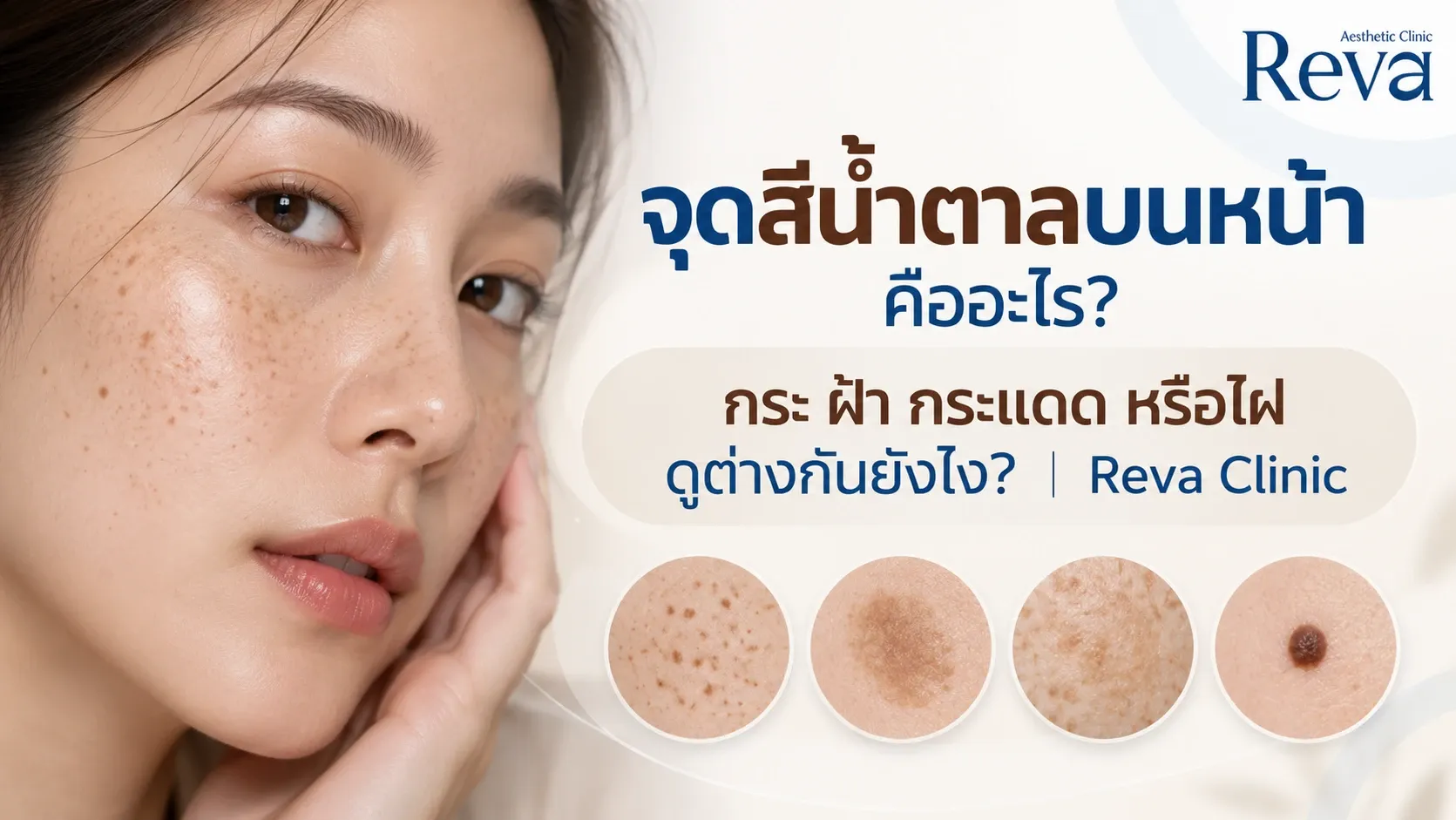
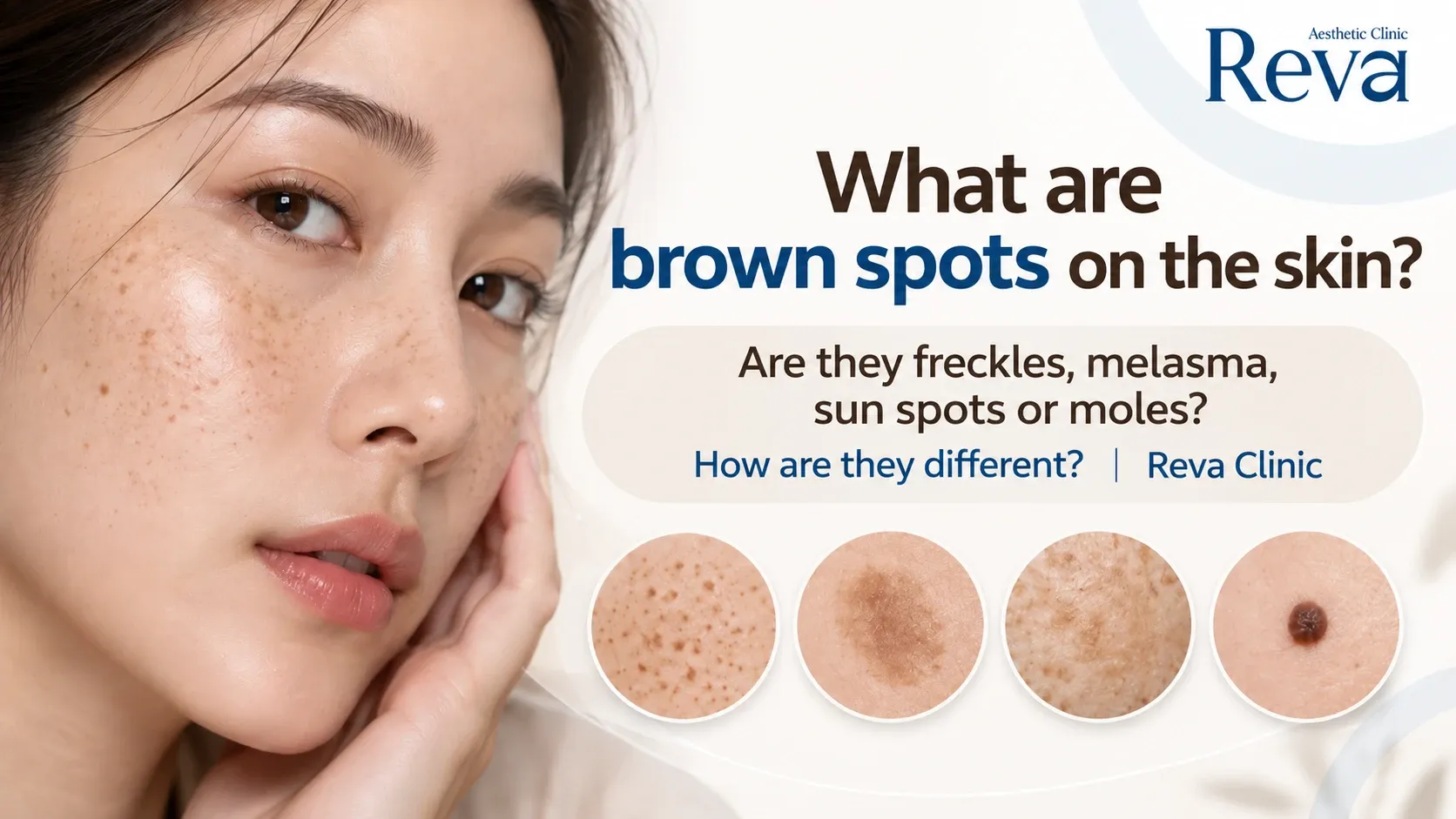
What Are Brown Spots on the Face? Freckles, Melasma, Sun Spots, or Moles? | Reva Clinic
Have you ever looked in the mirror and noticed a new brown spot on your face and wondered:
Is it a freckle, melasma, a sun spot, or a mole?
Many people see a brown spot and immediately start looking for a cream or laser treatment to remove it. But not all brown spots are the same, and they should not all be treated in the same way.
Some are caused by sun exposure. Some are melasma. Some are raised skin lesions, while others should be properly checked by a doctor before any laser treatment.
So before asking:
“Which laser should I use?”
The first question should be:
“What is this spot?”
What Can Cause Brown Spots on the Face?
Brown spots can look very similar at first glance. A simple way to start telling them apart is to look at their color, shape, location, and whether they are flat or raised.
1. Freckles
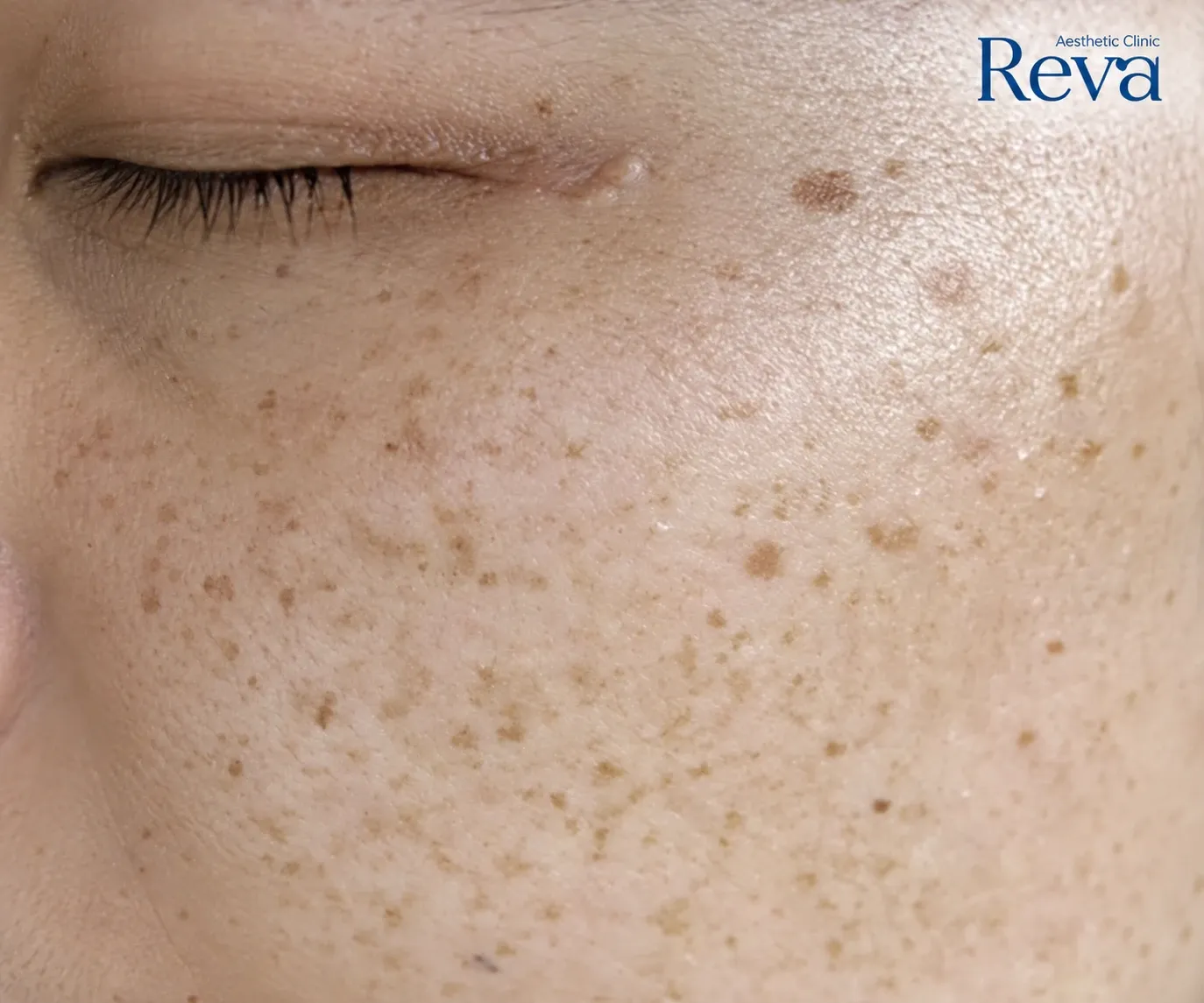
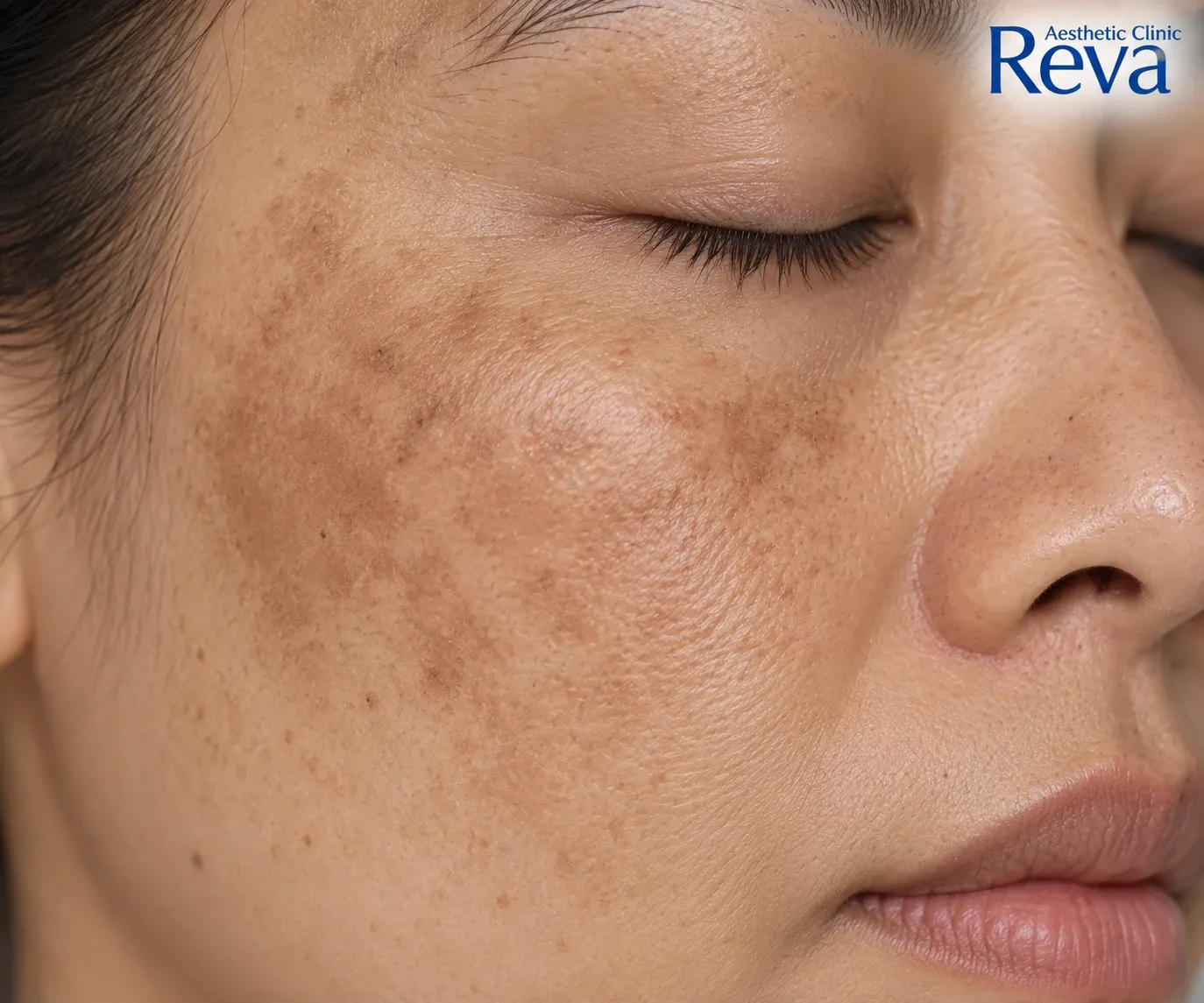
Freckles are usually small, light-to-brown spots that appear in groups, especially on sun-exposed areas such as the cheeks and nose.
Some people develop freckles from a young age, and they often become more noticeable after sun exposure.
This is why sun protection is important. Even after freckles become lighter with treatment, they can become more noticeable again with continued sun exposure.
2. Sun Spots (Solar Lentigines)
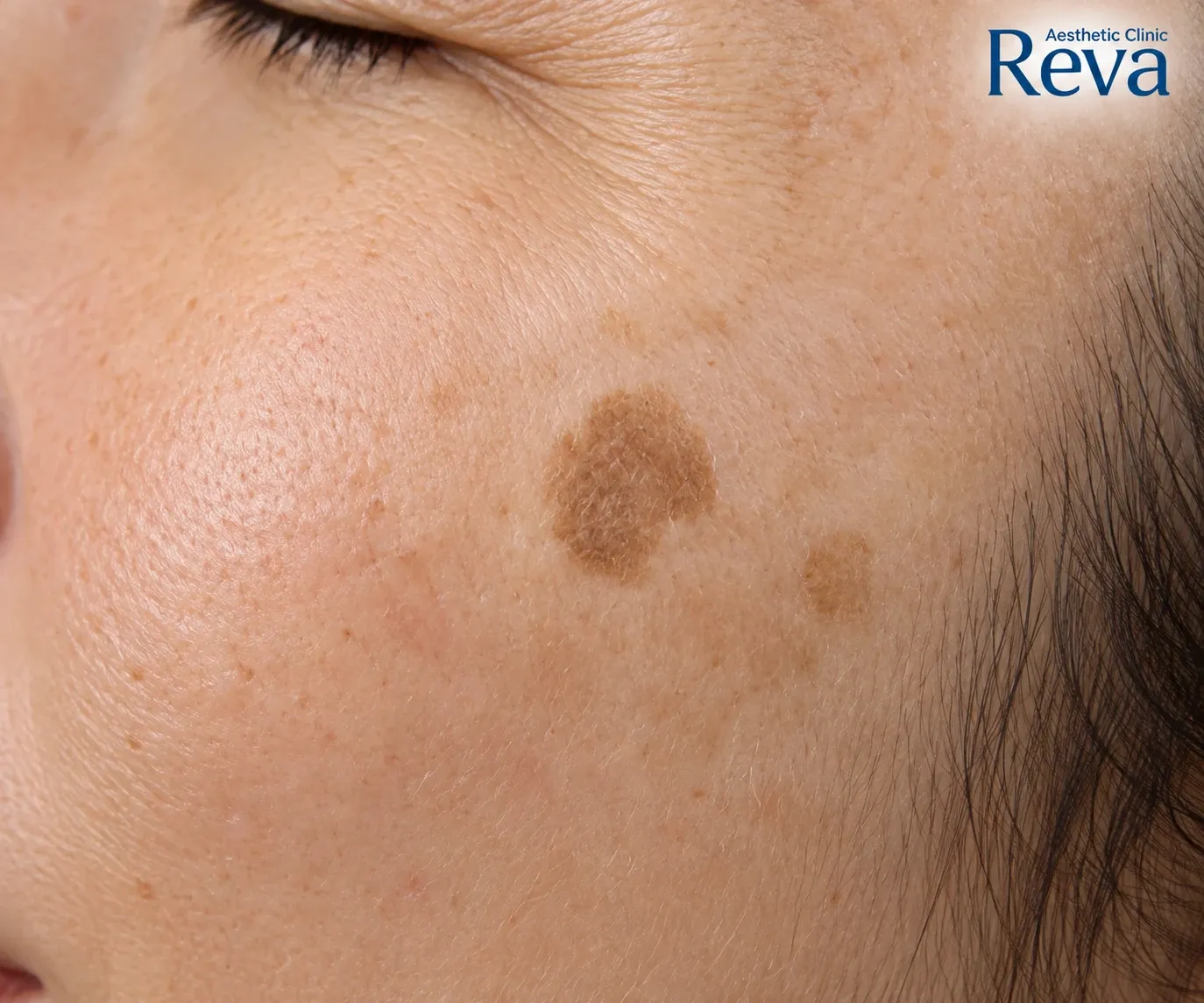
Sun spots usually appear as well-defined brown spots and are associated with cumulative sun exposure over the years.
They tend to become more common with age and often appear on areas that receive a lot of sunlight, such as the face, backs of the hands, shoulders, and upper chest.
Although people sometimes call all of these spots “freckles,” freckles and solar lentigines are not exactly the same thing.
3. Melasma
Melasma usually appears as brown or gray-brown patches rather than individual small spots.
It commonly affects the cheeks, forehead, nose, and upper lip and often appears in a relatively symmetrical pattern on both sides of the face.
Melasma can also be influenced by several factors, including sunlight, heat, hormones, and skin inflammation.
This is why treating melasma is not simply about trying to “laser the pigment away.” Managing triggers, sun protection, and overall skin care can also be important parts of the treatment plan.
4. Gray-Brown Spots on the Cheeks May Be Hori Nevus
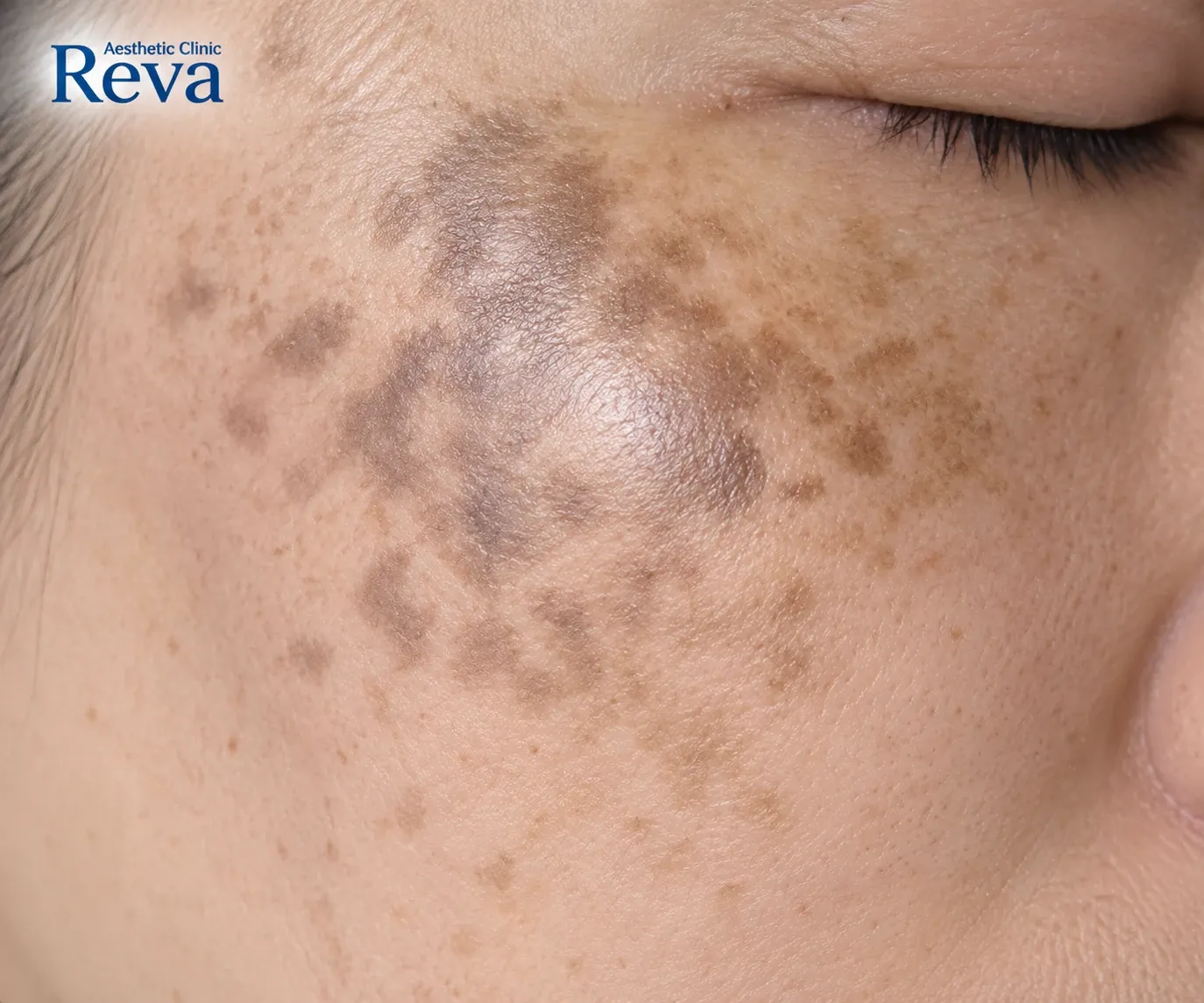
If you notice multiple gray-brown, dark gray, or blue-gray spots around the cheekbones, especially on both sides of the face, they may not necessarily be melasma.
Another possibility is Hori Nevus.
This is one reason why someone may have been treating “melasma” for a long time but still has certain spots that do not seem to improve.
In these cases, it may be worth reassessing whether all of the pigmentation is actually melasma or whether another type of pigmentation is present as well.
5. Seborrheic Keratosis
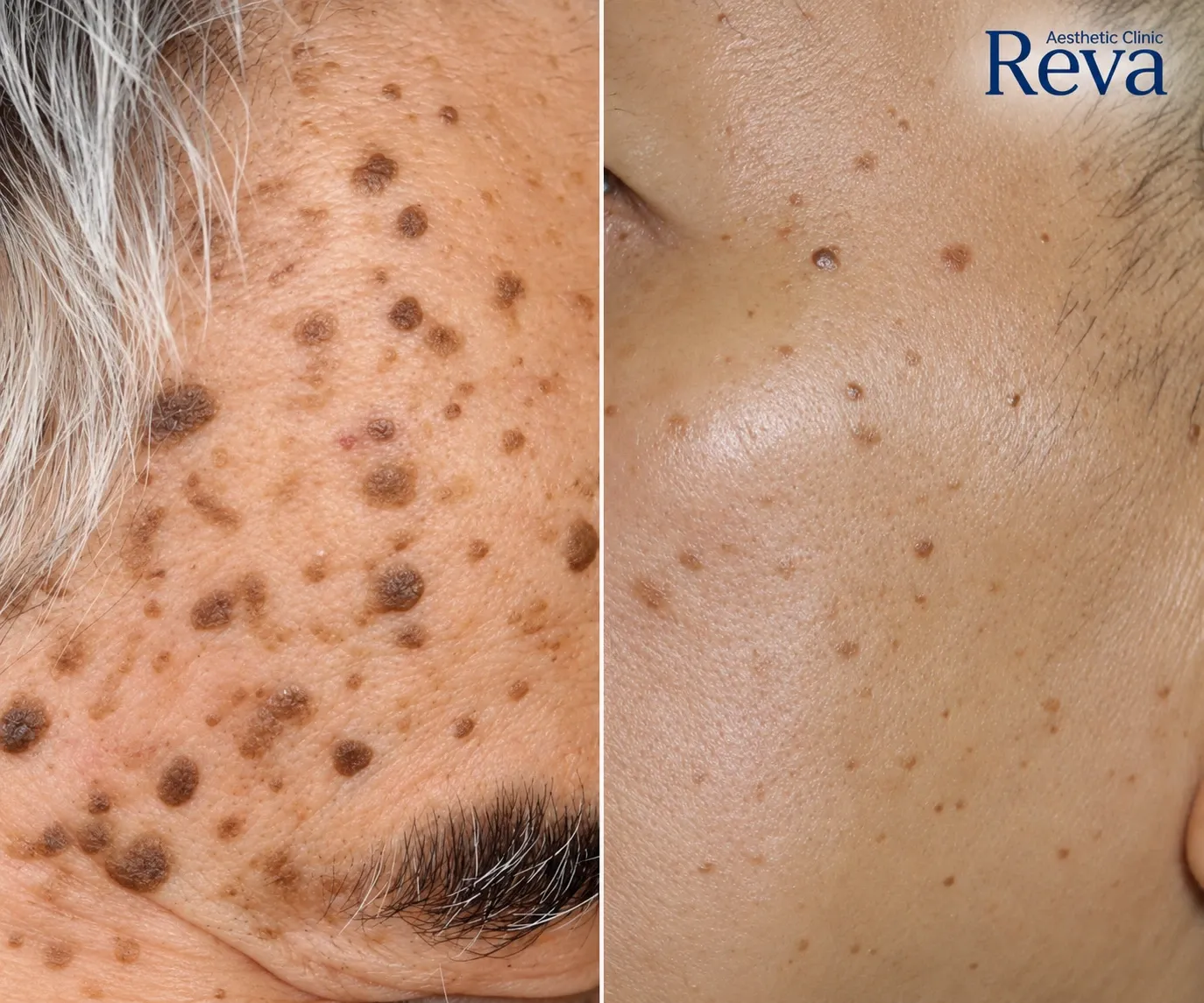
If a brown spot is not only darker in color but also becomes raised, thicker, or rougher, it may be a seborrheic keratosis.
Seborrheic keratoses become more common with age and can range from light brown to very dark brown or almost black.
Treatment is different from treating freckles or melasma because the problem is not simply pigment within the skin. There is also a raised skin lesion.
6. Moles (Melanocytic Nevi)
Moles can look very different from one another.
Some are flat, some are raised, some are light brown, and others may be very dark.
Most moles are benign. However, before removing a mole, it is important to assess its appearance first, particularly if it is new or has changed over time.
Freckles vs Melasma vs Sun Spots: How Can You Tell the Difference?
One simple way to think about it is to ask whether you are looking at “spots” or “patches.”
Freckles are usually multiple small spots and are strongly associated with sun exposure.
Sun spots tend to be more clearly defined brown spots associated with cumulative sun exposure.
Melasma usually appears as larger patches rather than individual spots and often affects both sides of the face.
In real life, however, it is not always this straightforward.
The same person may have melasma + sun spots + seborrheic keratoses at the same time. This is why different areas of the face may require different treatment approaches.
Which Brown Spots Should Not Be Lasered Right Away?
This is an important point:
Dark spot ≠ automatically suitable for laser treatment.
If a spot is new, growing quickly, changing in shape or color, has several colors within the same lesion, bleeds, becomes ulcerated, or simply looks very different from your other spots, it should be assessed before cosmetic treatment.
The same applies to a mole that has noticeably changed from how it looked before.
The goal should not be to remove the color first and ask questions later.
Diagnosis first. Treatment second.
Which Laser Can Be Used for Brown Spots?
The answer depends on what the brown spot actually is.
Different lasers work in different ways, and different types of pigmentation do not respond to the same treatment.
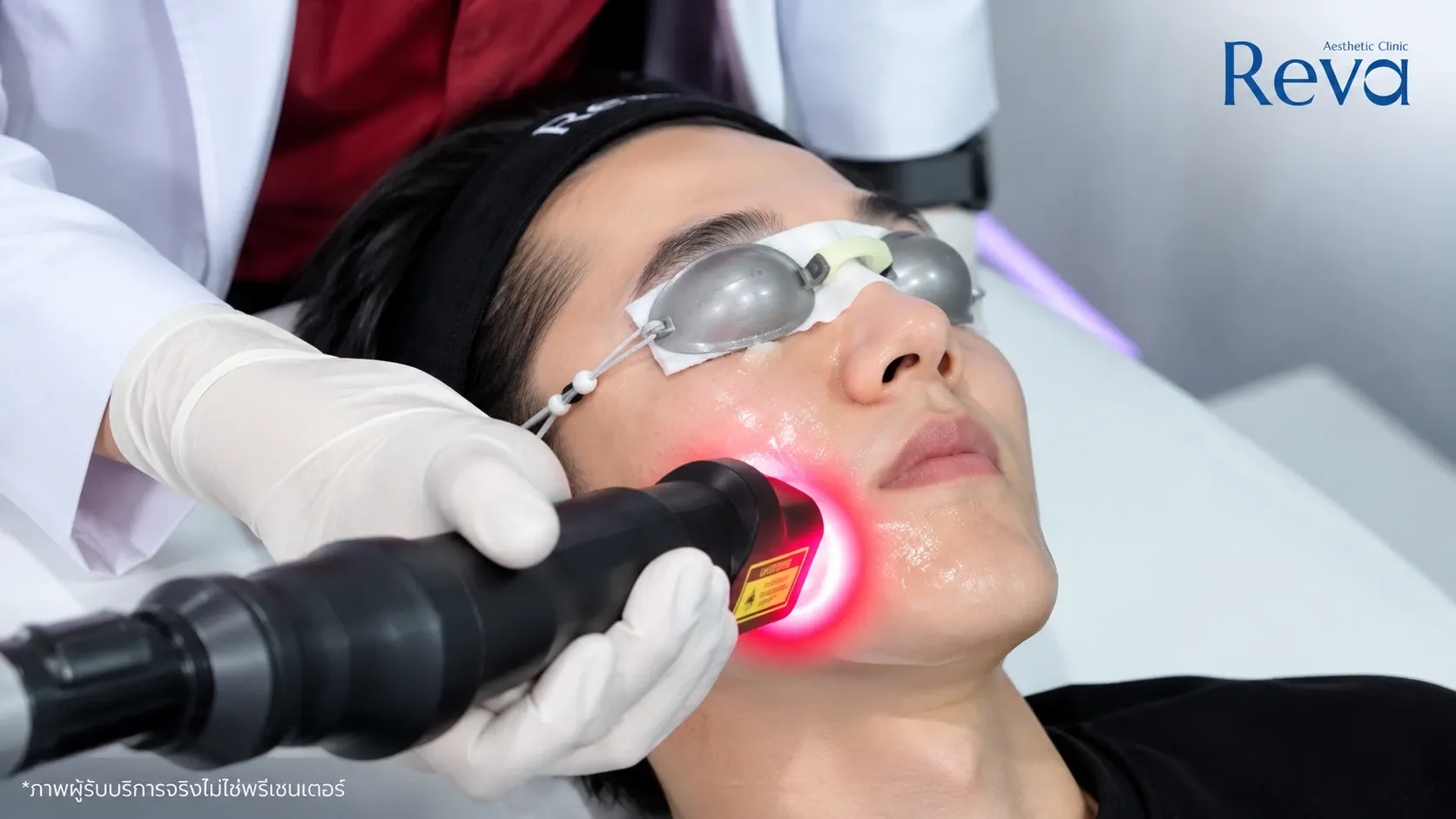
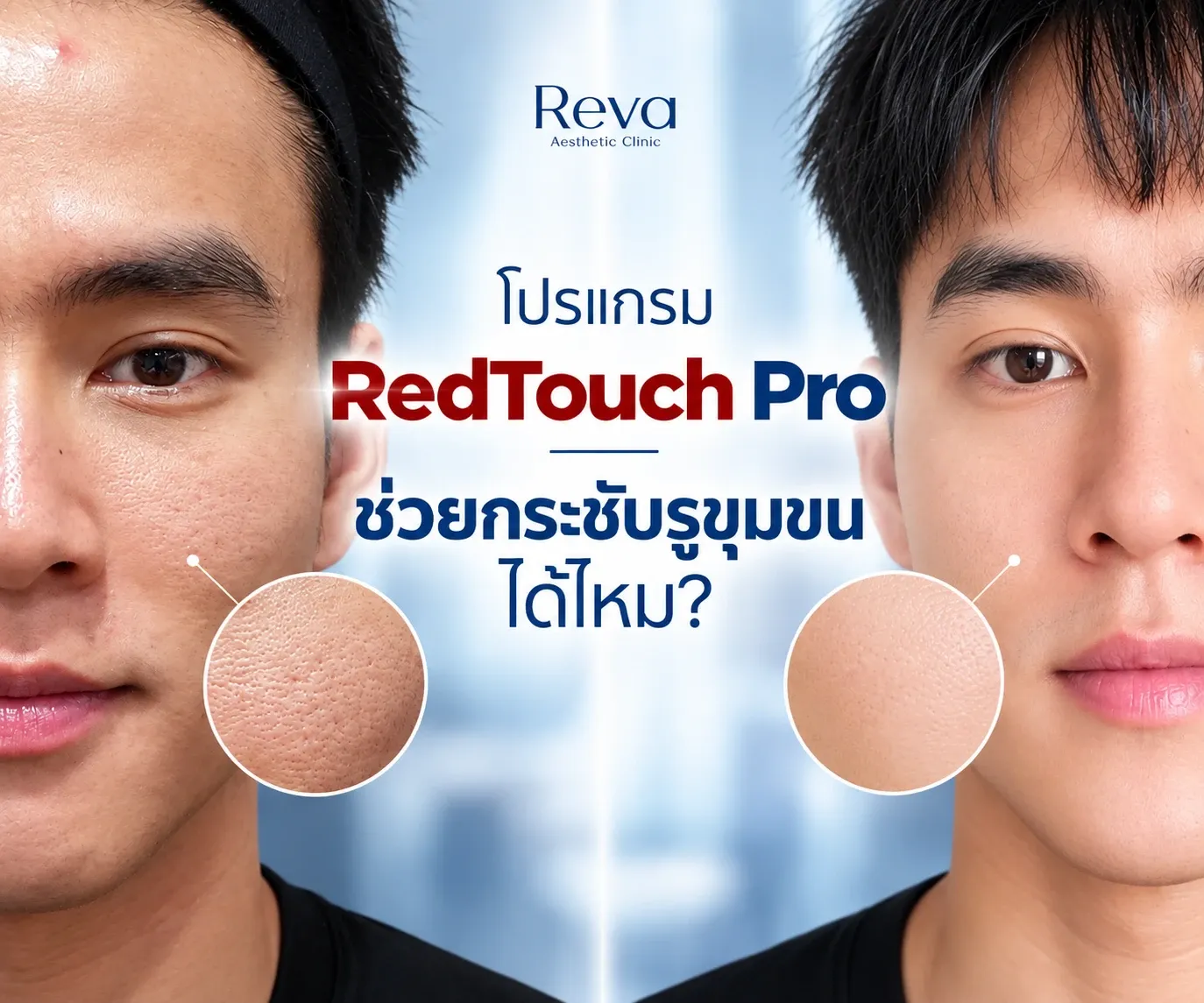
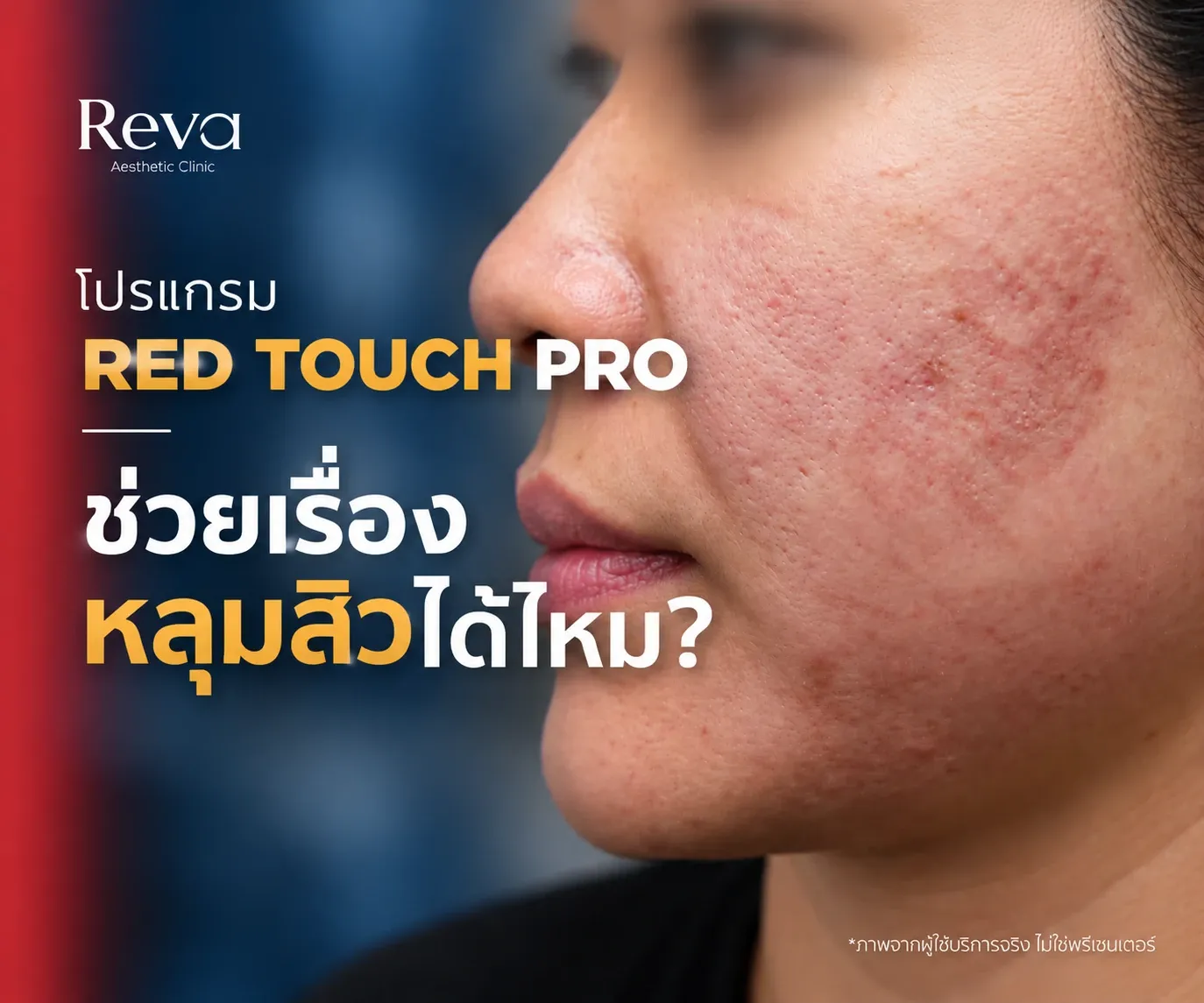
For certain concerns such as freckles, selected types of pigmentation, uneven skin tone, or pigmentation combined with skin-quality concerns, a doctor may consider Program RedTouch Pro.
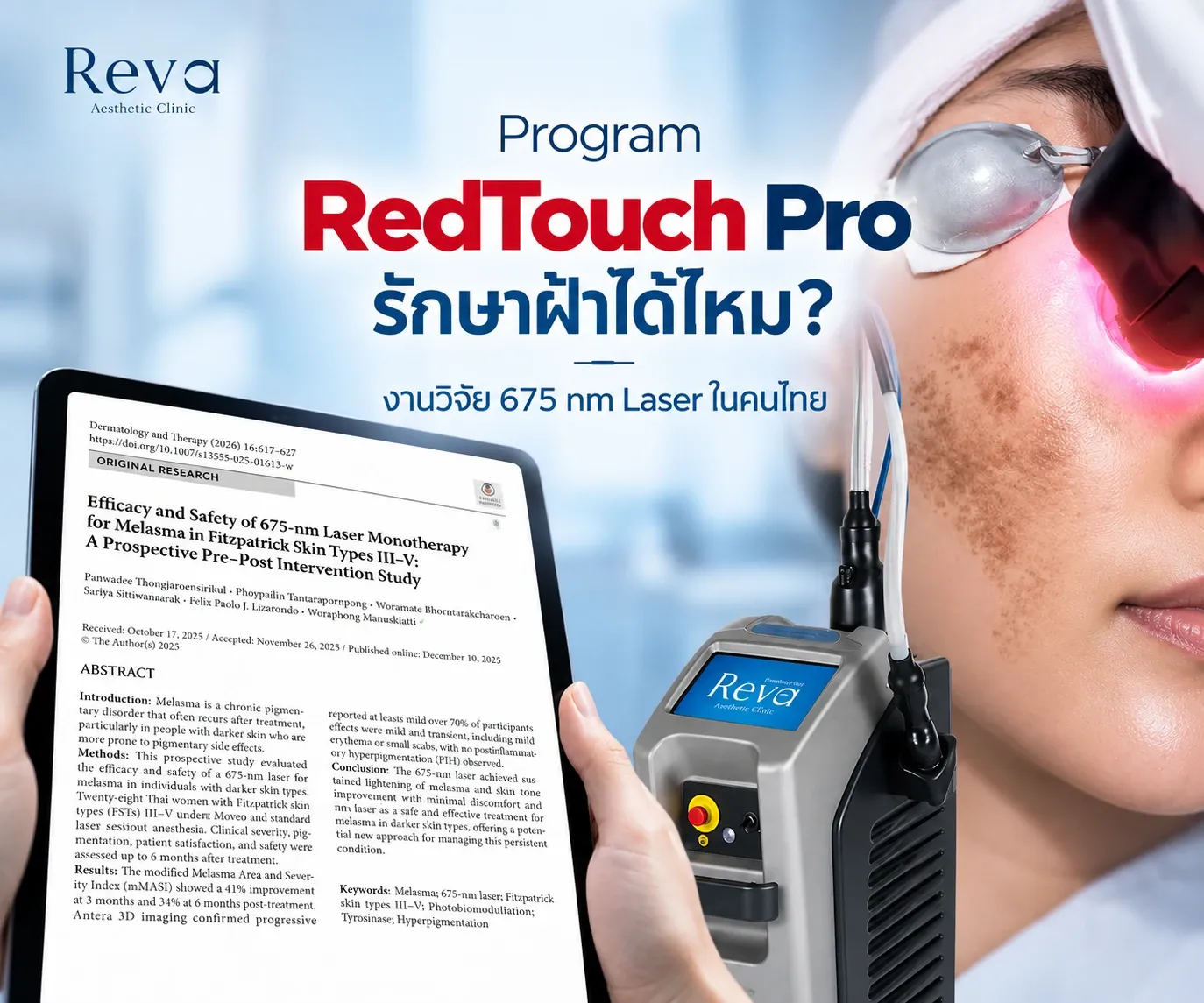
Program RedTouch Pro uses a 675 nm laser and can be incorporated into a treatment plan for selected pigmentation concerns while also addressing overall skin quality.
However, this does not mean:
Brown spot = Program RedTouch Pro
If the pigmentation is melasma, Hori Nevus, a mole, or another type of skin lesion, a different treatment approach may be more appropriate.
If the problem is not simply color but a lesion that is raised above the skin, the treatment approach is different from treating freckles or melasma.
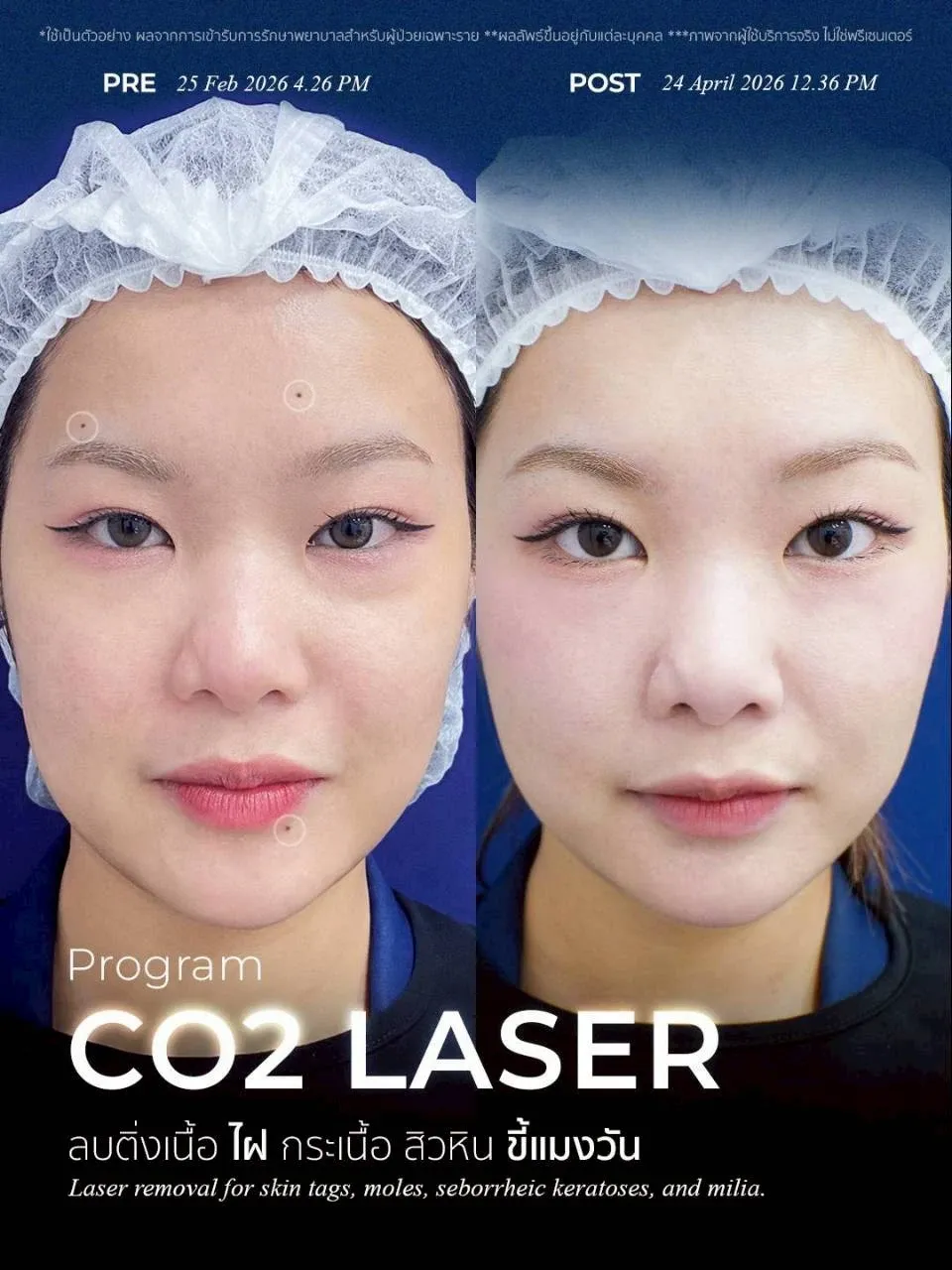
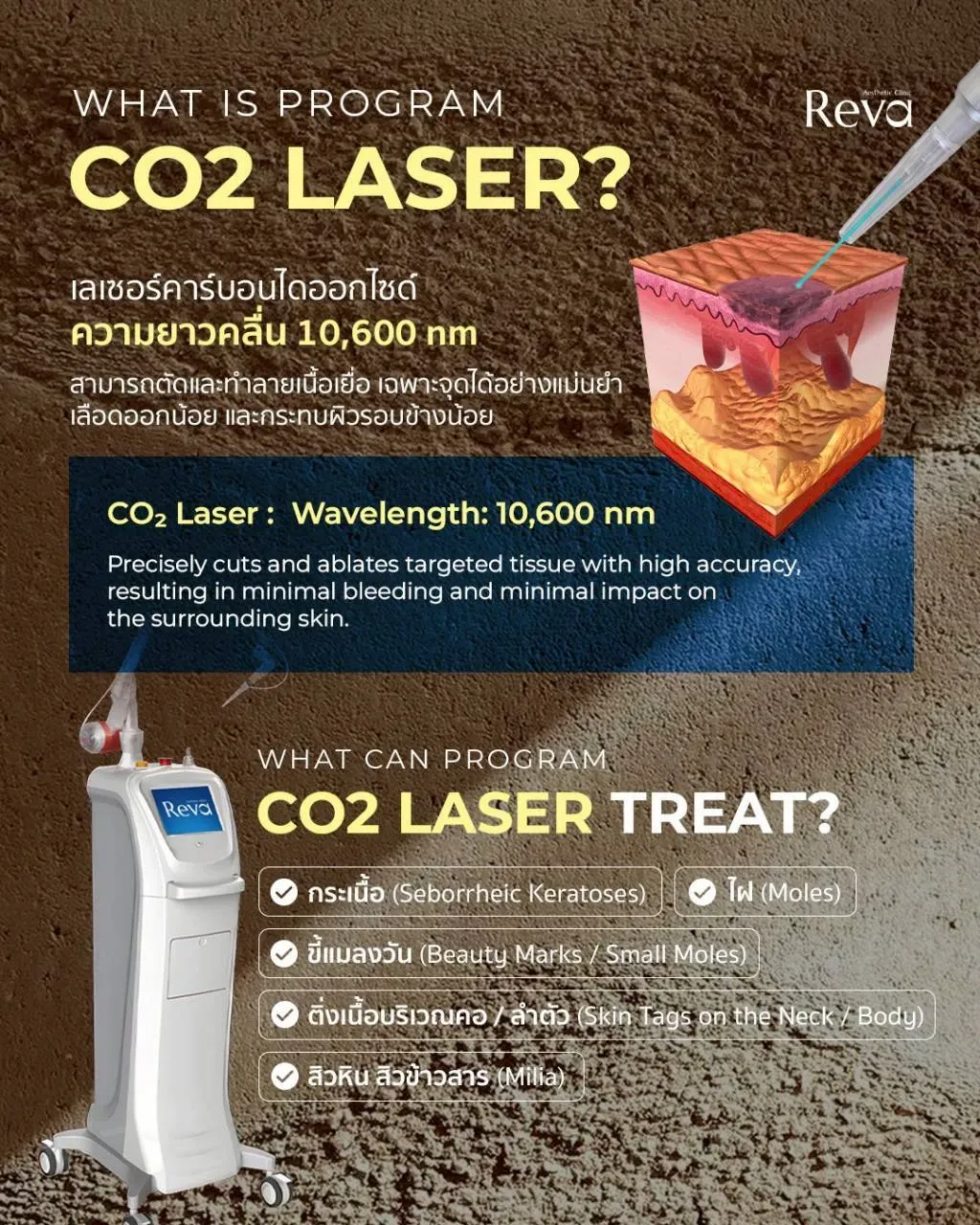
After the doctor has assessed the lesion and confirmed that it is appropriate for cosmetic removal, Program CO2 Laser may be considered in selected cases.
Program CO2 Laser uses a 10,600 nm CO2 laser to precisely vaporize or remove targeted tissue and may be suitable for certain raised skin lesions.
So if the question is:
“Can this brown spot be removed with CO2 Laser?”
The answer does not depend simply on whether the spot is brown.
The more important questions are:
What is the lesion, and is CO2 Laser an appropriate way to remove it?
Why Might One Person Need More Than One Treatment?
Because one face can have several different skin concerns at the same time.
For example, someone may have melasma across the cheeks, several sun spots, and a few raised seborrheic keratoses.
Using one machine to treat everything may therefore not be the best approach.
One area may require melasma management. Selected pigmentation and skin-quality concerns may be considered for Program RedTouch Pro, while certain raised lesions may be considered for Program CO2 Laser after assessment.
So the goal is not to find:
“Which laser is the best?”
A more useful question is:
“What is this spot, and which treatment is appropriate for it?”
Summary: Not Every Brown Spot on the Face Is a Freckle
If you notice brown spots on your face, do not automatically assume that they are freckles or melasma.
Spots that look similar can have different causes and may require very different treatments.
Start by looking at a few simple features:
Is it a spot or a patch? What color is it? Is it flat or raised? Where is it located? How long has it been there? Has it changed?
For selected pigmentation concerns, Program RedTouch Pro may be considered as part of the treatment plan.
For certain raised lesions such as seborrheic keratoses, moles, or skin tags, Program CO2 Laser may be considered after appropriate assessment.
But if a spot looks unusual or has changed over time, the first step should not be choosing a laser.
It should be finding out what the spot actually is.