Neck Lines and Loose Neck Skin: Can Program RedTouch Pro Help?
When it comes to skin rejuvenation, most people tend to focus on the face. However, the neck is often one of the first areas where changes in skin quality become noticeable.
Fine horizontal lines may become more visible, the skin may feel thinner or less firm, and its overall texture may no longer look as smooth as it once did.
These changes can be related to several factors, including changes in collagen and elastic fibers with age, as well as the constant movement of the neck throughout the day.
When the main concern is fine lines, declining skin quality, or early loss of skin firmness, treatments that stimulate collagen remodeling may be considered. One technology with published histological evidence specifically involving neck skin is the 675 nm laser used in Program RedTouch Pro.
How Can Program RedTouch Pro Help With Neck Lines?
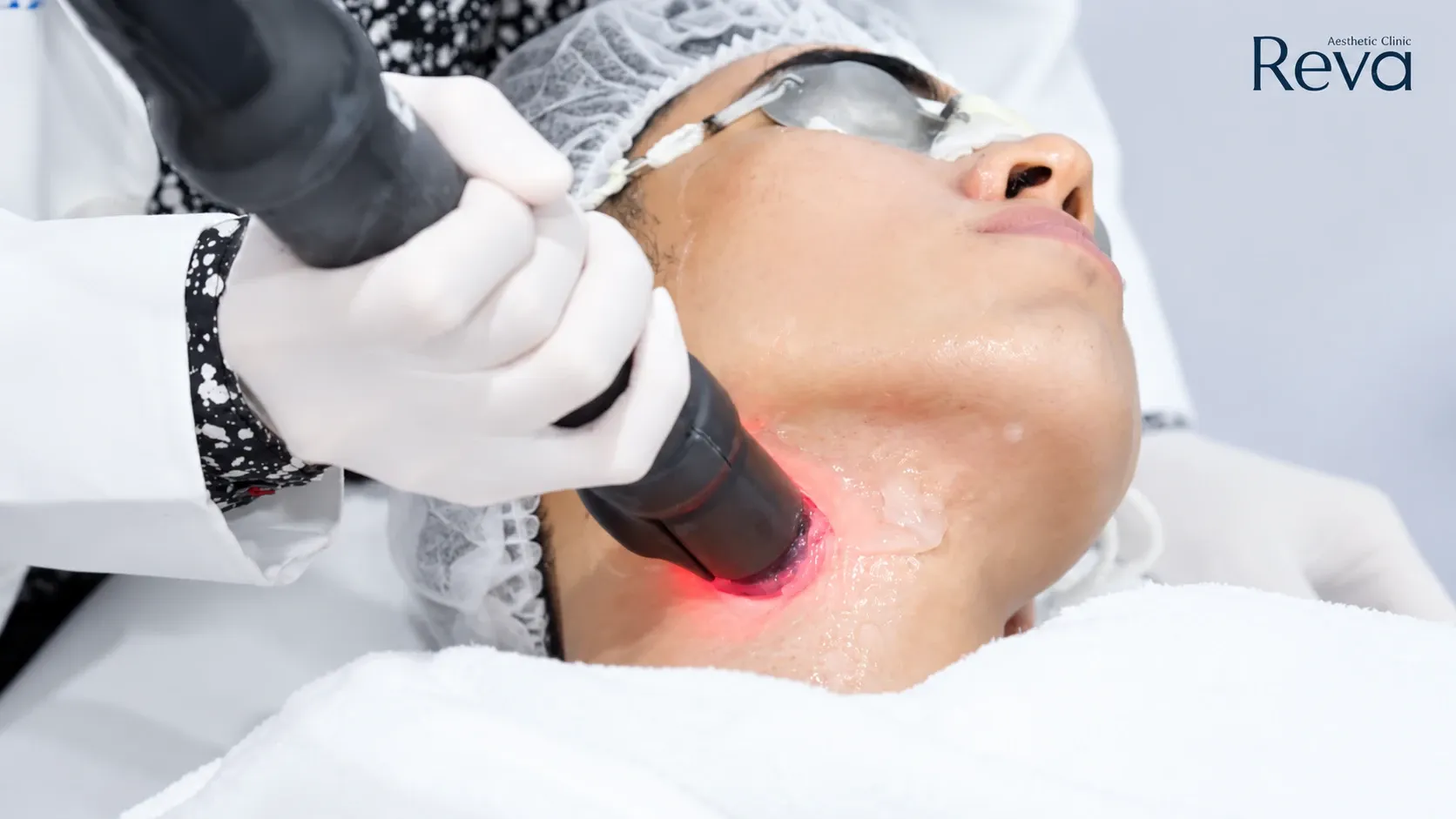
Program RedTouch Pro uses a 675 nm laser designed to support collagen remodeling within the skin.
Rather than injecting a product or adding volume, the laser creates controlled microthermal zones within the skin, triggering a tissue response associated with collagen remodeling.
For this reason, Program RedTouch Pro is more relevant to concerns involving skin quality, fine lines, texture, and collagen-related changes than to significant volume loss or more advanced tissue laxity.
You can learn more about the technology on our Program RedTouch Pro at Reva Clinic page.
Has the 675 nm Laser Actually Been Studied on the Neck?
Yes. One of the interesting pieces of evidence for this technology comes from a histological study that examined neck skin directly.
The study involved a 42-year-old man with signs of skin aging who received 675 nm laser treatment on the neck. Forty-five days later, researchers collected skin samples from the treated area and compared them with adjacent untreated skin.
Histological examination demonstrated changes in collagen fibers following treatment, providing evidence supporting a dermal remodeling response to the 675 nm laser.
However, this was a single-patient histological study. It is useful for understanding what may happen within the tissue after treatment, but it should not be interpreted as evidence that every patient will achieve the same degree of clinical improvement.
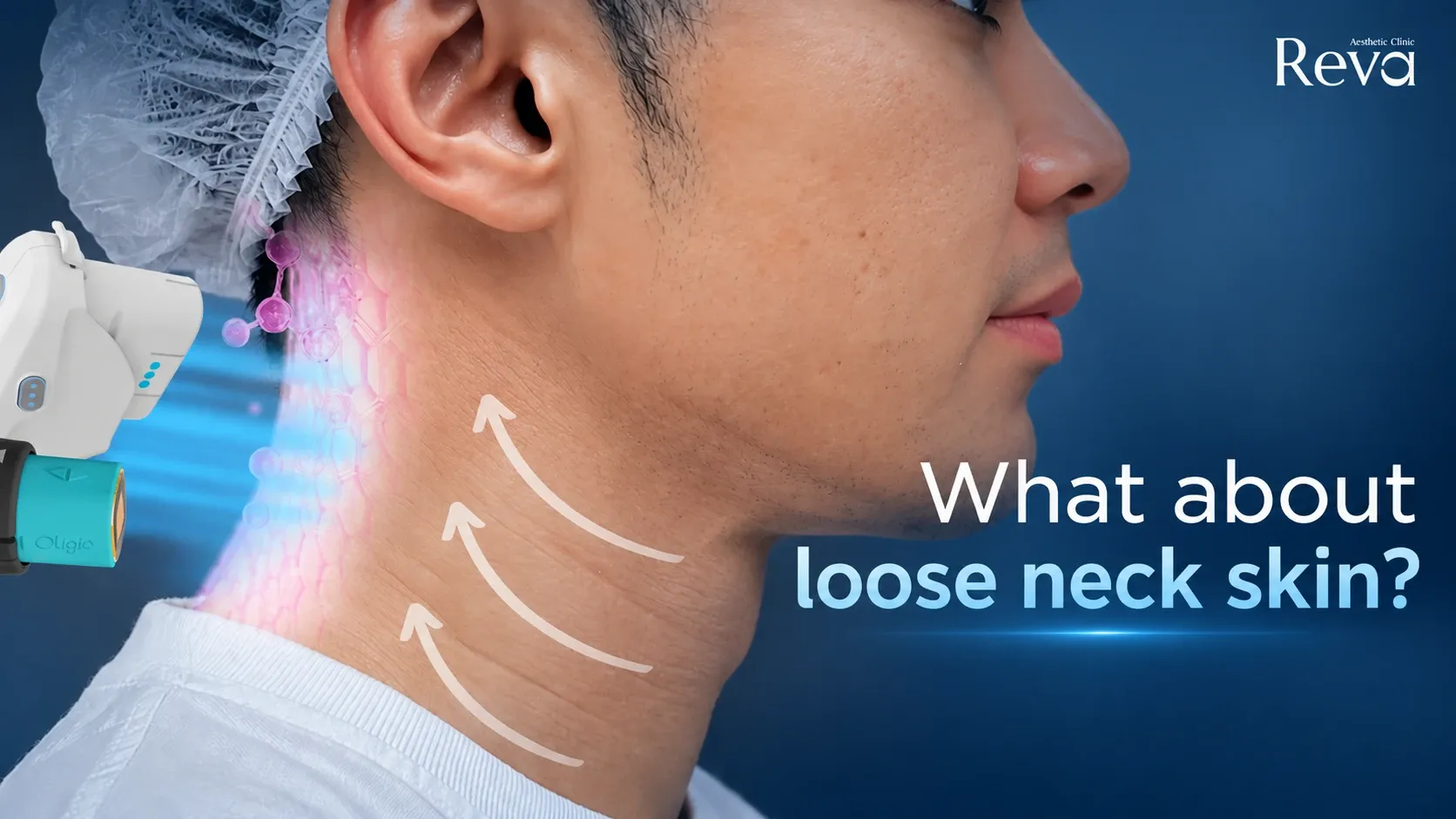
What About Loose or Less Firm Neck Skin?
This is where it is important to distinguish skin quality from tissue laxity.
If the neck is beginning to show fine lines, thinner-looking skin, reduced firmness, or changes in elasticity, Program RedTouch Pro may be considered because the treatment is focused on collagen remodeling and skin quality.
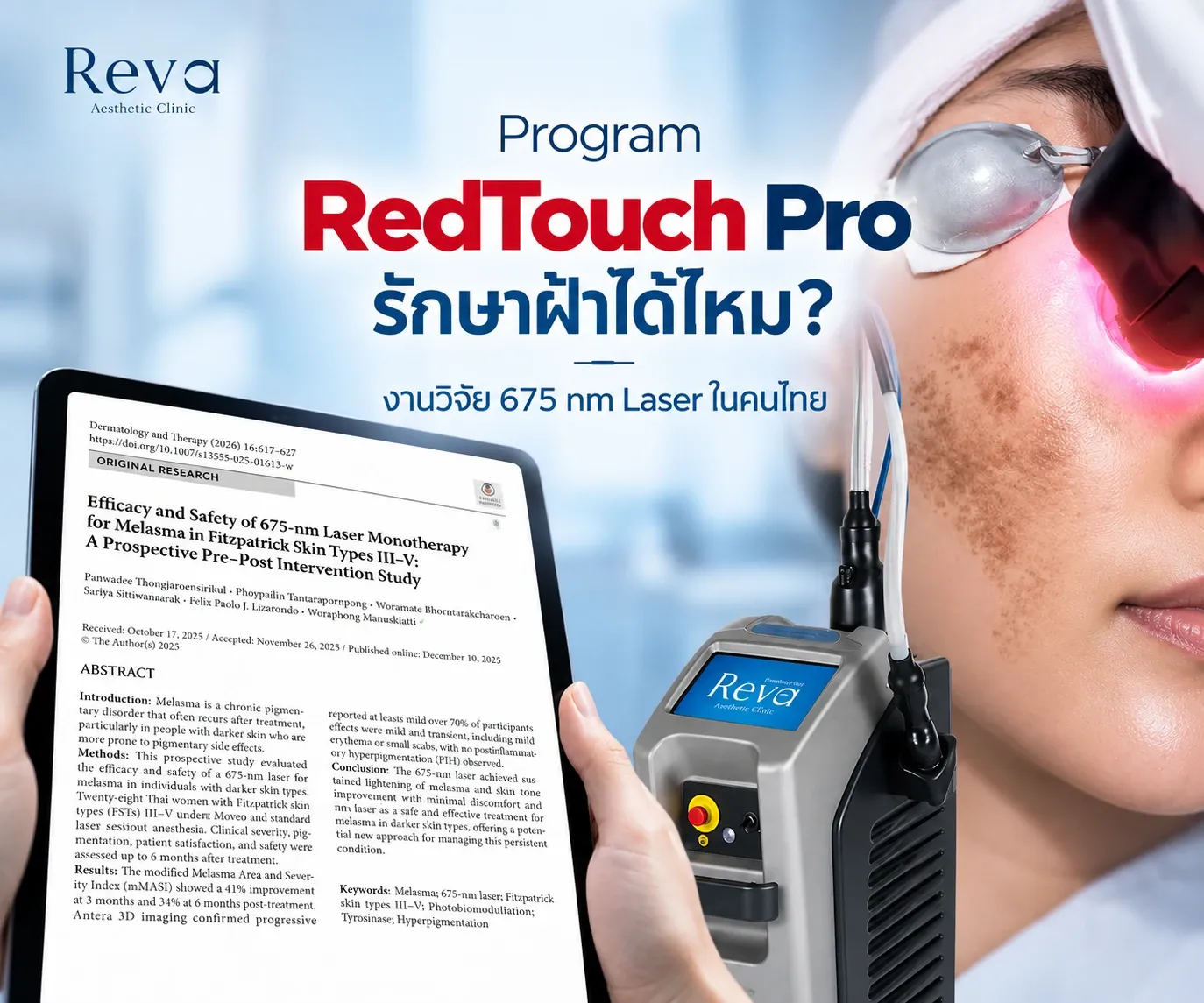
Additional evidence from an Asian population published in 2026 found significant improvements in measures of skin elasticity following three monthly 675 nm laser treatments. Changes were detectable from one month after the first treatment and continued during follow-up.
Importantly, this study evaluated facial skin rather than the neck. It supports the broader biological and clinical rationale for elasticity improvement with the 675 nm laser, but the results should not be presented as direct evidence of the same degree of improvement on the neck.
Neck Lines and Neck Laxity Are Not Always the Same Problem
A visible line across the neck does not necessarily mean that the entire neck is loose.
If the main concern is fine lines, thinner skin, reduced skin quality, or early collagen-related changes, a treatment focused on collagen remodeling may be appropriate.
However, if there is more significant skin or deeper tissue laxity, improving the superficial quality of the skin may not fully address the problem. Treatments targeting deeper tissue layers, such as ultrasound-based technologies or other energy-based devices, may need to be considered.
There is also retrospective evidence comparing 675 nm laser treatment, microfocused ultrasound, and a combination of the two for facial aging. The combination group showed greater improvement in wrinkle and laxity assessments than either modality alone. However, this evidence relates to the face rather than the neck, and it does not mean that combination treatment is necessary for every patient.
The treatment therefore depends on what is actually causing the neck to look aged: skin quality, collagen changes, repetitive movement, deeper laxity, or a combination of these factors.
Program RedTouch Pro for the Neck at Reva Clinic
Treating the neck should not simply mean extending the same facial laser protocol downward.
Neck skin has different anatomical characteristics from facial skin, and the pattern of fine lines and laxity can also differ from one patient to another.
At Reva Clinic, Program RedTouch Pro is performed using MOVE, STAMP, and SPOT techniques, with the treatment design adjusted according to the patient's skin and the areas being treated.
For the neck, the physician first assesses whether the main concern is fine lines, overall skin quality, or more significant tissue laxity. This helps determine whether Program RedTouch Pro is appropriate on its own or whether another treatment should also be considered.
You can read more about our treatment approach in Program RedTouch Pro 3 Modes at Reva Clinic.
So, Can Program RedTouch Pro Improve Neck Lines and Skin Firmness?
Program RedTouch Pro may be considered for fine neck lines, declining skin quality, thinner-looking skin, and early changes in skin firmness through the collagen-remodeling effects of the 675 nm laser.
One particularly relevant finding is that histological research on the 675 nm laser has examined neck skin directly and demonstrated collagen-related tissue changes following treatment. However, that evidence comes from a single-patient histological study, so it should be interpreted accordingly.
For more pronounced neck laxity, Program RedTouch Pro may not address every component of the problem on its own. The neck should first be assessed to determine whether the concern lies primarily within the skin or involves deeper tissue laxity.
Treating an aging neck is therefore not simply about treating the lines. It starts with identifying which layer is actually changing and selecting a treatment that addresses that layer.