What Is a “Collagen Injection”? Understanding Injectable Collagen and Atelocollagen | Reva Clinic
“Collagen injections” have become increasingly discussed in aesthetic medicine, especially for concerns such as fine lines, thin skin, crepey under-eye skin, and lines that remain visible even after botulinum toxin treatment.
But the name itself can be confusing.
Does injecting collagen mean placing ready-made collagen fibers directly into the skin?
Where does injectable collagen come from?
And how is it different from collagen biostimulators such as PLLA or PDLLA?
This article explains Injectable Collagen and Atelocollagen in simple terms.
Key Takeaways
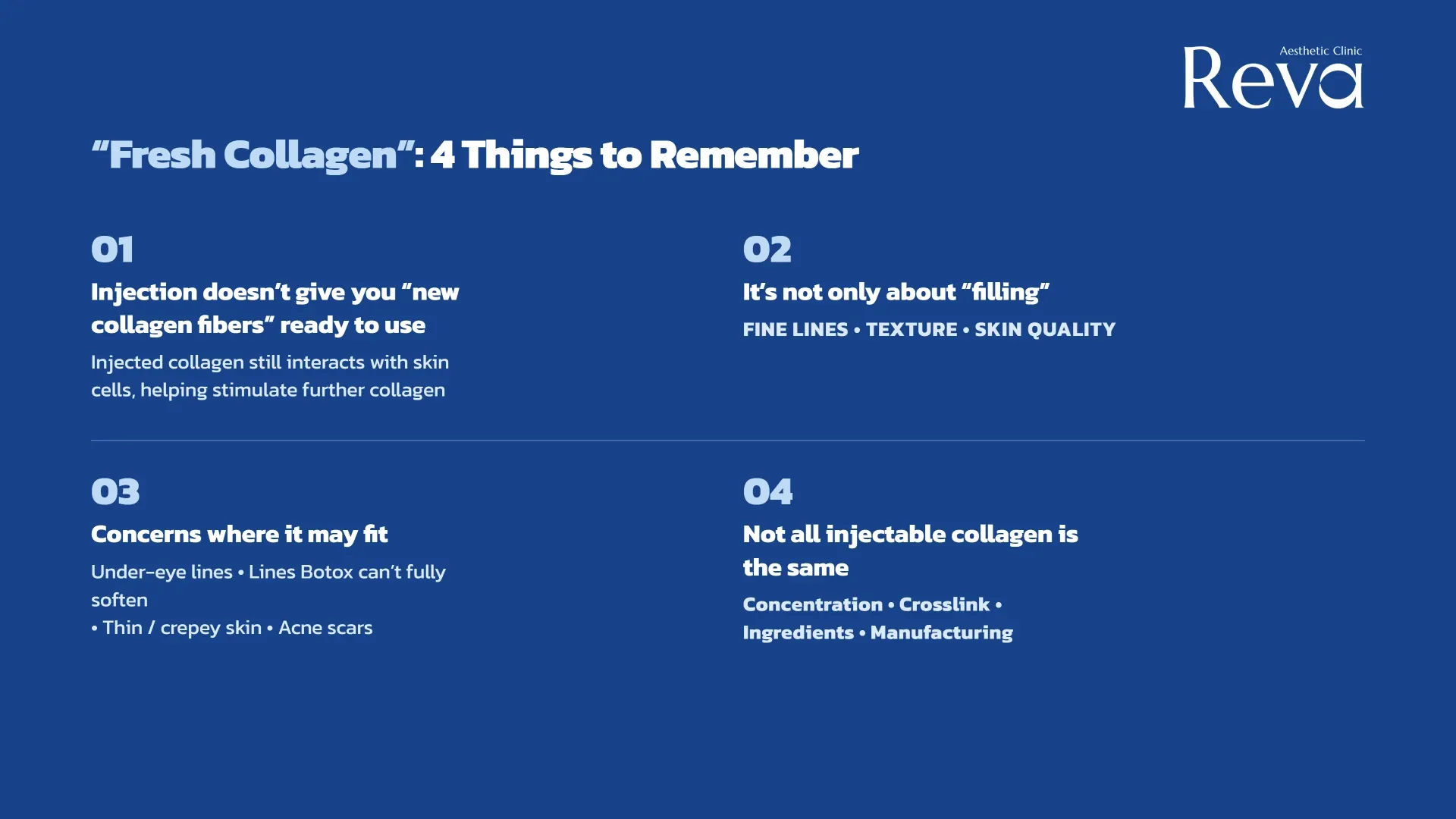
“Collagen injection” is a general term commonly used to describe Injectable Collagen. It does not mean that fresh, untreated collagen is injected directly into the skin.
Atelocollagen is collagen that has undergone processing to reduce its telopeptide regions, which can reduce its antigenicity and immunogenicity. This does not mean the risk of an immune or allergic reaction is zero.
With aging, we do not simply have “less collagen.” The structure and organization of the collagen surrounding fibroblasts also change.
Injectable Collagen products are not necessarily identical, even when they are all described as Atelocollagen.
Choosing between Atelocollagen and other collagen-stimulating treatments should depend on the skin concern, treatment area, formulation, and individual treatment goal.
What Happens to Collagen as Our Skin Ages?
When we think about skin aging, the common explanation is:
Aging → Less collagen → Wrinkles and sagging
That is partly true, but there is more to the story.
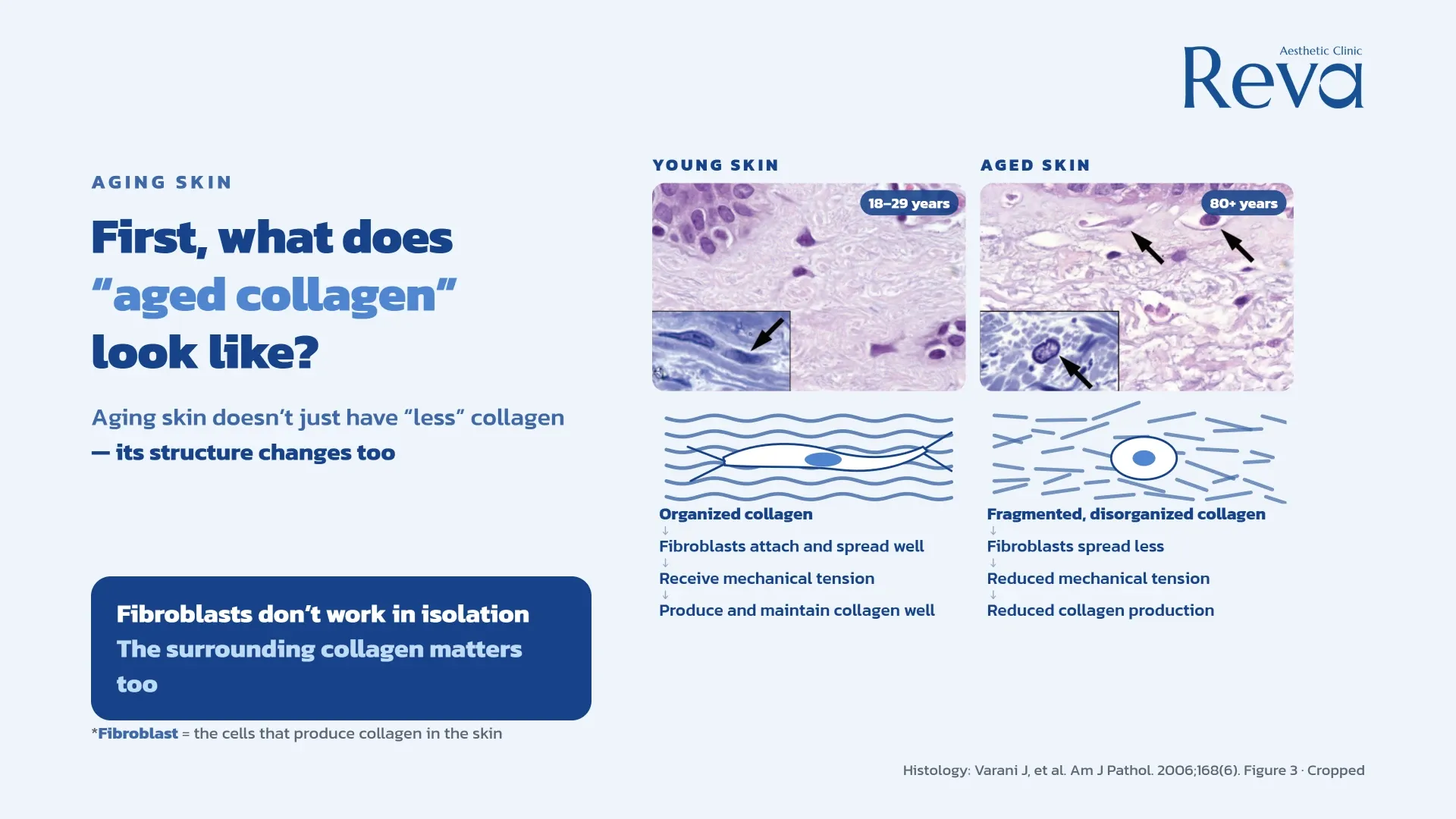
As skin ages, collagen becomes increasingly fragmented and structurally altered. This also changes the environment surrounding fibroblasts, the cells responsible for producing and maintaining collagen and other components of the skin's extracellular matrix.
What is a fibroblast?
In simple terms:
Fibroblasts are important cells responsible for producing and maintaining collagen in the skin.
In younger skin, fibroblasts can attach to and spread across a relatively well-organized collagen matrix. This allows them to receive mechanical tension from their surrounding environment.
In aged skin, collagen fragmentation increases. Fibroblasts become less spread out, their contact with surrounding collagen decreases, and mechanical stimulation is reduced.
These changes are associated with decreased collagen production.
Research by Varani and colleagues comparing younger adults aged 18–29 with adults aged 80 years or older demonstrated reduced fibroblast–collagen interaction and reduced collagen synthesis in aged skin.
[IMAGE: Young Skin vs Aged Skin — Histology + Diagram]
What Is Atelocollagen?
“Collagen injection” is a general consumer-facing term used for Injectable Collagen.
One type used in aesthetic medicine is:
Atelocollagen
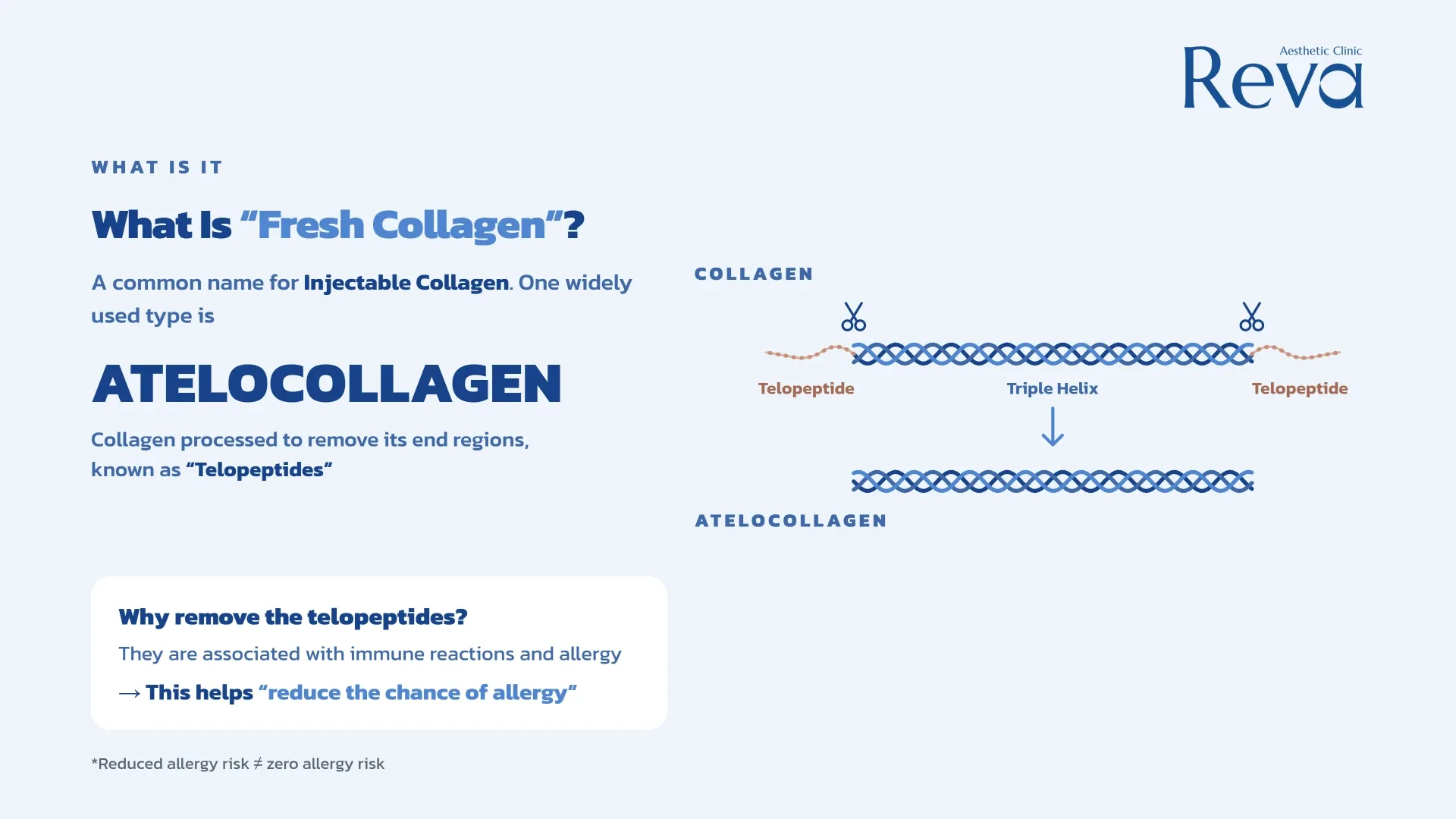
A collagen molecule contains a central triple-helical structure and terminal regions known as telopeptides.
Atelocollagen is collagen that has been processed to reduce these telopeptide regions.
Why remove the telopeptides?
Telopeptide regions are associated with the antigenicity and immunogenicity of animal-derived collagen.
Reducing these regions can therefore help reduce the potential for an immune response.
In simple terms:
Collagen → Telopeptide reduction → Atelocollagen
However:
Lower immunogenicity does not mean zero risk of an allergic or immune reaction.
The word “Atelocollagen” also does not tell us everything about a product. Different formulations may vary in concentration, crosslinking, additional ingredients, physical characteristics, and manufacturing process.
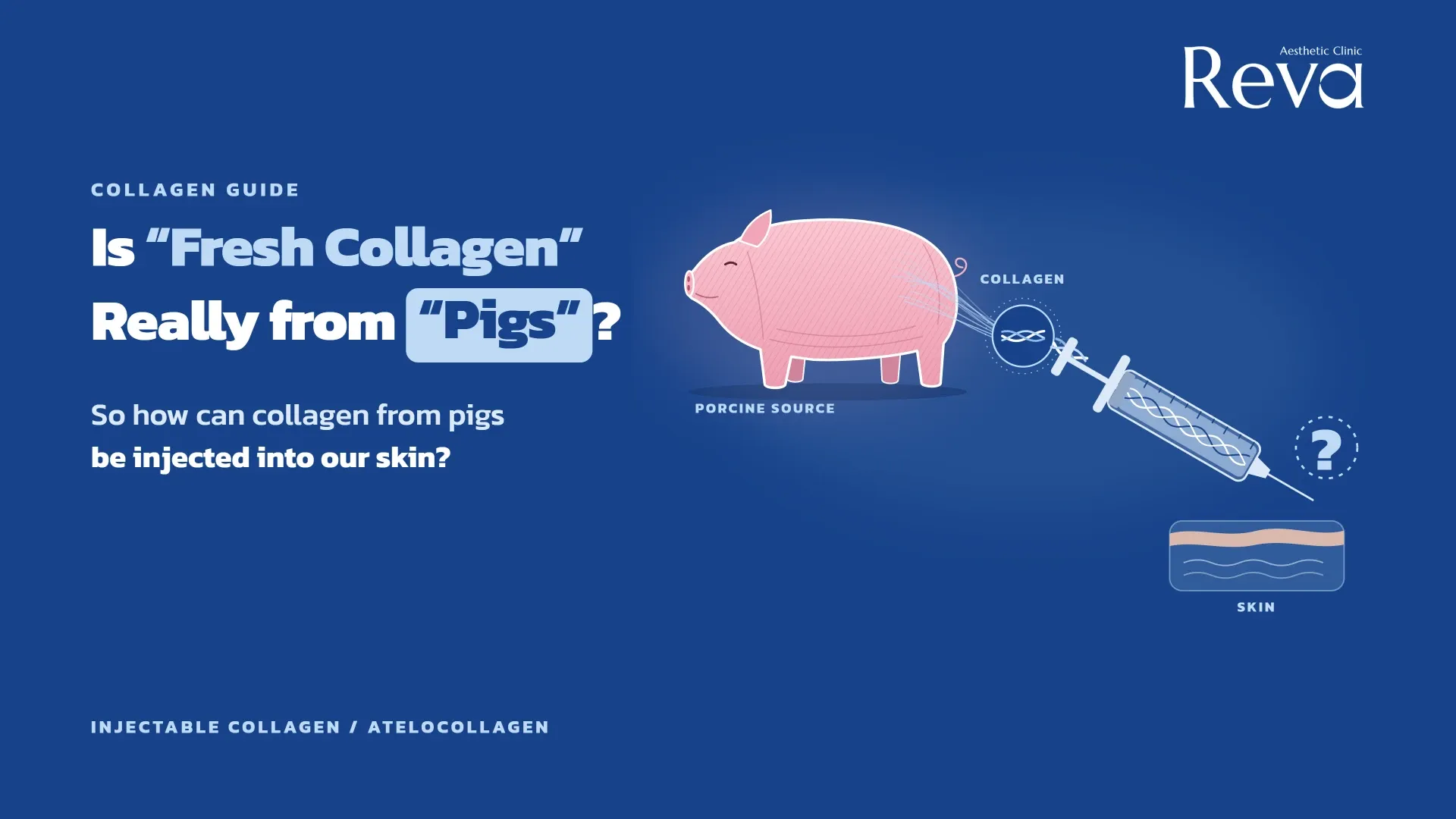
Does Injectable Collagen Really Come From Pigs?
Some Atelocollagen products used in aesthetic medicine are made from porcine-derived collagen.
However, this does not mean collagen is simply taken from a pig and injected directly into human skin.
The collagen undergoes processing and purification according to the manufacturing process and formulation of each product before it becomes an injectable medical material.
It is also important to remember that not all Injectable Collagen products are porcine-derived. Different products may use different collagen sources or manufacturing technologies.
This is why it is useful to know exactly what product is being injected, where its collagen comes from, and how it has been formulated.
What Happens After Collagen Is Injected Into the Skin?
This is probably one of the biggest misconceptions surrounding collagen injections.
Injecting collagen should not be thought of as:
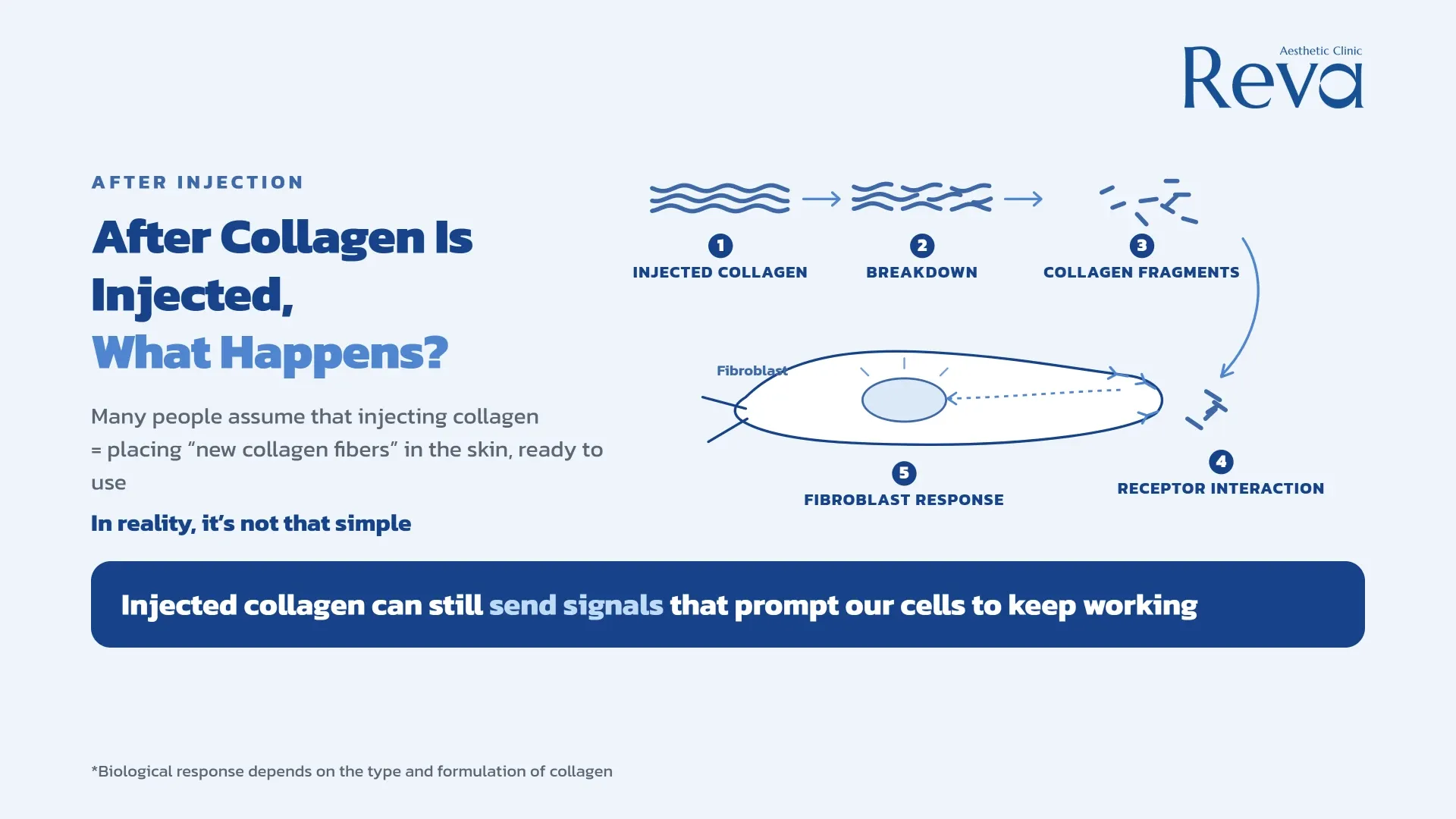
“Inject collagen fibers → new collagen fibers are immediately placed into the skin and ready to use.”
The biology is more complicated.
After injection, collagen material can undergo turnover and degradation. Collagen and collagen-derived fragments may also interact with cells and the surrounding extracellular matrix.
Therefore, Injectable Collagen can be viewed not only as a material placed into tissue, but also as a material capable of biological interaction with the surrounding tissue.
A simple way to visualize the concept is:
Injected Collagen
↓
Collagen degradation
↓
Collagen fragments
↓
Interaction with collagen-recognition receptors
↓
Fibroblast response
↓
Changes in collagen/ECM remodeling
However, the biological response depends on the specific collagen material and formulation being studied.
It would therefore be an oversimplification to assume that every Injectable Collagen product produces the same cellular response or the same degree of new collagen formation.
How Is Atelocollagen Different From a Collagen Biostimulator?
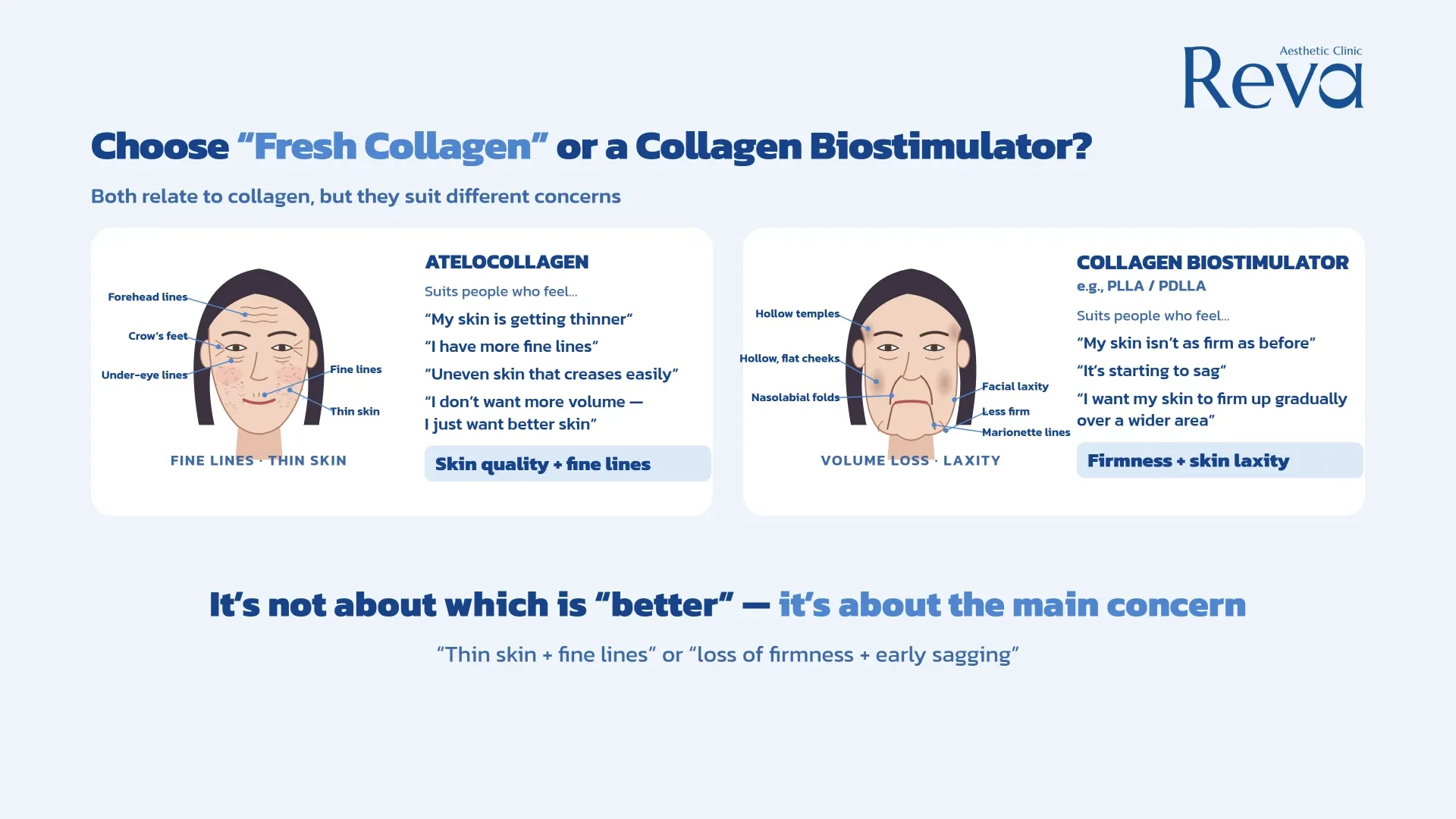
If both approaches are ultimately related to collagen, why would we choose one over the other?
The better question is not:
“Which one stimulates more collagen?”
Instead, we should ask:
“What is the main problem we are trying to treat?”
Atelocollagen
Atelocollagen may be considered when the treatment goal is more focused on:
Fine Lines • Texture • Skin Quality
For example:
Thin or crepey-looking skin
Multiple small fine lines
Uneven skin texture
Areas where improving skin quality is more important than adding significant volume
Collagen Biostimulators such as PLLA / PDLLA
These may be considered when the treatment goal involves broader tissue changes, such as:
This is only a simplified framework.
Treatment selection still depends on facial anatomy, skin quality, volume loss, degree of laxity, treatment area, and the characteristics of the individual product.
Who May Be Suitable for Atelocollagen?
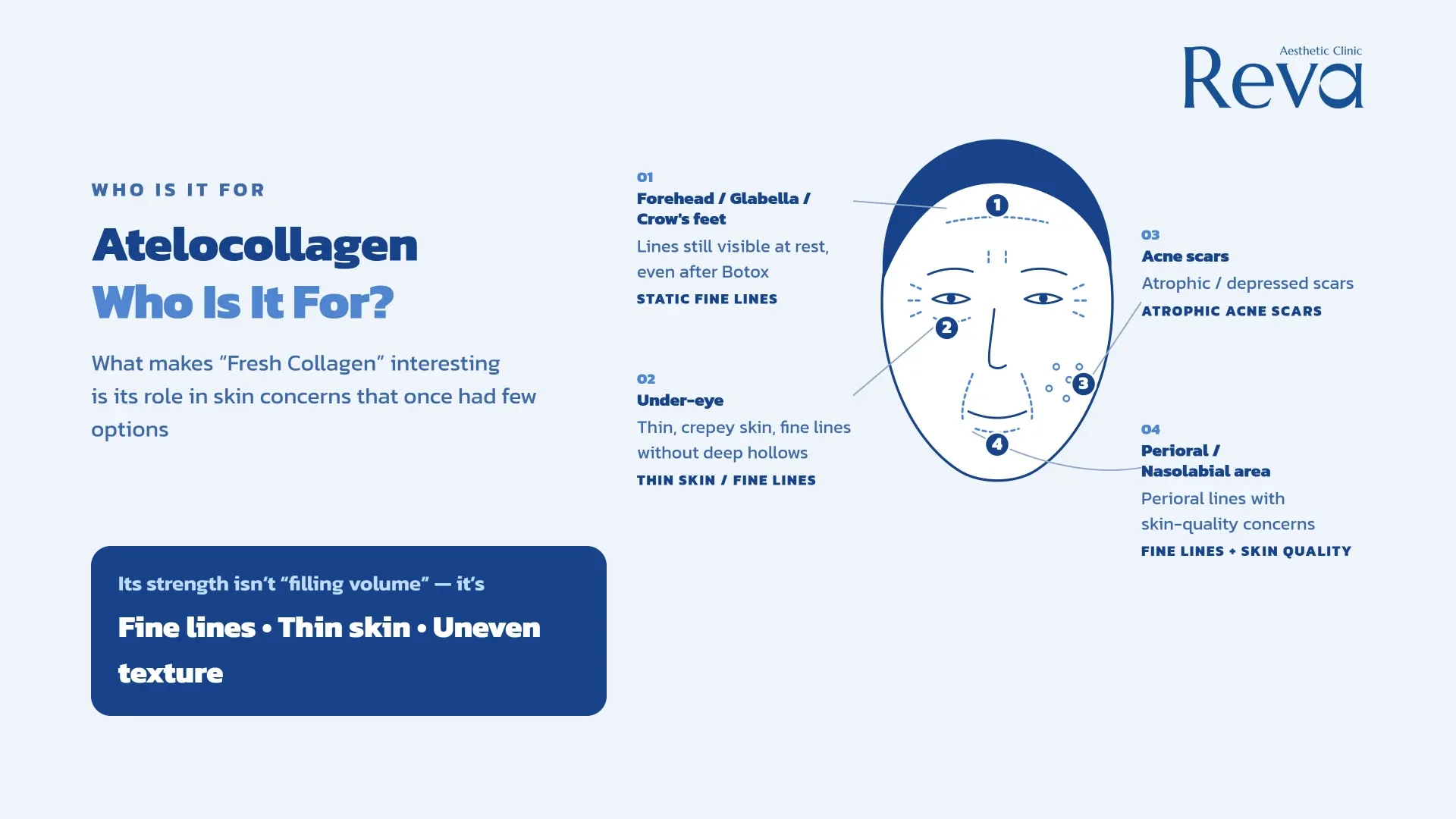
One reason Injectable Collagen is interesting is that some aesthetic concerns are not simply a matter of “filling a hollow.”
1. Fine Lines That Remain After Program Botox
Program Botox reduces muscle activity responsible for dynamic wrinkles.
However, some people still have lines that remain visible even when the face is at rest. These are often referred to as static fine lines.
Examples include fine lines on the:
Forehead
Glabella
Crow's-feet area
In these cases, simply increasing the amount of Program Botox may not address the skin-quality component of the line.
Injectable Collagen may therefore be considered as part of a treatment plan focusing on Fine Lines and Skin Quality.
2. Fine Lines and Thin Under-Eye Skin
Not every under-eye concern is caused by a deep tear trough or volume loss.
Some people mainly have:
Thin skin • Crepey texture • Fine lines
If significant volume loss is not the main problem, adding volume may not necessarily be the primary treatment goal.
Injectable Collagen may therefore be another option considered after assessing the anatomy and skin condition of the under-eye area.
3. Atrophic Acne Scars
Acne scars are complex and can involve several factors, including fibrotic tethering, tissue loss, and alterations in dermal collagen.
Injectable Collagen has been explored as one component in the management of certain atrophic acne scars.
However, this does not mean it replaces other treatments in every case.
Depending on the scar type, treatments such as scar release, energy-based devices, or combination approaches may still be required.
4. Fine Lines Around the Mouth or Folds With a Skin-Quality Component
Some facial lines and folds are not caused by volume loss alone.
Structural changes may occur together with:
Fine lines + Changes in skin quality
In these situations, Injectable Collagen may form one part of a broader treatment plan, rather than completely replacing Program Filler or other structural treatments.
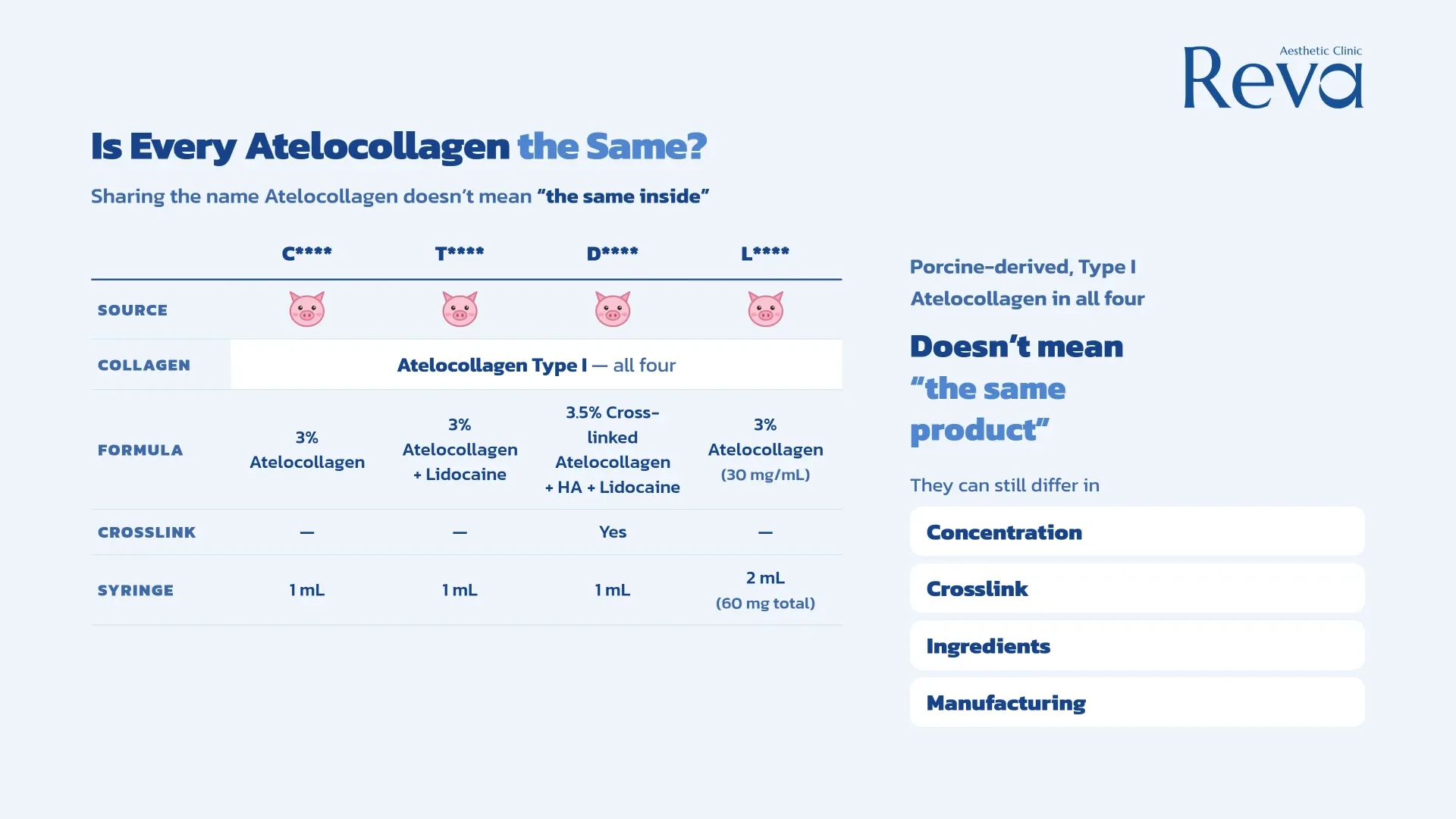
Are All Atelocollagen Products the Same?
No.
Two products may both contain Type I Atelocollagen, but that does not necessarily mean their properties are identical.
Important differences may include:
Concentration
How much collagen is present in the formulation.
Crosslinking
Whether additional links have been introduced between collagen structures.
Additional Ingredients
Some formulations may contain components such as HA, lidocaine, or different carriers.
Processing methods and the final physical architecture of the collagen material may also differ.
Therefore:
“They are both collagen” does not mean “they are the same product.”
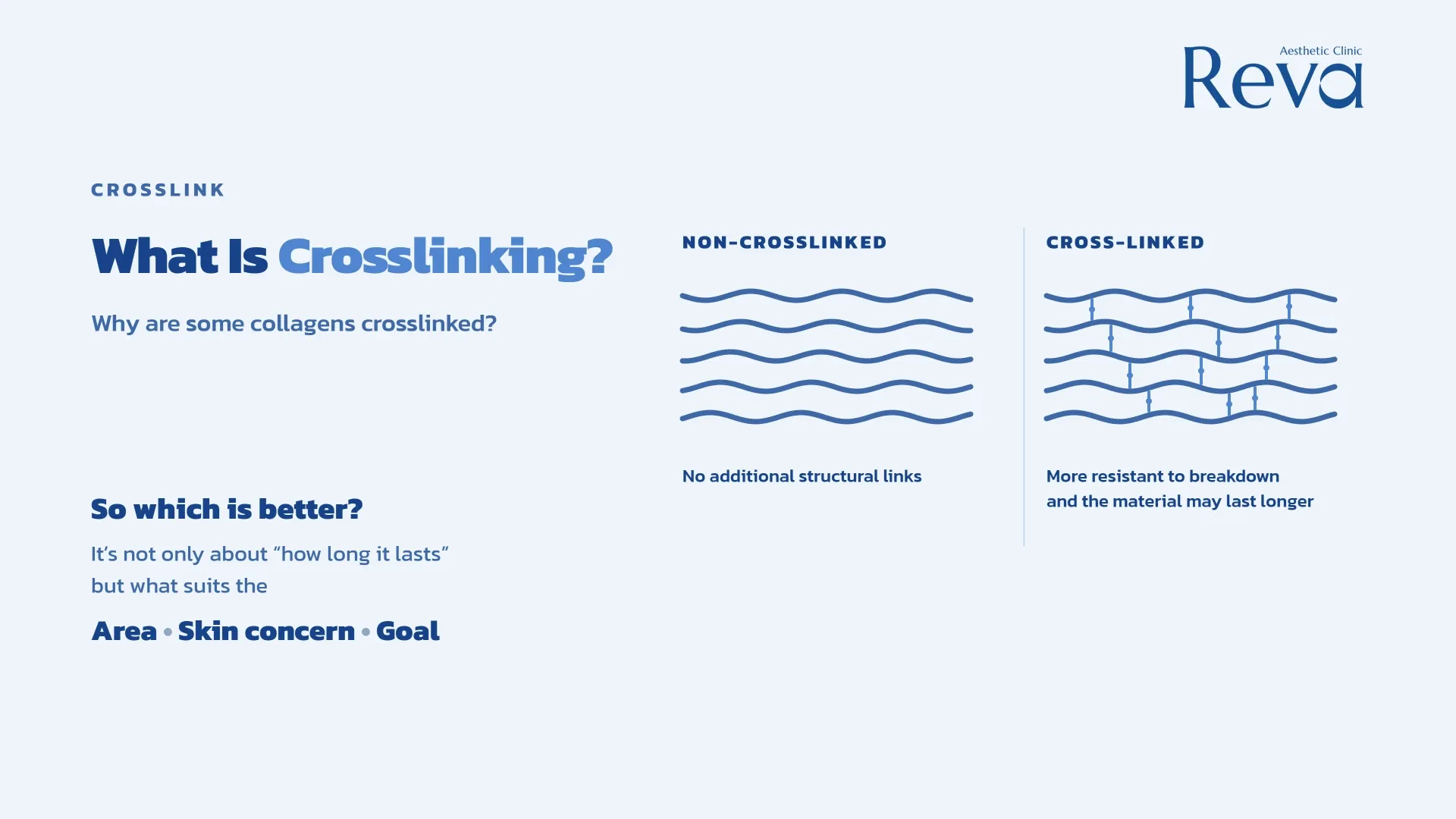
Cross-Linked vs Non-Crosslinked Collagen: What Is the Difference?
Crosslinking introduces additional connections within or between collagen structures.
This can change the physical properties of the material and increase its resistance to enzymatic degradation.
As a result, crosslinked collagen may persist longer than a comparable non-crosslinked material.
However, persistence is only one characteristic of an Injectable Collagen product.
Crosslinking alone cannot tell us:
Which anatomical area the product is best suited for
What injection plane should be used
How much biological response it will produce
Whether it is more appropriate for a particular patient
So instead of asking only:
“How long does it last?”
A more useful question is:
“Does this formulation have the right characteristics for the area and problem being treated?”
What Should You Know Before Getting an Injectable Collagen Treatment?
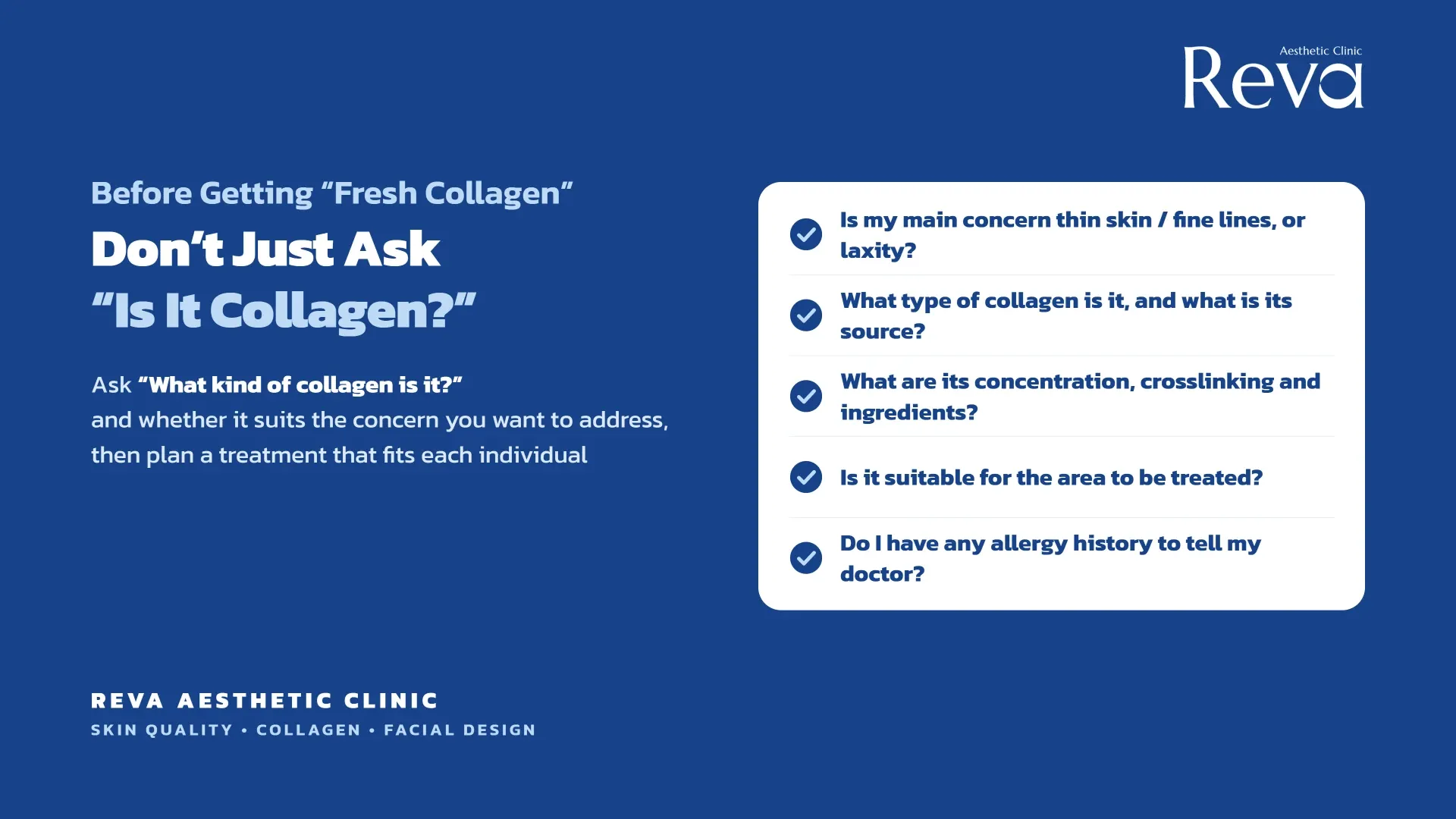
Before treatment, four simple questions can be useful:
What is the source of the collagen?
What type and formulation of collagen is being used?
Is it crosslinked, and does it contain other ingredients?
Is this particular product appropriate for the problem being treated?
The word “Collagen” on its own does not tell us everything about how a product behaves.
Is Injectable Collagen Worth It?
Injectable Collagen and Atelocollagen are emerging options for aesthetic concerns involving Fine Lines, Texture, and Skin Quality, particularly when the treatment goal is not simply to add volume.
The important point is that injecting collagen does not mean placing ready-made new collagen fibers into the skin that immediately become part of your own collagen network.
It is also important not to assume that every Injectable Collagen formulation works in exactly the same way.
Treatment should begin by identifying the actual cause of the concern:
Muscle movement? Skin quality? Volume loss? Laxity? Scar tissue?
The treatment can then be selected according to the underlying problem.
At Reva Clinic, our doctors assess facial structure, skin quality, and the underlying cause of lines or folds before designing an individualized treatment plan and selecting the appropriate Program.
Frequently Asked Questions
Is “fresh collagen” the same as Atelocollagen?
“Fresh collagen” or “collagen injection” is a consumer-facing term rather than the scientific name of one specific material. Atelocollagen is one form of processed collagen that may be used in injectable medical products.
Is Atelocollagen a filler?
It depends on the product and how the term “filler” is being used. Collagen injectables have historically been used as dermal fillers, and different Atelocollagen formulations may provide different degrees of mechanical or volumizing effects. It would therefore be inaccurate to say that every Atelocollagen product is completely non-volumizing.
Can Injectable Collagen replace Program Botox?
They address different components of wrinkles. Program Botox primarily reduces muscle activity responsible for dynamic wrinkles, while Injectable Collagen has different material and biological properties. In some patients, both may address different aspects of the same visible line.
Can Injectable Collagen replace Program Filler?
Not necessarily. If the main problem is significant volume loss or structural support, Program Filler may have a different role. Treatment should be selected according to the cause of the fold or hollow rather than the product category alone.
Is Atelocollagen suitable for the under-eye area?
It may be considered in selected patients, particularly when thin skin, crepey texture, or fine lines are more prominent than deep volume loss. The anatomy of the under-eye area and the characteristics of the specific product should be assessed before treatment.