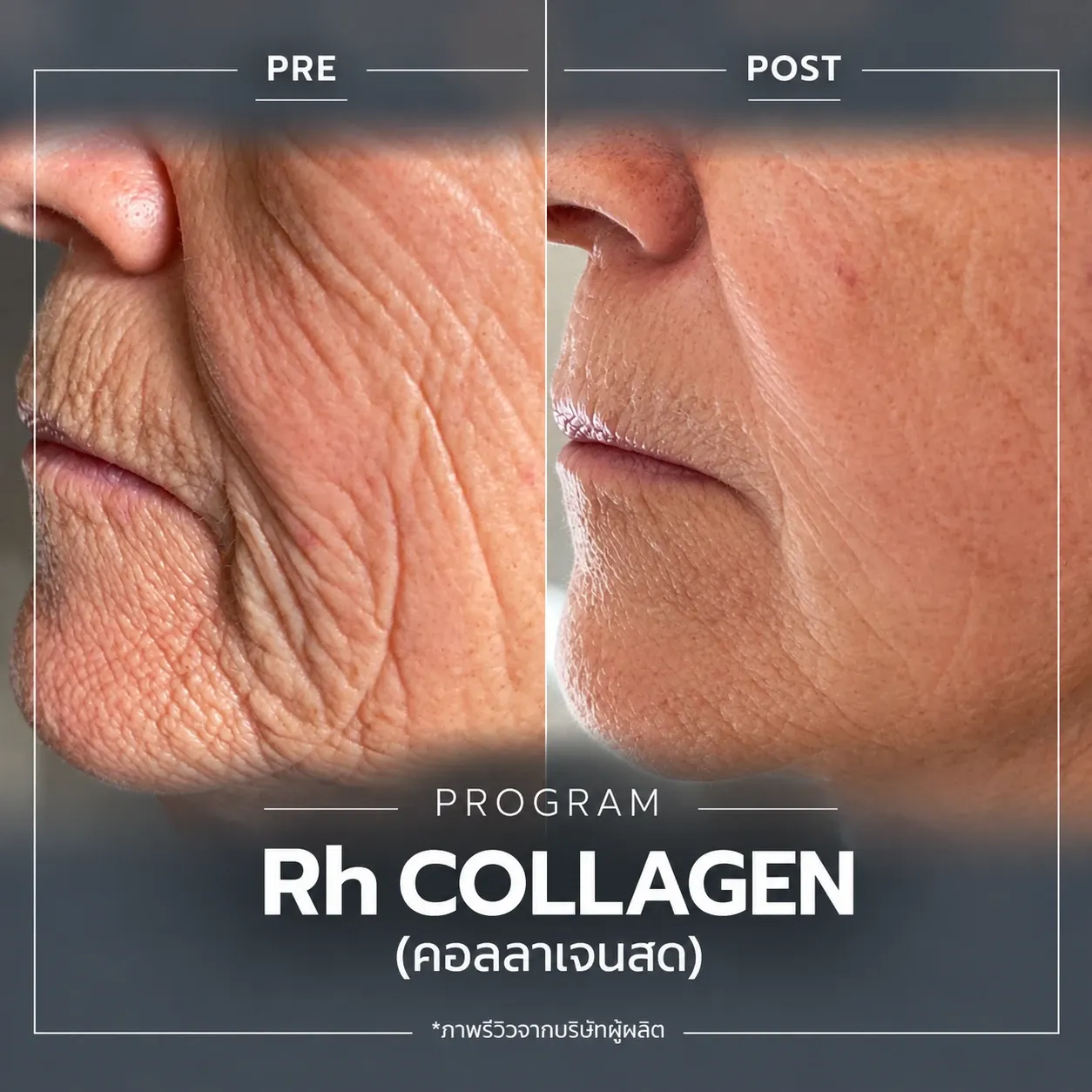
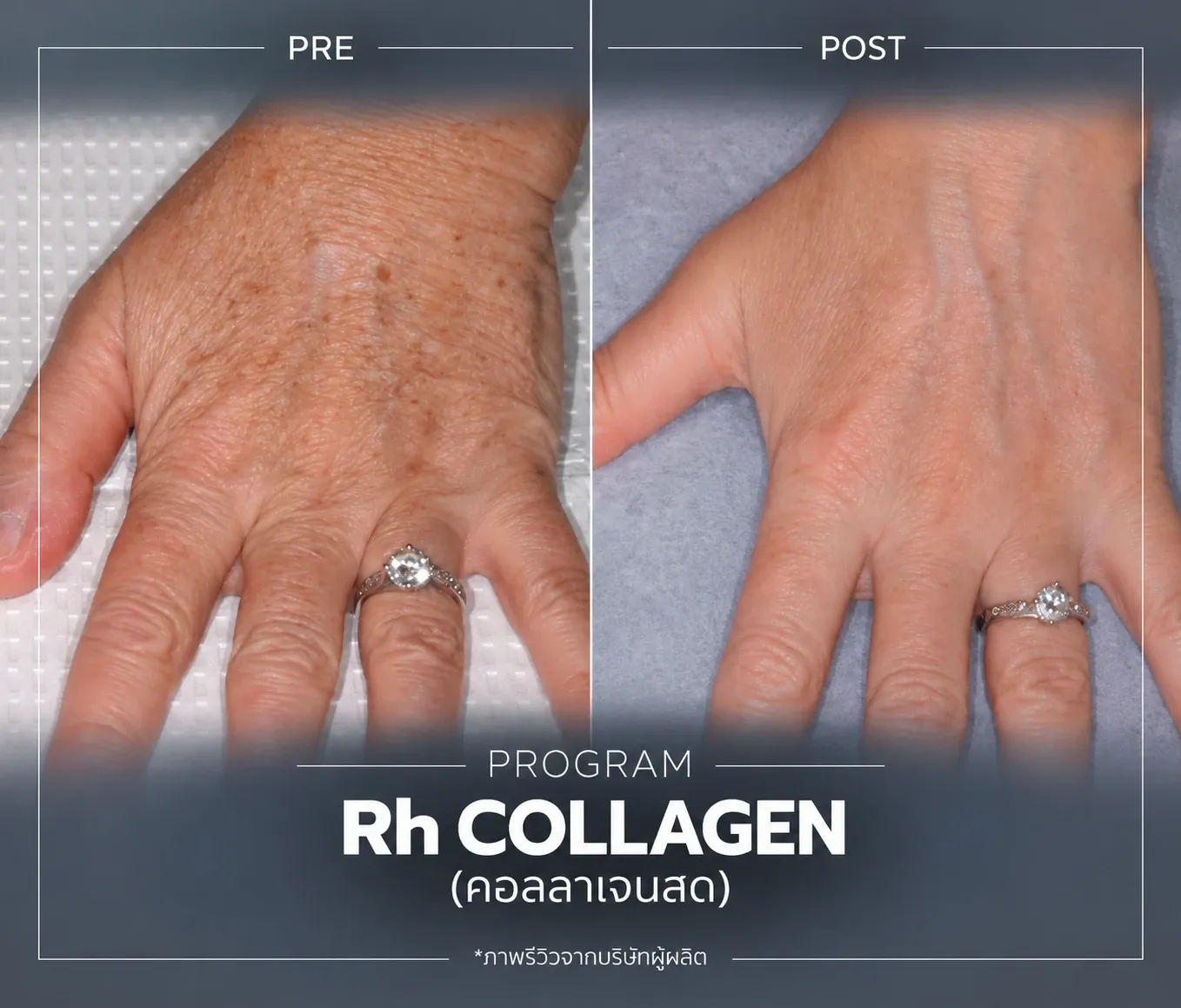
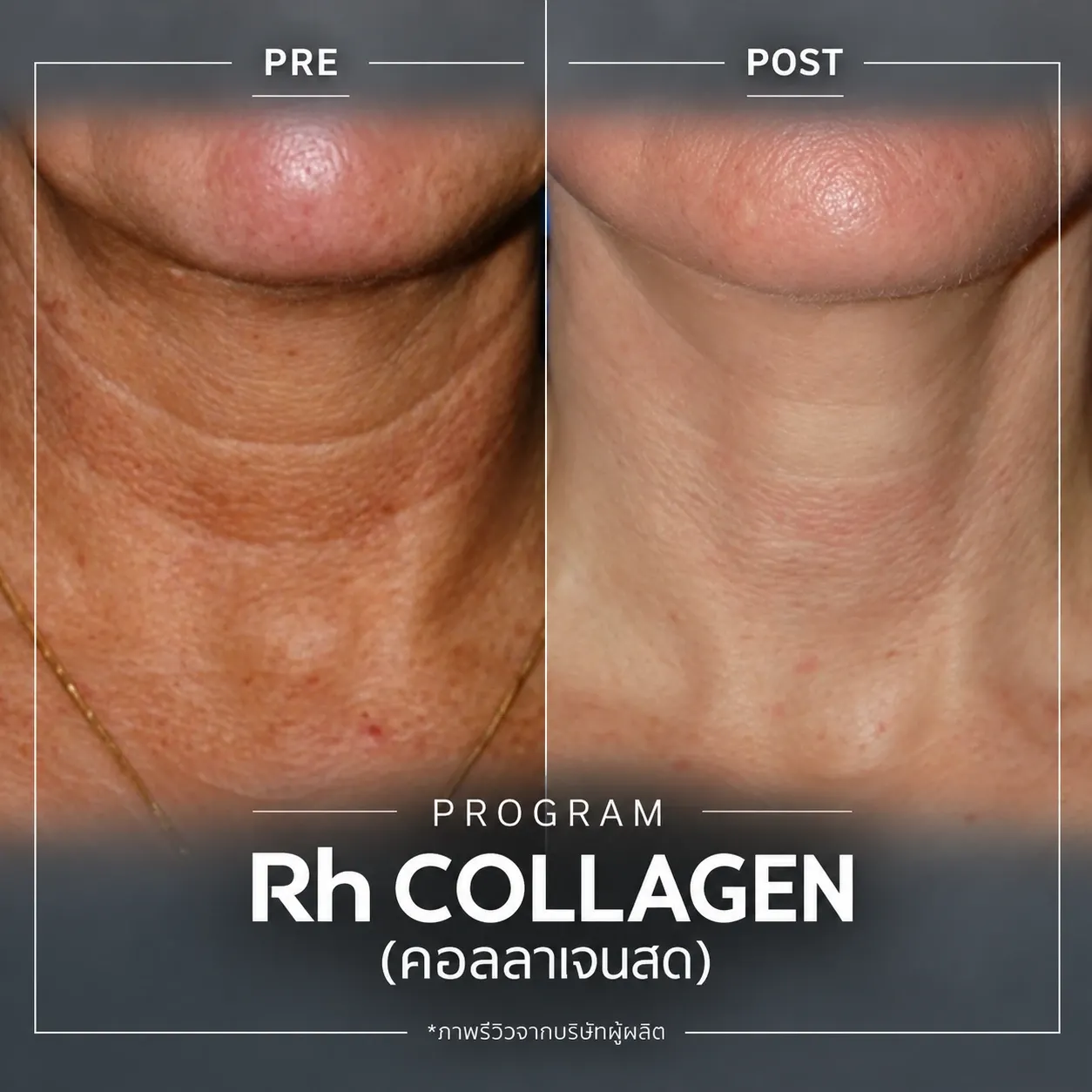
Injectable Collagen: Does It Really Stimulate New Collagen? Atelocollagen vs Rh Collagen Explained
Injectable collagen is making a comeback in aesthetic medicine, particularly among people concerned about thin, crepey skin, fine lines, and age-related changes in skin texture.
But what exactly is injectable collagen? Why are some products derived from pigs while others are produced using silkworm biotechnology? And most importantly, does injecting collagen actually help your skin produce new collagen?
In this article, REVA Clinic explains the science behind injectable collagen, the differences between Atelocollagen and Recombinant Human Collagen (Rh Collagen), and what clinical research tells us about their potential benefits.
What Is Injectable Collagen?
Injectable collagen refers to a category of injectable products containing collagen or collagen-derived proteins. In Thailand, these treatments are commonly marketed as “Fresh Collagen” (คอลลาเจนสด).
However, fresh collagen is a marketing term, not a specific medical ingredient.
Different products may contain different forms of collagen, produced using different technologies.
Two categories currently attracting attention are:
Atelocollagen: Collagen extracted from animal tissues, such as porcine (pig) tissue, with certain terminal regions called telopeptides removed or reduced.
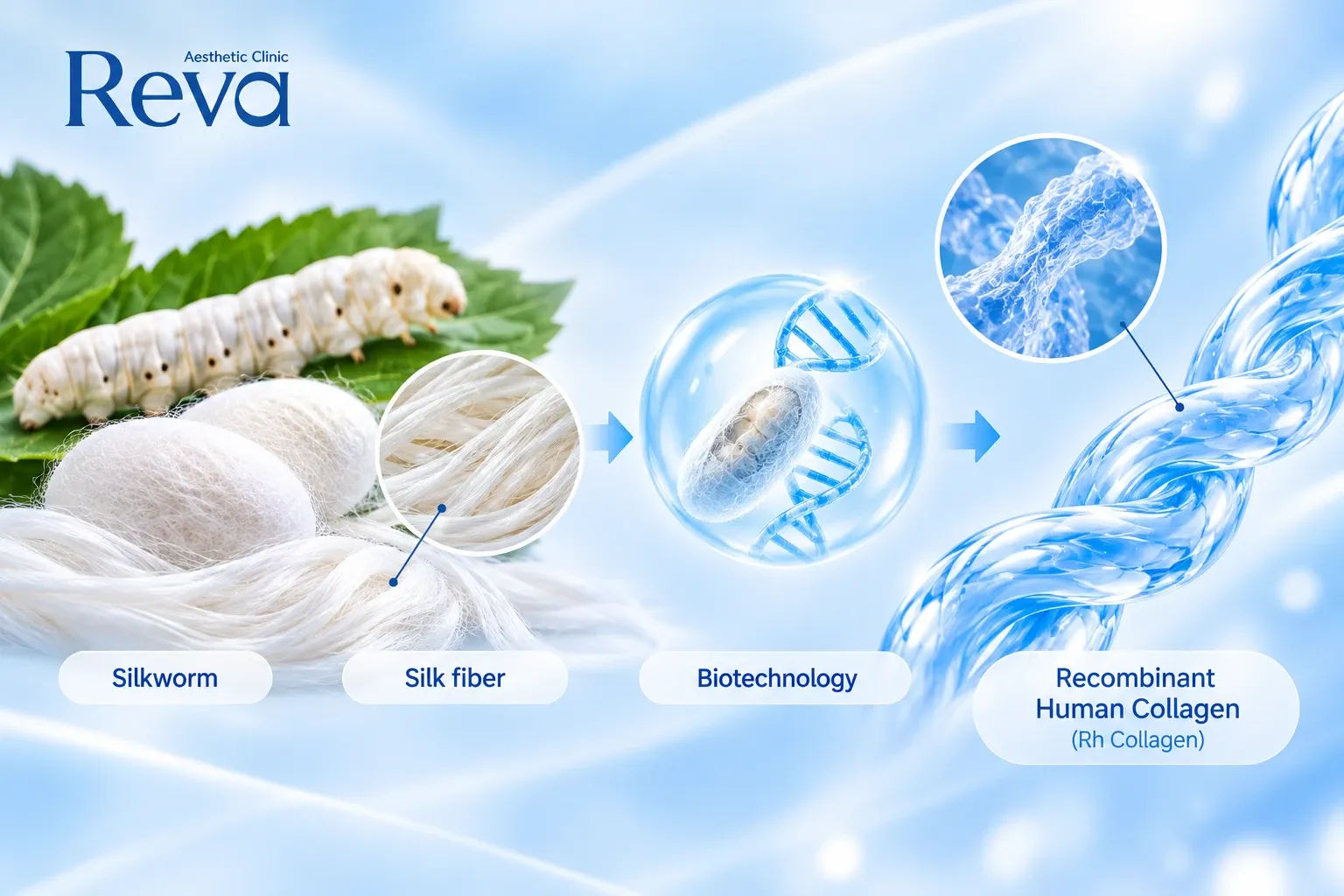
Recombinant Human Collagen (Rh Collagen): Collagen-related proteins manufactured through biotechnology. Some products use genetically engineered silkworms to produce proteins with human collagen amino acid sequences.
Although both are associated with collagen, their molecular structures, formulations, and clinical evidence may differ significantly.
Importantly, injecting collagen does not mean that all the injected material becomes permanent new collagen in your skin.
Why Does Skin Still Look Crepey After Collagen-Stimulating Treatments?
Collagen is one of the main structural proteins in the dermis, helping maintain skin firmness and strength.
As we age, collagen production gradually declines. This is why many anti-aging treatments focus on stimulating collagen through skincare, supplements, lasers, energy-based devices, and collagen biostimulators.
Yet some people continue to experience thin, crepey skin or fine wrinkles despite undergoing multiple treatments.
Why?
The answer involves more than simply having less collagen.
Aging Skin Loses Both Collagen Quantity and Structural Integrity
Inside the dermis are specialized cells called fibroblasts, which produce collagen and other components of the skin's extracellular matrix (ECM).
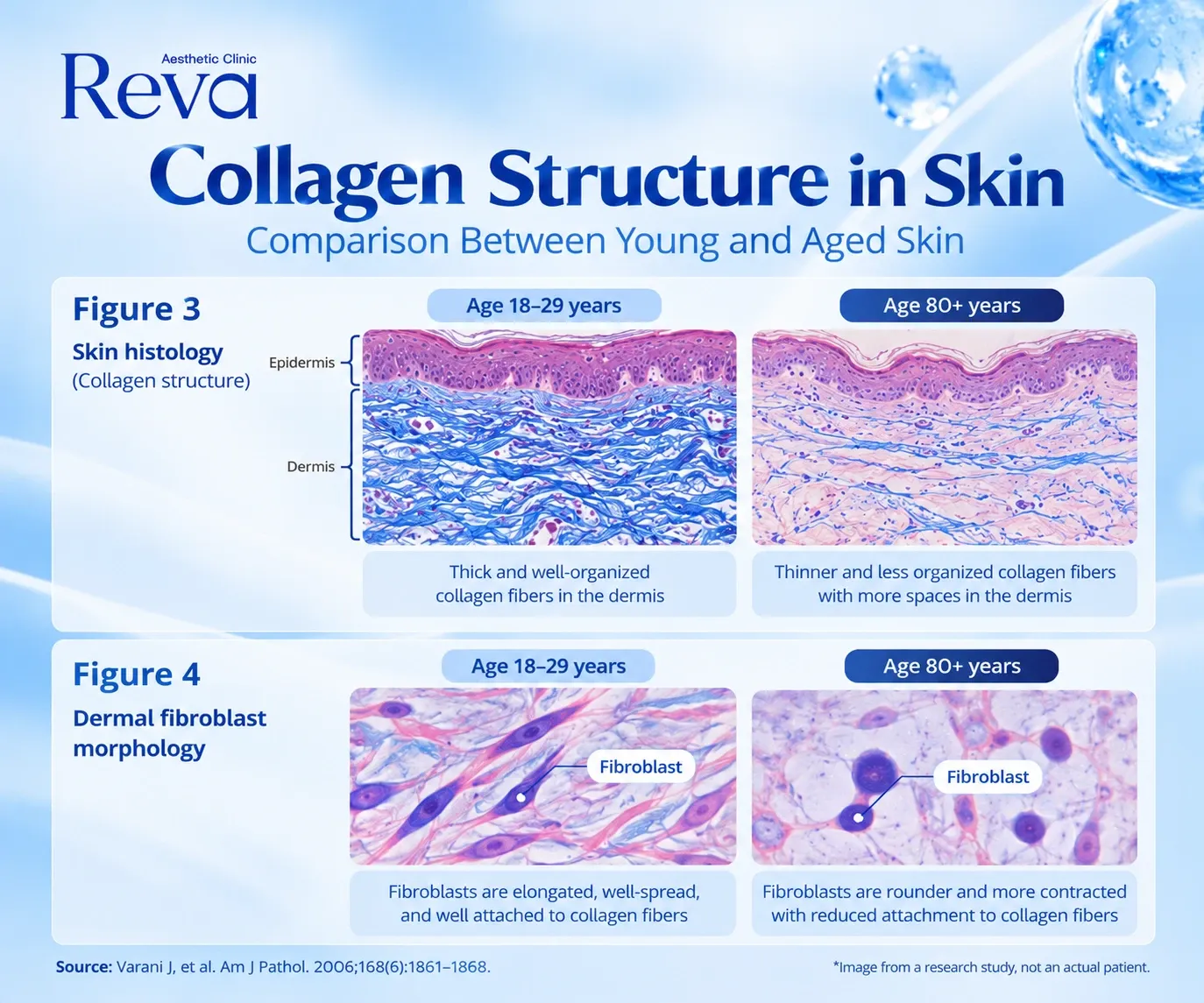
In younger skin, collagen fibers provide a supportive environment that allows fibroblasts to spread out and maintain contact with the surrounding matrix.
As skin ages, existing collagen fibers become increasingly fragmented.
This structural deterioration can affect fibroblast attachment, cell shape, and collagen production.
A study by Varani and colleagues, published in the American Journal of Pathology in 2006, compared skin samples from younger adults aged 18–29 with those from adults aged 80 and older.
The researchers observed differences in collagen structure, fibroblast morphology, and collagen production associated with chronological skin aging.
These findings highlight an important concept:
Skin aging is not only about losing collagen. It also involves changes in the extracellular matrix and the cells responsible for maintaining it.
However, this does not mean that injecting collagen has been proven to restore the ECM to its youthful state.
If You Already Take Collagen Supplements or Have Laser Treatments, Do You Still Need Collagen Injections?
Not necessarily.
Different approaches to skin rejuvenation work through different mechanisms.
Oral Collagen Supplements
When collagen is consumed, it is digested into peptides and amino acids rather than being transported directly to the skin as intact collagen fibers.
Some clinical studies have investigated the effects of oral collagen peptides on skin hydration and elasticity, although the evidence varies across formulations and studies.
Skincare Products
Certain skincare ingredients, particularly retinoids, have evidence supporting their ability to influence collagen metabolism and improve signs of photoaging.
Lasers and Energy-Based Devices
Treatments such as ultrasound, radiofrequency, and laser procedures can stimulate tissue remodeling through different mechanisms.
Some focus primarily on skin laxity, while others target fine lines, texture, or superficial skin concerns.
Injectable Collagen
Injectable collagen products introduce collagen-related materials directly into the tissue. Their effects depend on the formulation, injection technique, treatment area, and supporting clinical evidence.
These approaches are not necessarily interchangeable.
For someone experiencing persistent fine lines or crepey skin after lifting treatments, the first step should be identifying whether the main concern is skin laxity, volume loss, hydration, or skin quality.
Combining treatments may be appropriate in selected cases, but additional injections are not necessary for everyone.
Injectable Collagen Was Popular Before Hyaluronic Acid Fillers
Although injectable collagen may seem like a new aesthetic trend, collagen injections have been used for decades.
During the 1980s and 1990s, bovine collagen fillers such as Zyderm and Zyplast were widely used to correct wrinkles, facial lines, and certain volume-related concerns.
Zyderm I received FDA approval in the United States in 1981.
However, early bovine collagen products had important limitations.
Because they contained animal-derived proteins, patients generally needed allergy skin testing several weeks before treatment. Results were also relatively short-lived compared with some fillers developed later.
As hyaluronic acid (HA) fillers became more widely available in the 2000s, collagen fillers gradually lost popularity for many aesthetic indications.
Today, interest in injectable collagen is returning alongside advances in biotechnology and a broader shift toward treatments focused on skin quality rather than facial volume alone.
What Is Atelocollagen?
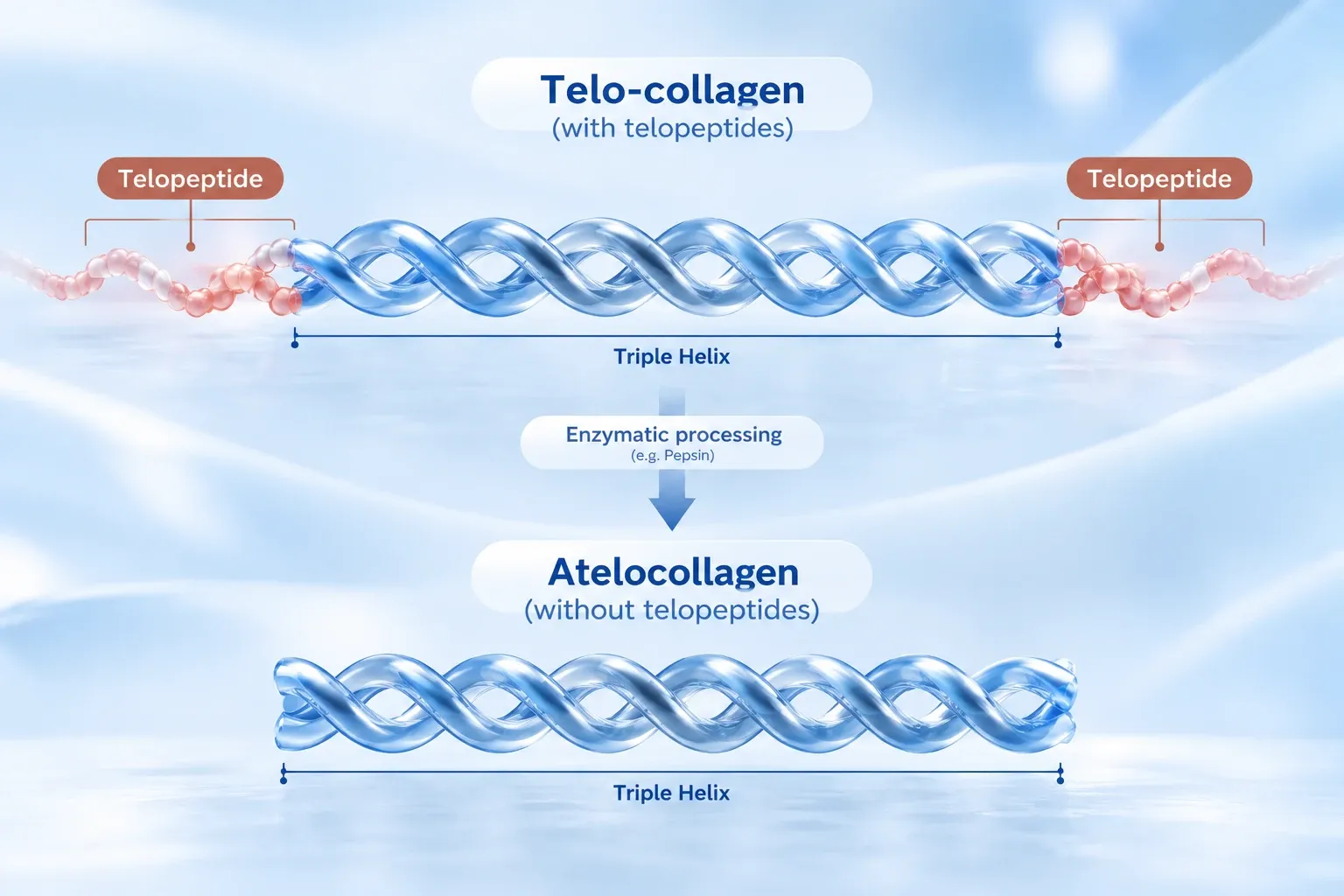
Atelocollagen is collagen that has undergone processing to remove or reduce terminal regions known as telopeptides.
These regions can contribute to the immune response associated with certain collagen preparations.
Atelocollagen may be manufactured from animal-derived collagen, including porcine collagen, using purification processes and enzymes such as pepsin.
Removing telopeptides can reduce immunogenicity compared with certain untreated collagen preparations.
However, reduced immunogenicity does not mean zero allergy risk.
Atelocollagen has also been investigated in other medical fields, including biomaterials and selected orthopedic applications.
Evidence from these applications cannot automatically be applied to facial injections, as different tissues, formulations, and treatment goals are involved.
What Is Recombinant Human Collagen (Rh Collagen)?
Recombinant Human Collagen (Rh Collagen) refers to collagen-related proteins produced using recombinant biotechnology.
One particularly interesting manufacturing approach involves genetically engineered silkworms.
Scientists can introduce genetic instructions that enable silkworms to produce proteins containing human collagen amino acid sequences.
This does not mean that ordinary silkworms naturally produce human collagen.
Is Rh Collagen Identical to the Collagen in Human Skin?
Not necessarily.
Natural Type I collagen in human skin consists of three polypeptide chains arranged in a triple-helix structure.
Certain silkworm-derived recombinant collagen products contain the human collagen α1(I) polypeptide rather than a complete native Type I collagen triple helix.
Therefore, the term human collagen does not automatically mean that a product is structurally identical to naturally occurring collagen in the dermis.
The exact protein structure and formulation should be evaluated for each product.
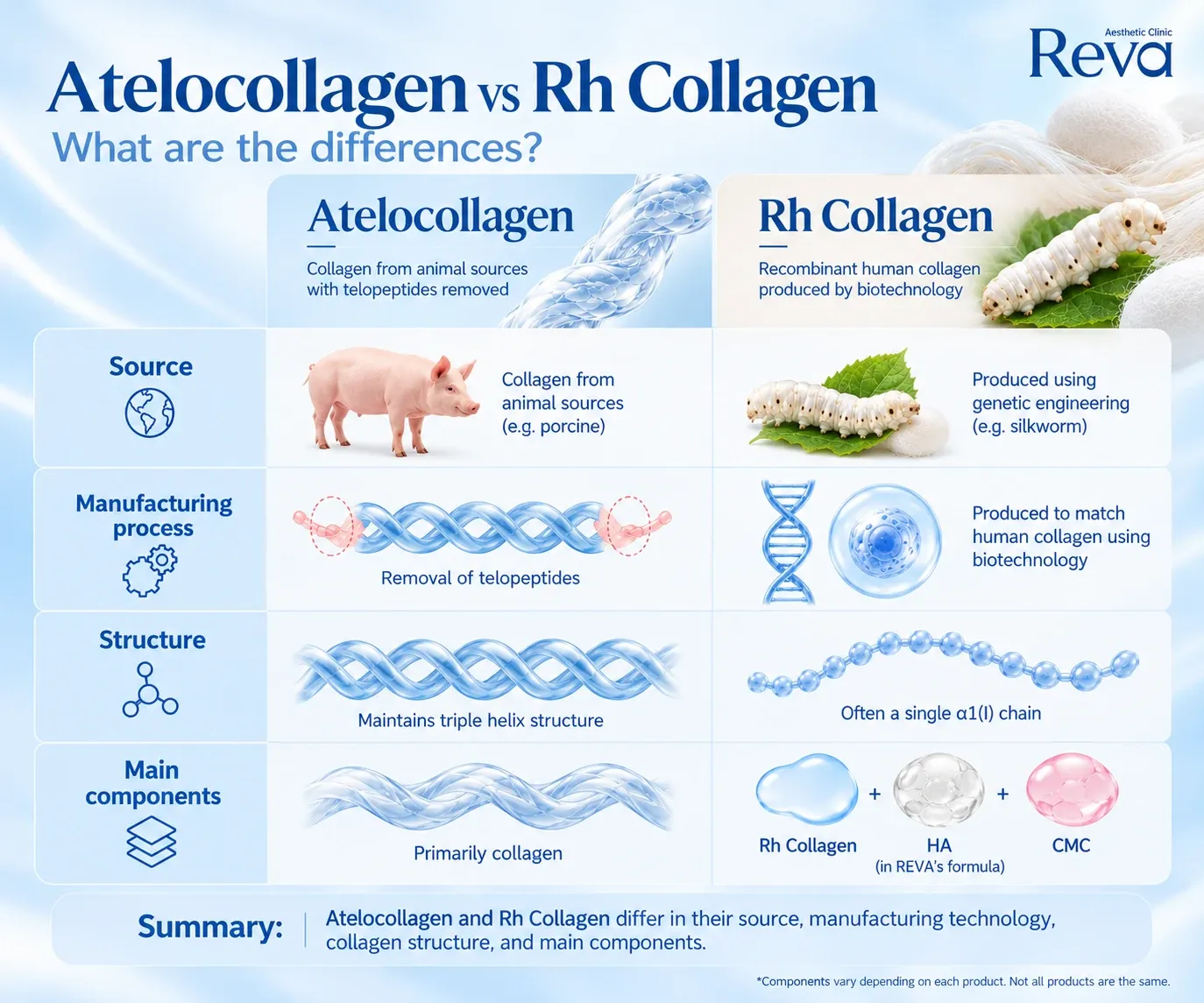
Atelocollagen vs Rh Collagen: What Is the Difference?
FeatureAtelocollagenRh CollagenOriginAnimal-derived collagen, such as porcine collagenRecombinant biotechnologyProductionExtraction, purification, and reduction of telopeptidesBiological production of human-sequence collagen-related proteinsMolecular structureDepends on the source and manufacturing processDepends on the recombinant protein producedAllergy considerationsReduced immunogenicity is possible, but allergies can still occurSafety depends on the entire formulationClinical evidenceProduct-specificProduct-specific
Which Is Better: Atelocollagen or Rh Collagen?
There is currently insufficient direct comparative clinical evidence to conclude that one category is universally superior to the other.
A newer manufacturing technology does not automatically translate into better clinical outcomes.
The most meaningful comparisons should consider the complete product formulation, safety profile, treatment indication, and quality of clinical evidence.
Do Collagen Injections Actually Stimulate New Collagen?
This is one of the most important questions surrounding injectable collagen.
Injected collagen proteins can undergo enzymatic degradation over time.
Therefore, injecting a certain volume of collagen does not mean that an equivalent volume of permanent, newly synthesized collagen will remain in the skin.
Researchers are interested in how collagen-containing formulations interact with skin cells and whether these interactions lead to measurable improvements in skin quality.
However, improvements in skin appearance do not automatically prove that the body has produced new collagen.
What Does Clinical Research Show?
A 2024 study by Di Rosa and colleagues, published in Biomedicines, investigated an injectable formulation containing:
The study included 100 participants across groups with different skin concerns, including age-related skin changes, smoking-related changes, and facial scars.
Participants received two treatment sessions approximately one month apart.
Researchers assessed skin characteristics using Antera 3D imaging and clinical evaluations.
The study reported improvements in skin roughness following treatment.
However, several limitations are important:
The study evaluated a combination formulation, so the observed effects cannot be attributed exclusively to Rh Collagen.
It also did not directly compare Rh Collagen with Atelocollagen or establish that the formulation produces a specific amount of newly synthesized collagen in human skin.
These findings are encouraging but should not be interpreted as proof that collagen injections permanently rebuild youthful skin.
Some patients notice an immediate plumping effect after treatment.
This initial appearance may result from the injected product's volume, water-binding ingredients, and temporary swelling associated with the procedure.
As swelling subsides, the visible fullness may decrease.
However, this does not necessarily mean the treatment has stopped working.
Likewise, immediate plumping should not be interpreted as evidence of newly formed collagen.
Meaningful assessment should consider the treatment's expected timeline, the product's clinical evidence, and changes from the patient's baseline condition.
What Are the Potential Benefits of Injectable Collagen?
Depending on the specific formulation and supporting clinical evidence, injectable collagen treatments may be considered for concerns involving skin quality, such as:
Thin-looking or crepey skin
Fine lines and superficial wrinkles
Uneven skin texture
Age-related changes in skin appearance
Selected concerns
Program Rh Collagen at REVA Clinic
At REVA Clinic, we believe that treating aging skin is not simply about restoring facial volume. It is equally important to identify whether the main concern is skin laxity, volume loss, or declining skin quality.
Program Rh Collagen is one of the treatment options our doctors may consider for individuals concerned about thin, crepey skin, fine lines, and wrinkles. Each treatment is tailored to the individual's skin condition and specific concerns.
Before treatment, our doctors carefully assess skin quality, previous treatment history, areas of concern, and personal expectations to develop a personalized treatment plan.
Learn more about Program Rh Collagen | REVA Clinic.