Chin Dimpling & Mentalis Strain: What Causes It and Can Chin Botox Help? | Reva Clinic
Many people notice forehead lines, frown lines, or crow’s feet when looking in the mirror. But there is another area that often goes unnoticed: the chin.
During a facial assessment, some patients may show chin bunching or dimpling while talking, pursing their lips, or trying to close their mouth. This is commonly related to the activity of a small muscle called the mentalis.
In some people, understanding this muscle is particularly important because a chin that appears short does not always mean that adding more volume with chin filler should be the first step.
What Is Mentalis Strain?
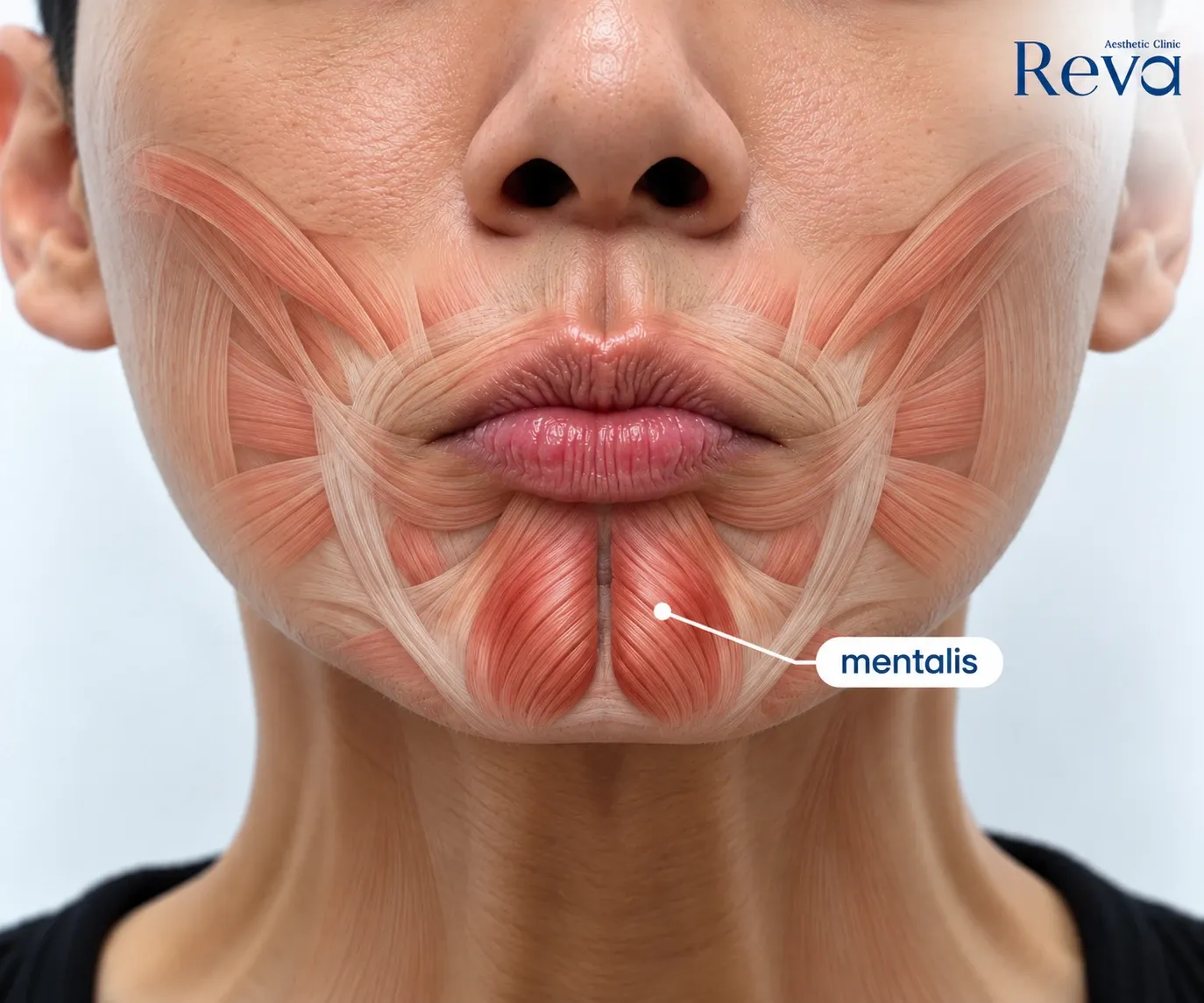
The mentalis is a paired muscle located in the central chin. It helps elevate the lower lip and the soft tissue of the chin.
When the mentalis contracts strongly, you may notice:
Chin bunching or tightening
Small dimples across the chin
An orange-peel or “cobblestone” appearance
Elevation of the lower lip
A chin that appears more tense or compressed
This appearance is commonly referred to as mentalis strain or a cobblestone chin.
For some people, it is barely noticeable at rest and becomes much more obvious during facial movement.
Why Does My Chin Dimple When I Talk?
The mentalis is a dynamic facial muscle, so its activity can become more noticeable when you:
Talk
Purse your lips
Try to close your lips
Elevate the lower lip
This is why assessing the face only from a still photograph may miss the problem.
At Reva Clinic, facial assessment may include observing the lower face both at rest and during movement to understand whether the appearance comes primarily from muscle activity, facial structure, volume deficiency, or a combination of factors.
Why Do Some People Have More Mentalis Strain?
There is no single cause of mentalis strain.
Some people simply have stronger mentalis activity. In others, it may be associated with the relationship between the lips, teeth, jaw, and chin.
One important example is lip incompetence, where the lips do not comfortably meet at rest.
When closing the lips requires additional effort, the mentalis may compensate by helping elevate the lower lip. This can make chin strain and skin dimpling more noticeable.
People with a short or retruded chin may show this pattern more frequently, but not everyone with a short chin has mentalis strain, and not every case of mentalis strain is caused by chin retrusion.
Can Mentalis Strain Make the Face Look More Tense?
It can.
When the mentalis contracts strongly, the lower lip and chin may appear tight or compressed. In some people, this can make the lower face look more tense or serious than it does when the muscle is relaxed.
The difference may be subtle, but it is one reason facial expression should be evaluated dynamically rather than looking only at wrinkles or facial proportions at rest.
How Does Chin Botox Help Mentalis Strain?
Botulinum toxin can be used to temporarily reduce excessive contraction of the mentalis muscle.
In appropriately selected patients, relaxing the mentalis may help:
Reduce chin bunching
Improve cobblestone or orange-peel dimpling
Make the chin skin appear smoother
Reduce excessive tension in the lower face
Alter the soft-tissue contour of the chin
The goal is not necessarily to completely immobilize the muscle. The treatment should be individualized according to muscle activity, anatomy, lip function, and the desired result.
How Many Units of Botox Are Used for the Chin?
Asian expert consensus literature has reported approximately 2–8 units of onabotulinumtoxinA for the mentalis region.
However, this should be considered a reference range rather than a standard dose for everyone.
The appropriate amount depends on factors such as:
Importantly, units of different botulinum toxin products are not automatically interchangeable.
Does a Short Chin Always Need Filler?
No. A chin that looks short does not always mean it needs more volume.
This is an important distinction when assessing the lower face.
In some patients, a hyperactive mentalis pulls the chin soft tissue upward. When the muscle relaxes, the soft-tissue position and contour of the chin may change, making the chin appear longer or less compressed without adding volume.
Hsu and Frankel studied patients with hyperactive mentalis muscles treated with onabotulinumtoxinA. Most patients in their small case series demonstrated inferior movement of the soft-tissue pogonion after treatment, illustrating how reducing mentalis activity can change chin position and contour.
This does not mean that Botox can replace chin filler in every patient.
Instead, it highlights an important principle:
A short-looking chin does not always need to be filled immediately.
If significant mentalis strain is present, it may be useful to evaluate the muscle component first and then reassess whether additional chin projection or volume is actually needed.
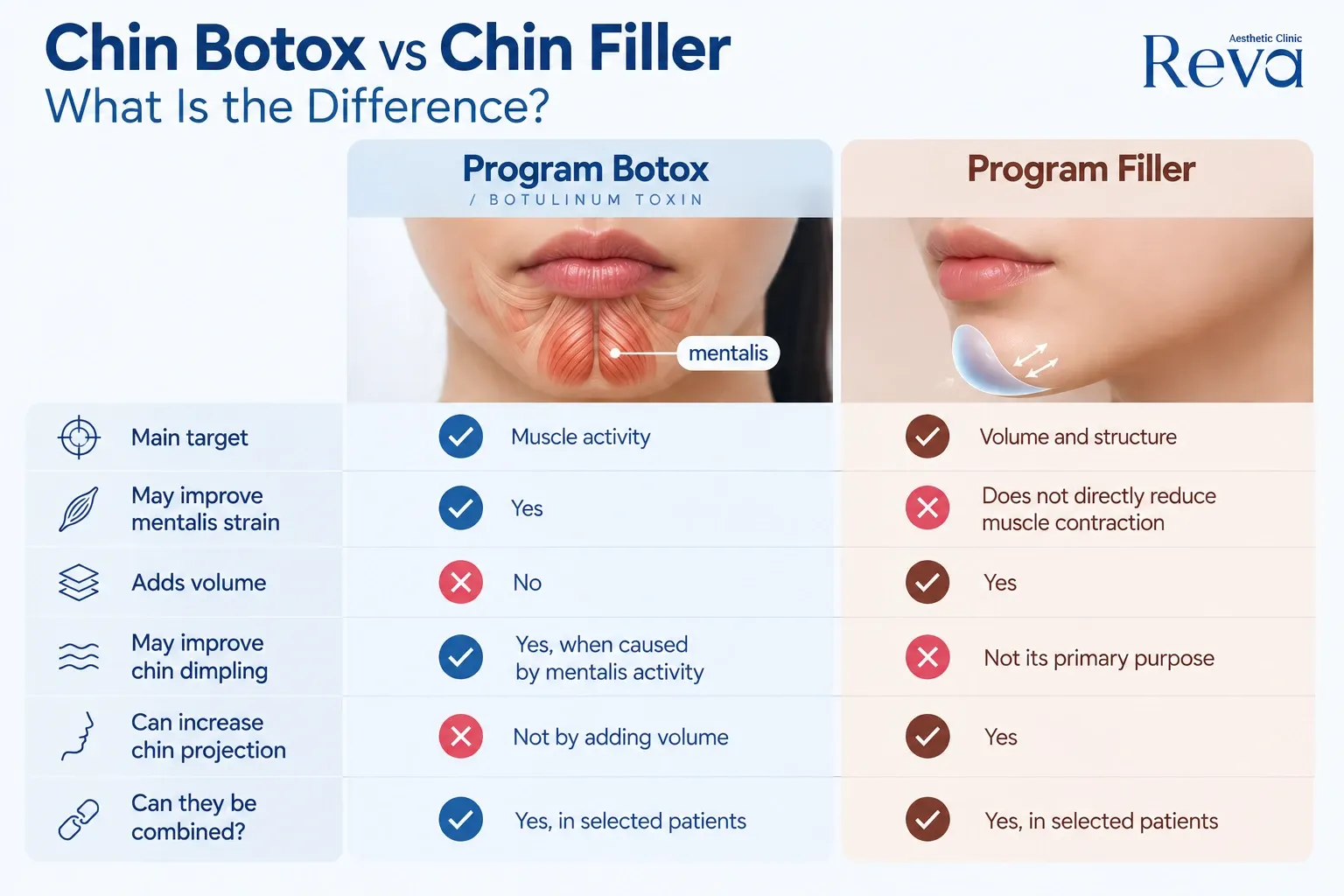
Chin Botox vs Chin Filler: What Is the Difference?
Chin Botox / Botulinum ToxinChin FillerMain targetMuscle activityVolume and structureMay improve mentalis strainYesDoes not directly reduce muscle contractionAdds volumeNoYesMay improve chin dimplingYes, when caused by mentalis activityNot its primary purposeCan increase chin projectionNot by adding volumeYesCan they be combined?Yes, in selected patientsYes, in selected patients
Some patients primarily have muscle hyperactivity, some primarily have structural or volume deficiency, and others have both.
This is why the same treatment plan should not be applied to every short or retruded chin.
How Can I Tell If I Have Mentalis Strain?
Try observing your lower face in a mirror or recording a short video while you talk.
Look at your chin:
Does it bunch up when you speak?
Does the skin become dimpled or uneven?
Does it look like orange peel?
Does the chin tighten when you close your lips?
Do you need to make an effort to keep your lips together?
Does your chin appear shorter or more compressed during lip closure?
If the appearance changes significantly between rest and movement, muscle activity may be contributing to the problem.
A medical assessment can then help distinguish between muscle activity, skeletal structure, volume deficiency, and lip function.
Summary
Chin dimpling is not always simply a skin problem.
In many cases, it reflects the activity of the mentalis muscle, which elevates the lower lip and chin soft tissue. Excessive activity can create chin bunching, an orange-peel texture, and a tense appearance of the lower face.
It also explains why a chin that appears short should not automatically be treated as a volume problem.
For selected patients with significant mentalis strain, reducing excessive muscle activity may change the soft-tissue contour and make the chin appear less compressed without adding filler. Patients with true structural deficiency or inadequate projection, however, may still benefit from filler or other approaches.
The key is determining whether the appearance is primarily caused by muscle, structure, volume—or a combination of these factors.
References
Hsu AK, Frankel AS. Modification of Chin Projection and Aesthetics With OnabotulinumtoxinA Injection. JAMA Facial Plast Surg. 2017;19(6):522–527.
Wu WTL, et al. Consensus on Current Injectable Treatment Strategies in the Asian Face. Aesthetic Plast Surg. 2016;40:202–214.
Yi KH, et al. Novel Anatomical Guidelines for Botulinum Neurotoxin Injection in the Mentalis Muscle. Anat Cell Biol. 2023;56:293–298.