Why Don’t I See Results After a Lifting Treatment? | Reva Clinic
Lifting treatments such as ultrasound- and radiofrequency-based devices are commonly used to improve facial laxity, contour, and skin firmness. However, some patients may feel that they have had a treatment but “don’t see much difference.”
This does not always mean that the device did not work. The result depends on several factors: what is actually causing the face to look older, whether the right technology was selected, where and how the energy was delivered, the treatment design, the body’s biological response, and how long you wait before evaluating the result.
Key Takeaways
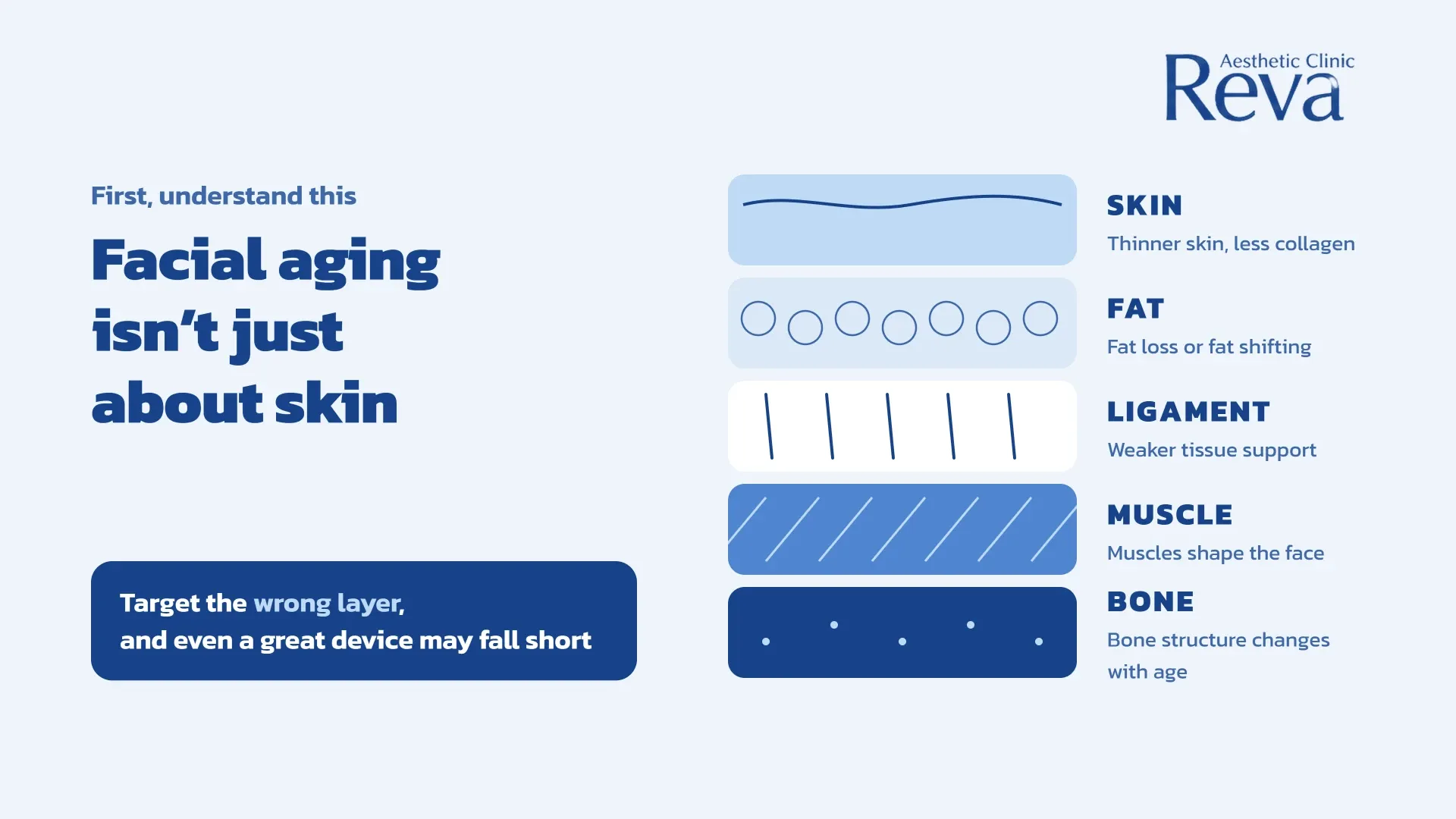
An “aged” or “sagging” face is not caused by the skin alone. Skin, fat, ligaments, muscles, and bone can all contribute.
Different lifting technologies target different tissue depths and problems.
More shots or higher energy do not automatically mean better results.
Many energy-based treatments depend partly on the body’s own healing and collagen-remodeling response.
Results may continue to develop over weeks to months, depending on the technology.
Repeating treatments too quickly is not necessarily better. Treatment timing should be planned appropriately.
Lifting devices cannot reproduce every effect of a surgical facelift.
The most important step is identifying where the problem actually is before choosing the treatment.
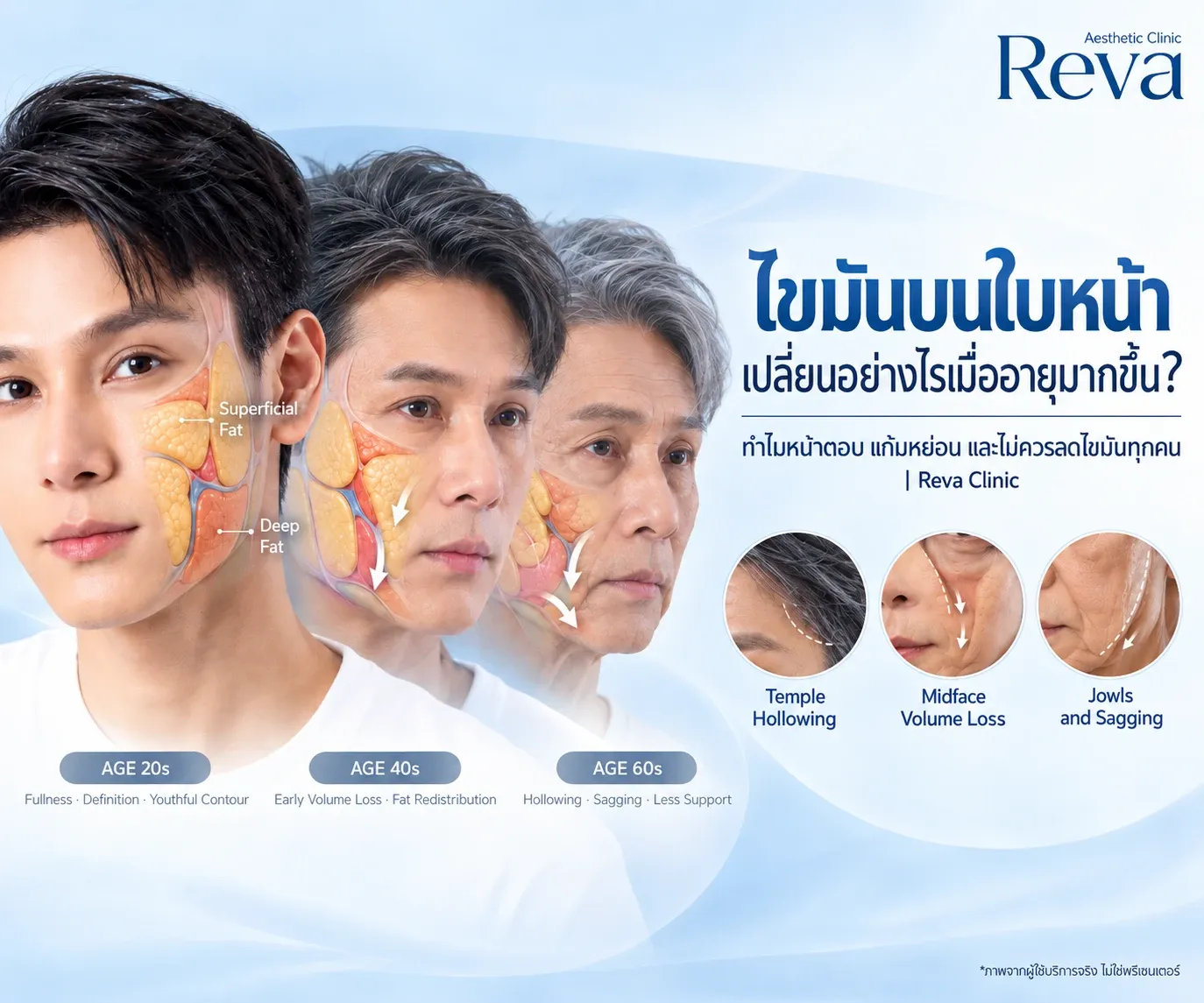
Why Can the Face Look Older or Saggy?
Before choosing a lifting treatment, it is important to understand that facial aging happens at several anatomical levels.
1. Skin
With age, the skin may become thinner and lose collagen and elasticity. This can contribute to fine lines, crepey skin, and reduced firmness.
2. Fat
Facial fat compartments may lose volume or change position over time. This can make the cheeks look flatter, create hollowness, or alter facial contours.
3. Ligaments
Supporting structures of the face also change with age and may contribute to visible laxity.
4. Muscle
Muscles affect facial shape, movement, and contour. In some patients, muscle anatomy can contribute to the appearance of the lower face.
5. Bone
The facial skeleton also changes with aging. Structural changes cannot necessarily be corrected by tightening the skin alone.
This is why using a lifting device without first identifying the main cause may produce a result that does not match the patient’s expectations.
5 Reasons Why a Lifting Treatment May Not Give the Result You Expected
Reason 1: The Device Does Not Match the Problem
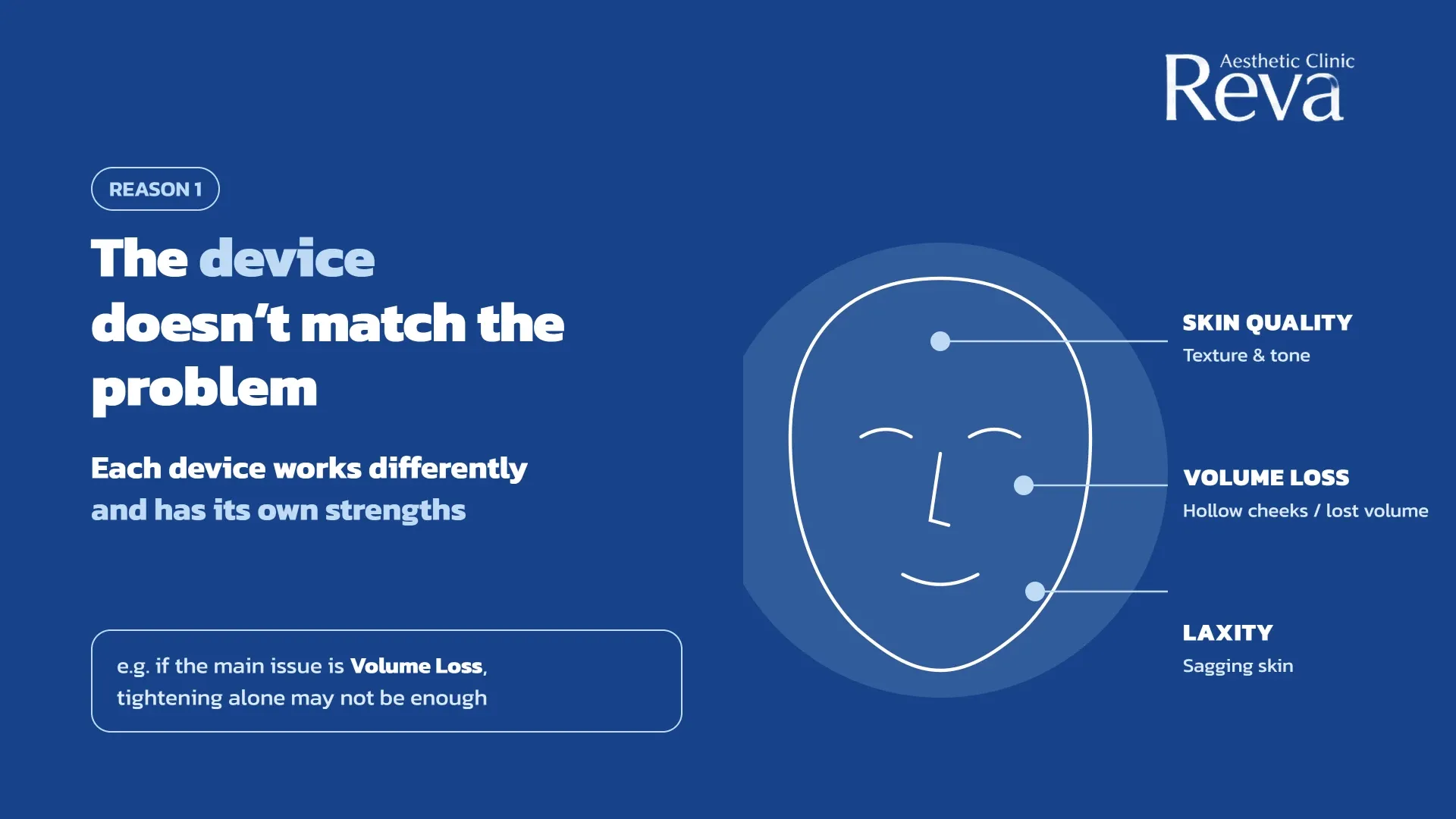
Not every patient who says, “My face is sagging,” has the same problem.
One person may mainly have skin laxity, while another may have volume loss, thin skin, changes in facial fat, or a combination of several factors.
Different technologies also have different strengths.
A device designed primarily for tightening may be useful when laxity is an important component. However, if the dominant problem is significant volume loss or structural change, tightening alone may not fully address the concern.
Therefore, treatment should begin with a facial assessment rather than simply choosing a device by name.
Reason 2: The Energy Does Not Reach the Intended Target
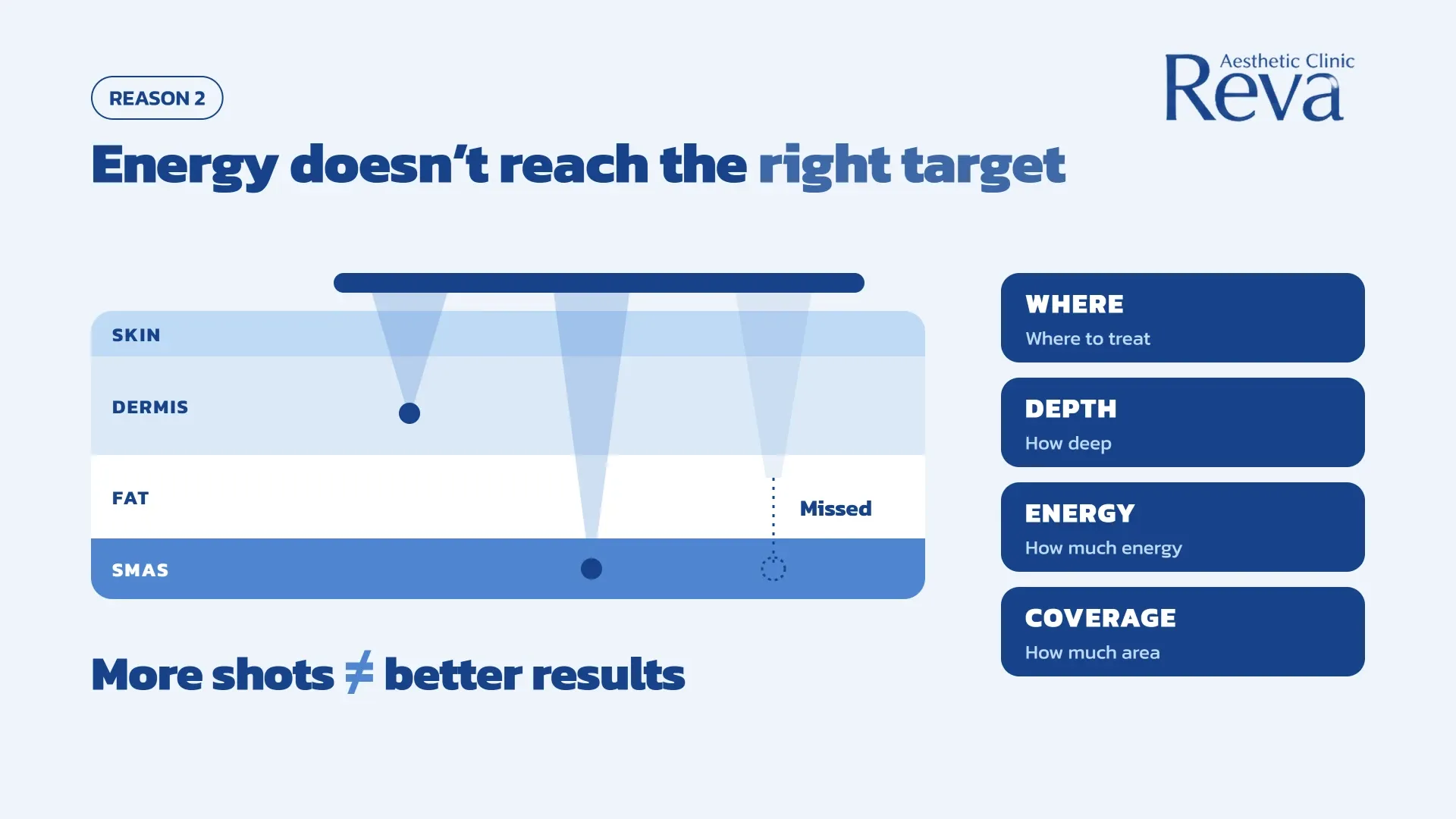
The result of an energy-based treatment is not determined by the number of shots alone.
Several variables matter:
WHERE — Where is the energy delivered?
DEPTH — Which tissue layer is being targeted?
ENERGY — Is the energy appropriate for the treatment goal and tissue?
COVERAGE — Has the relevant area been treated adequately?
Two patients receiving the same device or even the same number of shots can therefore have different outcomes.
The treatment design matters as much as the device itself.
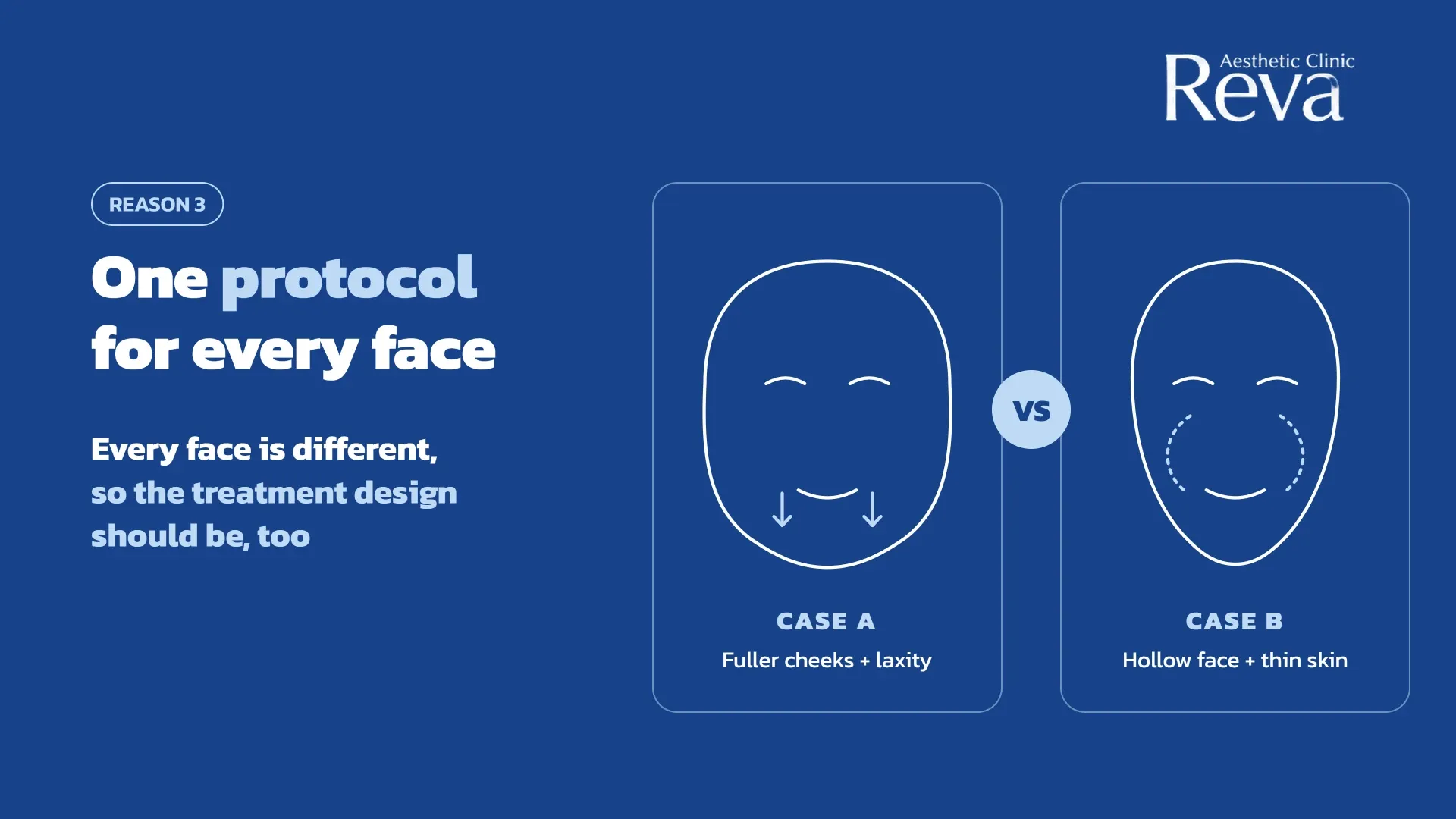
Reason 3: Using the Same Protocol for Every Face
There is no single facial-lifting protocol that is ideal for everyone.
For example:
Patient A: fuller cheeks with facial laxity
Patient B: thinner face with volume loss and thinner skin
Even if both patients want a “more lifted face,” their treatment plans should not necessarily be identical.
The physician may need to adjust treatment areas, depth, energy, number and distribution of shots, or combine different approaches according to facial anatomy.
At Reva Clinic, treatment planning therefore focuses on personalized facial design rather than a one-protocol-fits-all approach.
Reason 4: You Are Checking the Result Too Early
Some lifting technologies can create an early visible change, but part of the final result may depend on biological processes that occur gradually after treatment.
A simplified timeline may look like this:
Day 0: Treatment
↓
Early period: Some changes may begin to appear
↓
Following weeks to months: Tissue response and collagen remodeling continue
The exact timeline varies depending on the technology, treatment parameters, individual biology, and treatment goal.
This means evaluating a collagen-stimulating treatment too early can underestimate its final result.
The Device “Stimulates,” but Your Body Has to “Build”
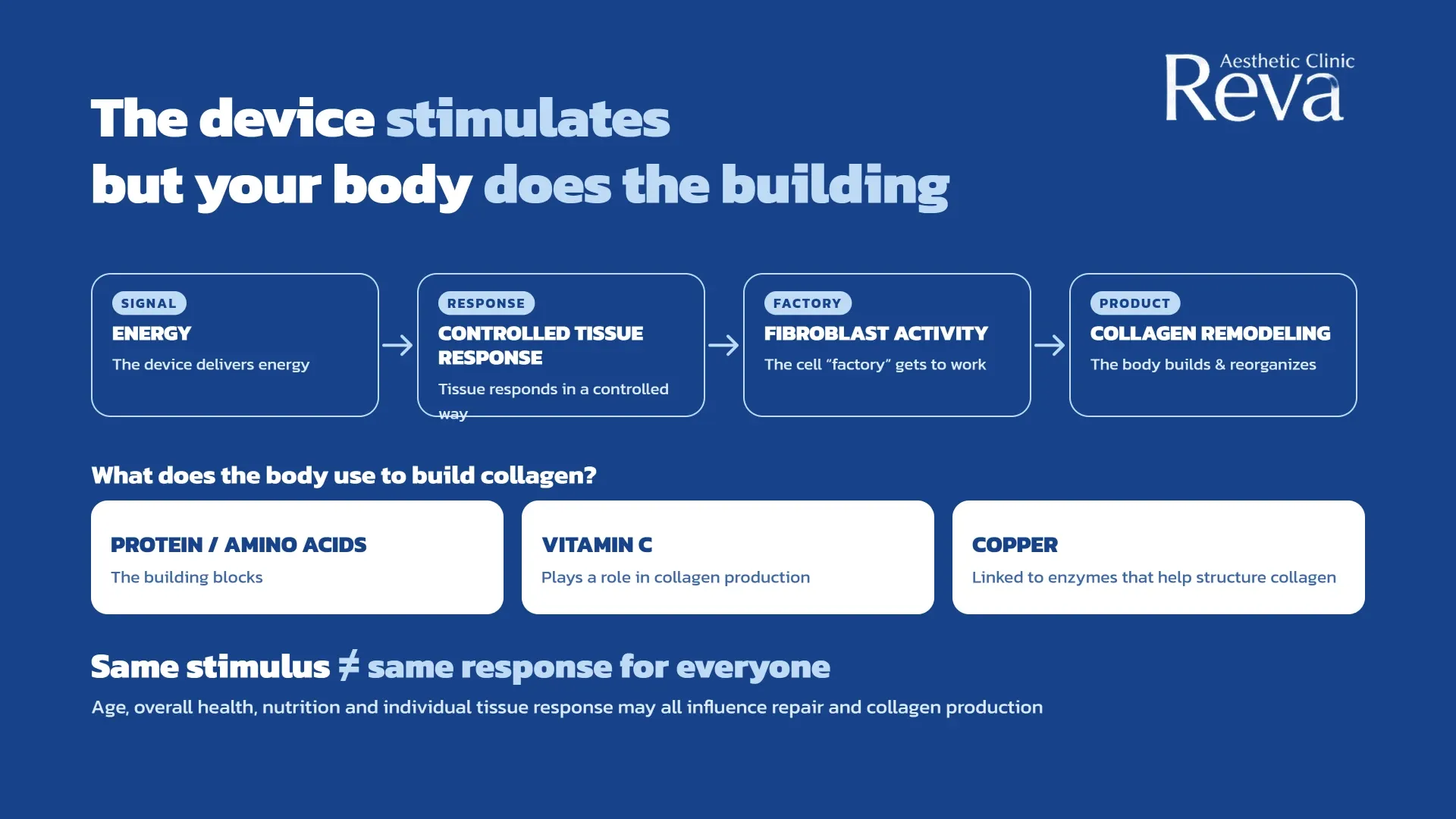
Many energy-based aesthetic treatments work by delivering controlled energy into selected tissue.
This creates a biological response that may involve tissue remodeling and new collagen formation.
A simplified concept is:
Energy → Controlled tissue response → Fibroblast activity → Collagen remodeling
However, the machine is not directly “injecting new collagen” into the face. The patient’s own tissue is responsible for much of the remodeling process.
Collagen synthesis requires amino acids, while micronutrients such as vitamin C and copper have important roles in normal collagen formation and maturation.
Therefore, individual biological factors—including age, general health, nutritional status, tissue condition, and healing response—may influence how the skin responds.
The same treatment does not necessarily produce exactly the same result in every person.
Should You Repeat Lifting Treatments as Soon as Possible?
Not necessarily.
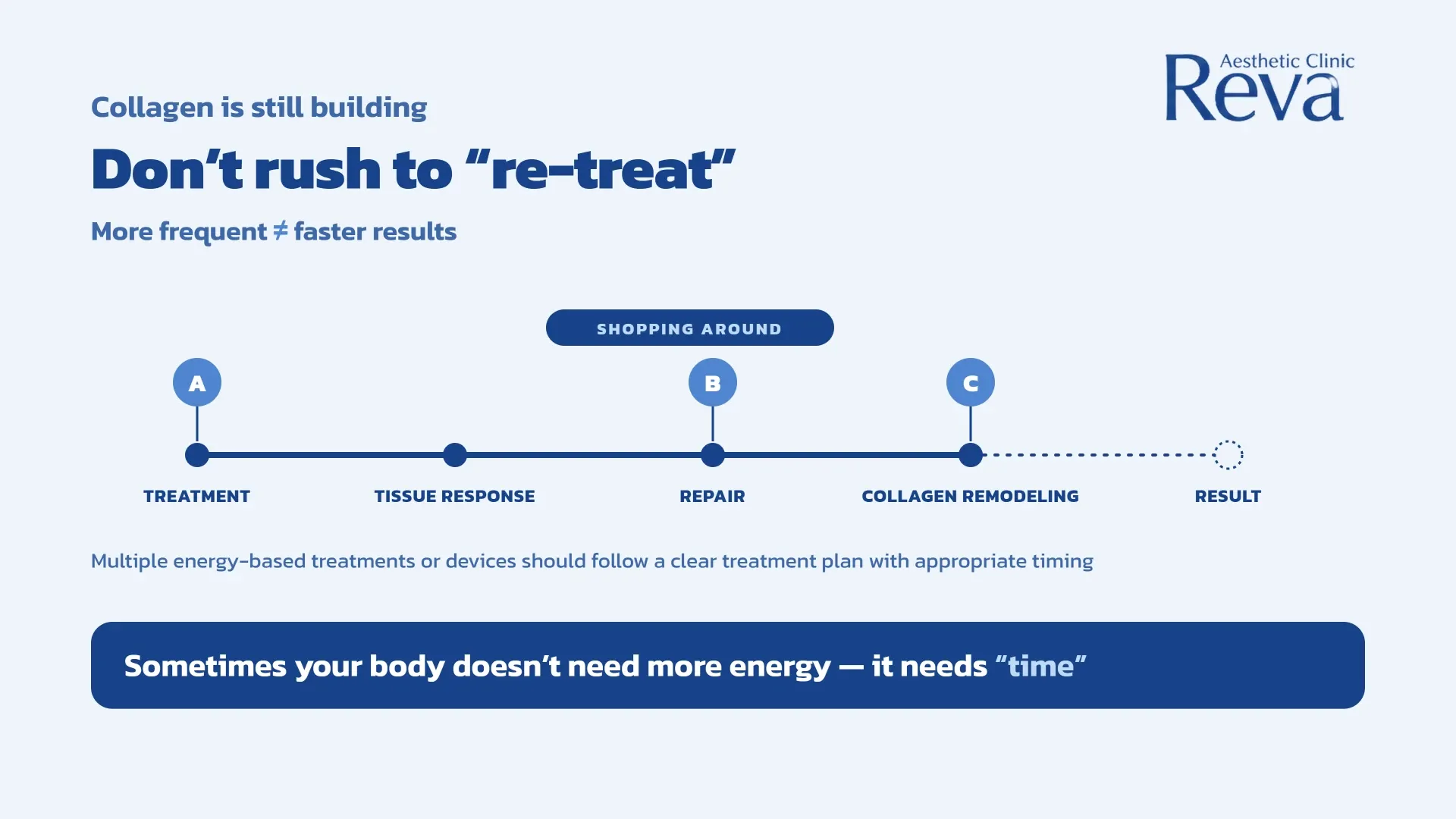
One common situation is “shopping around”: a patient receives Device A, does not see an immediate dramatic result, then quickly moves to Device B and Device C.
But many treatments are designed to initiate a tissue response that continues after the appointment.
Therefore:
More treatments ≠ automatically more collagen or better results.
The interval between energy-based procedures should be considered as part of the overall treatment plan, especially when combining devices that act on similar tissues or treatment goals.
Rather than repeatedly adding treatments, it may be more useful to ask:
What was treated? At what depth? With what goal? When should the result be assessed? And when would another treatment actually be appropriate?
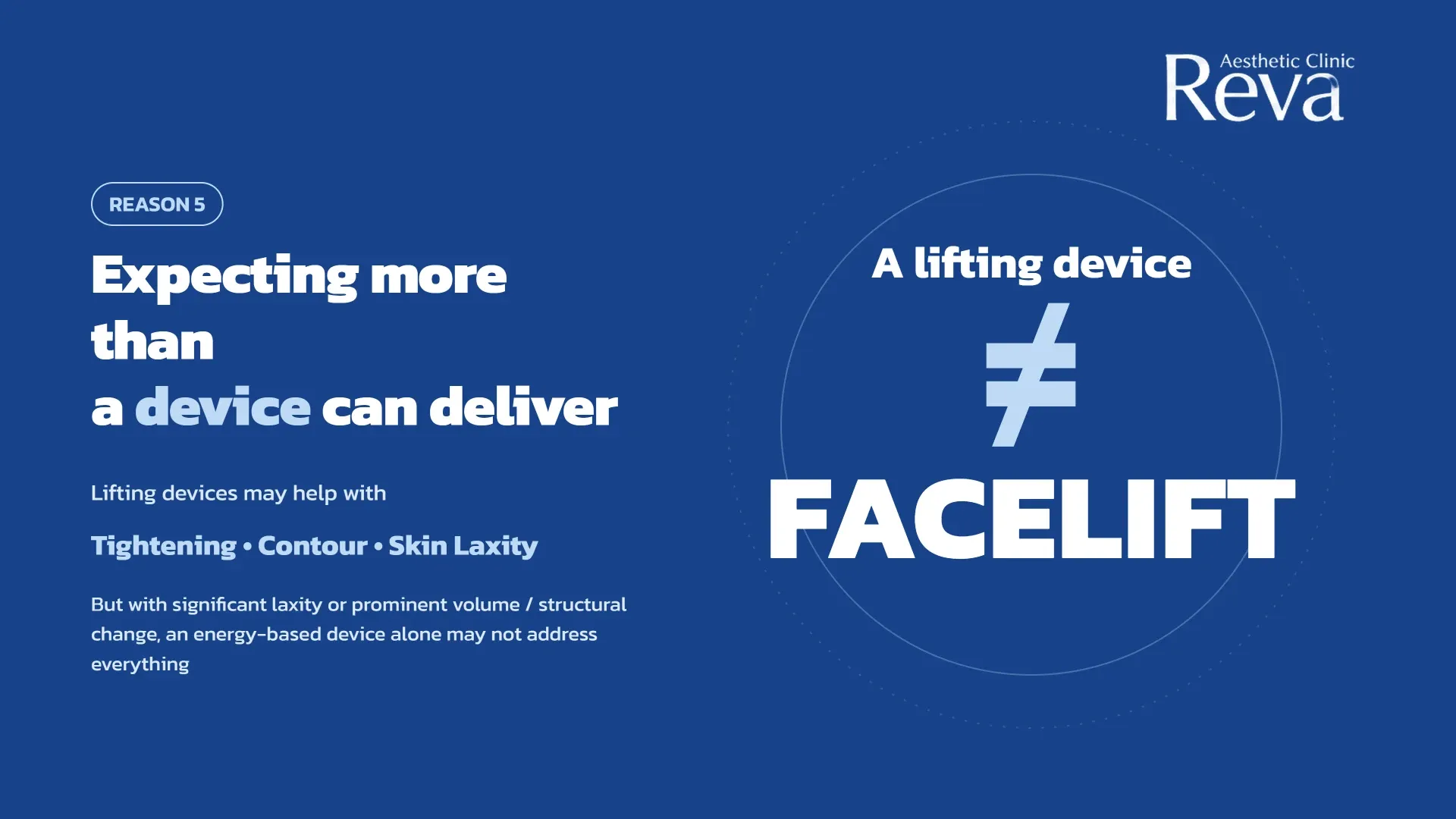
Reason 5: Expecting a Lifting Device to Produce a Surgical Facelift Result
Aesthetic devices can help with concerns such as:
However:
Lifting device ≠ Surgical facelift
If a patient has substantial tissue laxity, significant volume or structural changes, or advanced facial aging, an energy-based treatment alone may not achieve the degree of change they expect.
Setting realistic expectations is therefore an important part of treatment planning.
Why Can Two People Use the Same Device but Get Different Results?
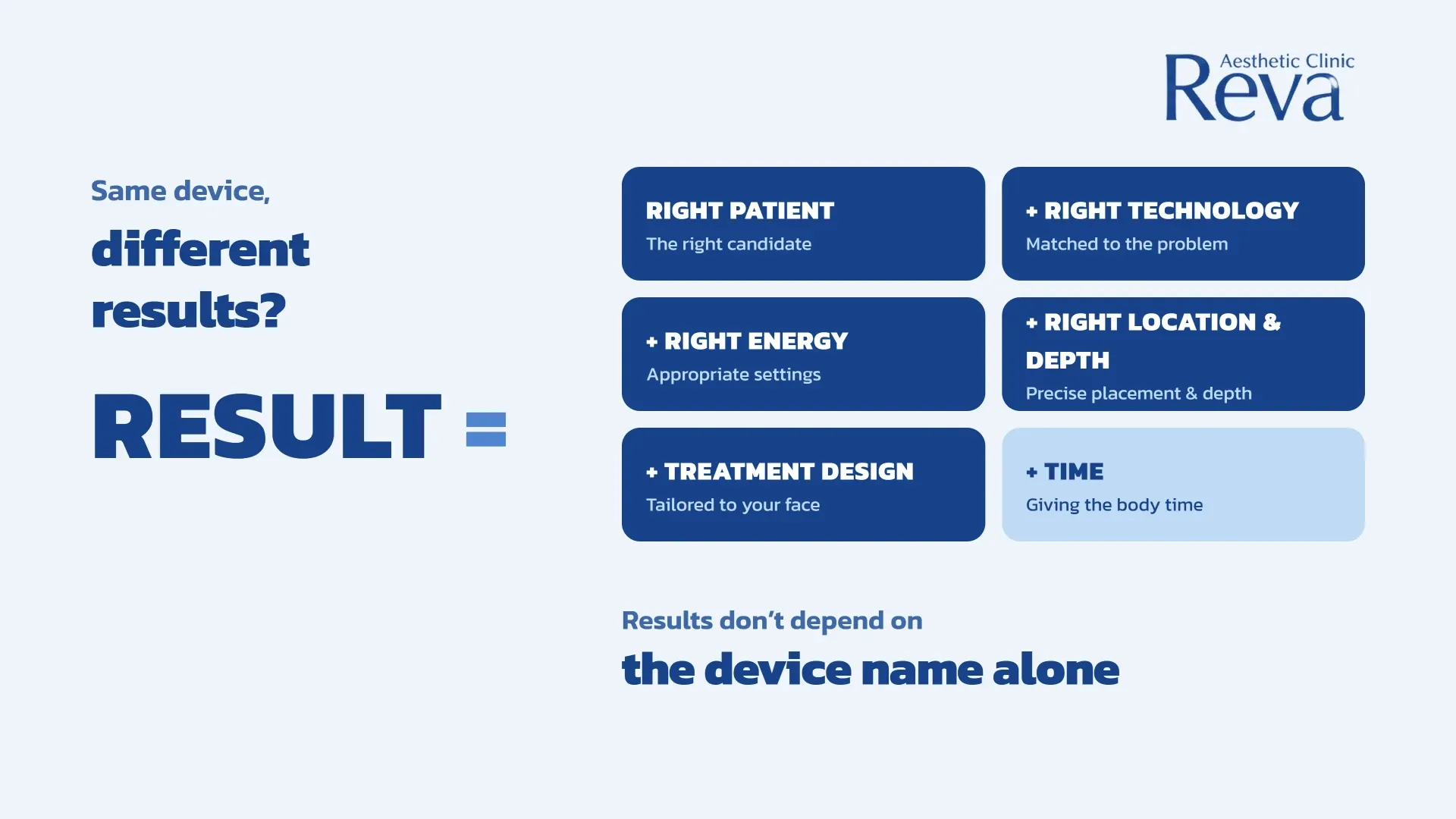
Because the final result is not determined by the device name alone.
A useful way to think about it is:
RESULT =
Right Patient
This is also why comparing treatments only by the device name, number of shots, or promotional package can be misleading.
The same technology can be used differently depending on the patient’s anatomy and treatment goal.
What Should You Ask Before Having a Lifting Treatment?
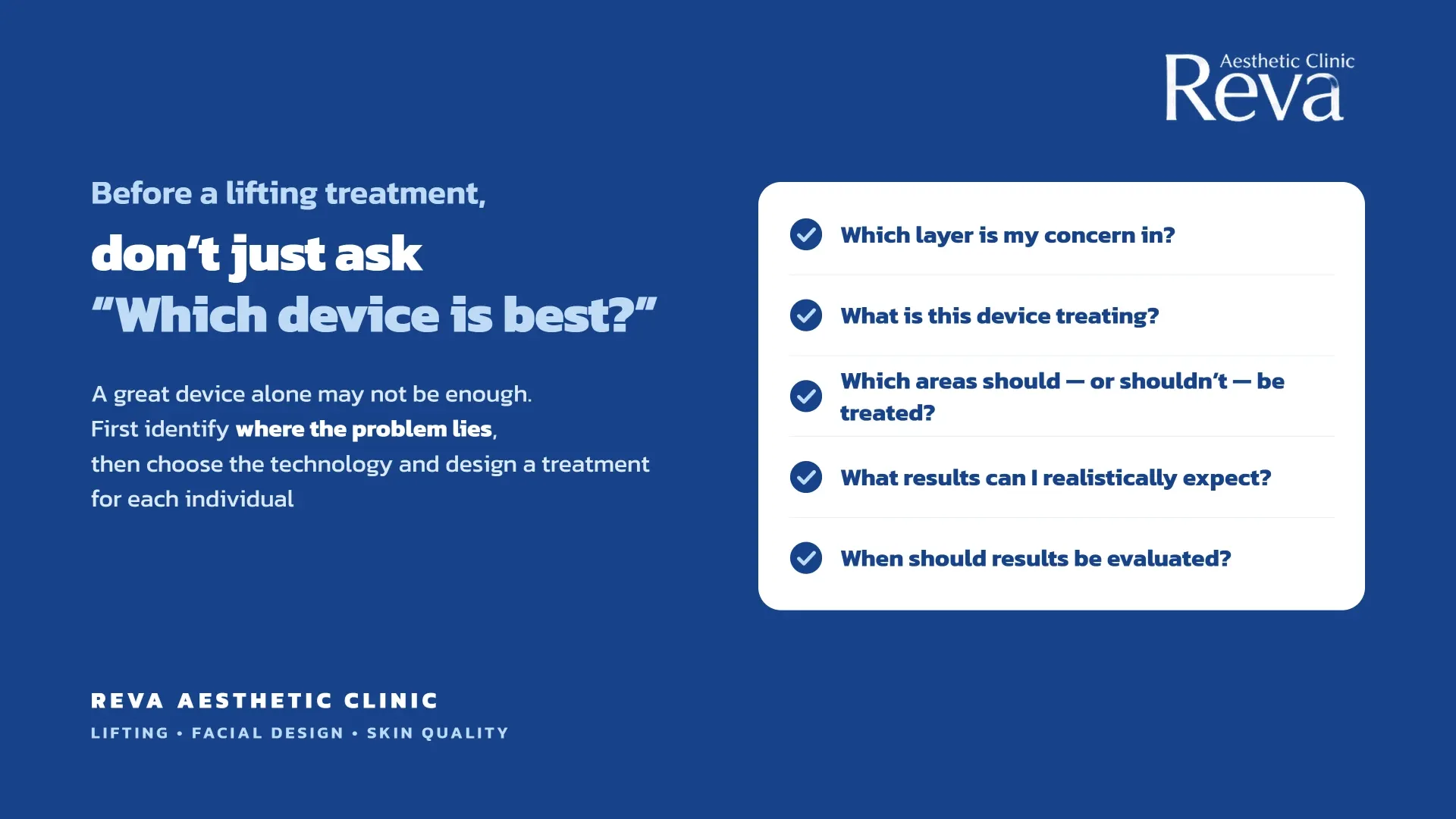
Instead of asking only:
“Which lifting machine is the best?”
Consider asking:
Which layer or structure is causing my concern?
What exactly is this technology designed to treat?
Which areas should be treated—and which areas should be avoided?
How much improvement is realistic for my condition?
When should I expect to see the result?
When should the result be reassessed before considering another treatment?
These questions help shift the focus from choosing a machine to choosing an appropriate treatment strategy.
Which Lifting Treatment Is Right for You?
There is no single lifting device that is suitable for every face.
Some patients may benefit primarily from tightening. Others may need treatment for skin quality, volume loss, facial contour, or several components at the same time.
At Reva Clinic, facial assessment focuses on identifying the main anatomical causes of facial aging before selecting the technology and designing the treatment.
The goal is not simply to perform more shots or use more devices, but to determine:
What is the problem? → Which tissue should be targeted? → Which technology is appropriate? → How should the treatment be designed? → When should the result be evaluated?
Because when it comes to facial lifting, the device is only one part of the result.