Can Program Vitaran Help with Skin Inflammation and Facial Redness? What Recent PN Research Shows | Reva Clinic
Polynucleotides (PN) are commonly used in aesthetic medicine to improve skin quality, hydration, fine lines, and overall skin texture. More recently, research has also begun to explore another potential role of PN: its effects on skin inflammation, the skin barrier, and facial redness.
Of particular interest is a 2026 report involving Vitaran in patients with atopic dermatitis. The findings are still preliminary, and Program Vitaran should not be considered a treatment for atopic dermatitis or a replacement for standard medical therapy. However, the research provides an interesting perspective on how PN may influence skin beyond conventional rejuvenation.
Atopic dermatitis is a chronic inflammatory skin condition involving both immune dysregulation and an impaired skin barrier. Patients may experience redness, dryness, itching, irritation, and increased skin sensitivity.
A 2025 experimental study using an atopic dermatitis animal model found that PN was associated with reductions in several inflammatory cytokines, including IL-4, IL-5, IL-13, IL-25, IL-33, and TSLP.
The study also reported improvements in transepidermal water loss (TEWL) and preservation of filaggrin, an important protein involved in skin-barrier integrity.
These findings suggest a possible relationship between PN and two interconnected processes:
Inflammatory environment + Skin-barrier function
However, this was an animal study using topical PN. The results cannot be directly translated into the effects of injectable Program Vitaran in humans.
2026 Research: Vitaran in Patients with Atopic Dermatitis
A 2026 case series published in the Journal of Cosmetic Dermatology reported the use of intradermal PN therapy in patients with atopic dermatitis.
Importantly, the report involved Vitaran (BR Pharm, South Korea), making it particularly relevant when discussing Program Vitaran rather than PN as a general ingredient category.
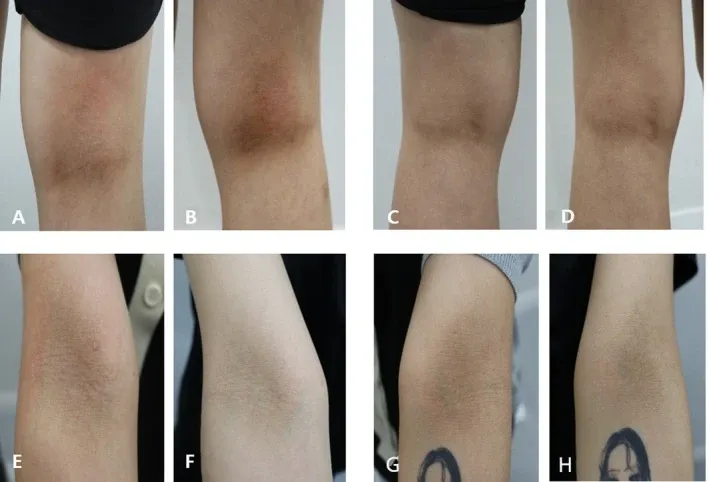
The authors reported improvements in clinical features including erythema, dryness, skin texture, and patient-reported symptoms such as itching and discomfort following treatment.
In one reported case, Vitaran was administered intradermally at 2 cc per session for three sessions at two-week intervals.
Suggested caption:
Clinical changes in a patient with atopic dermatitis following intradermal polynucleotide treatment with Vitaran. Improvements in erythema, dryness, and skin texture were reported in this case series. Results from a small case series should not be interpreted as expected outcomes for every patient.
The evidence needs to be interpreted cautiously. This was a small case series rather than a randomized controlled trial, and it does not establish Vitaran as a treatment for atopic dermatitis.
What About Facial Redness?
Research has also begun to examine PN in relation to facial erythema.
A 2024 report described two Korean women with generalized facial erythema who received three intradermal treatment sessions at two-week intervals. The treatment contained PN combined with non-crosslinked hyaluronic acid and lidocaine.
The authors reported improvement in facial erythema following treatment.
This study is interesting because it directly addresses facial redness. However, it included only two cases, and the treatment was a combination of PN and HA rather than Vitaran alone.
It therefore cannot demonstrate that Program Vitaran by itself will produce the same effect.
Does This Mean Program Vitaran Can Treat Red Skin?
Not necessarily.
“Facial redness” is a symptom rather than a single diagnosis. Redness can be associated with an impaired skin barrier or irritation, but it can also occur with conditions such as rosacea, dermatitis, allergic reactions, infection, or other inflammatory skin diseases.
For patients experiencing significant redness, itching, burning, scaling, swelling, or an active rash, identifying the underlying cause should come before choosing an injectable skin treatment.
Similarly, patients with active atopic dermatitis should not use these early studies as a reason to replace established medical treatment with PN injections.
So Where Does Program Vitaran Fit In?
At Reva Clinic, Program Vitaran is positioned primarily as a Polynucleotide treatment for Skin Quality, rather than as a treatment for inflammatory skin disease.
It may be considered for concerns such as:
The emerging research on inflammation, skin-barrier function, and erythema gives us additional insight into the biological effects of PN.
For someone who has reduced Skin Quality together with redness or sensitive-looking skin, this evidence may be relevant when a physician evaluates the overall treatment plan. The important step is first determining why the skin is red and whether injectable treatment is appropriate at that time.
Program Vitaran Is Not Suitable for Every Type of Facial Redness
The presence of newer research does not mean PN should be injected into every patient with red or sensitive skin.
If redness is caused by an active inflammatory skin condition, controlling the underlying disease may need to come before aesthetic treatment.
If the primary concern is instead related to Skin Quality, dryness, fine lines, or impaired-looking skin, and there is no contraindication to injectable treatment, a physician may then consider whether Program Vitaran has a role in the treatment plan.
This is also why treatment at Reva Clinic is planned according to the skin condition and treatment objective, rather than choosing the same number of cc or the same protocol for every patient.
What Does the Current Evidence Tell Us?
Research published in recent years suggests that the potential role of PN may extend beyond conventional skin rejuvenation.
Preclinical studies have investigated its effects on inflammatory mediators and skin-barrier function, while early human reports have described changes in facial erythema and atopic dermatitis. Most notably, the 2026 case series provides early clinical information involving Vitaran itself.
However, human evidence remains limited.
It would therefore be premature to describe Program Vitaran as a treatment for atopic dermatitis or facial redness in general.
A more clinically appropriate interpretation is that emerging research is expanding our understanding of PN in relation to:
Skin Quality + Skin Barrier + Inflammatory Environment
For patients with dry, sensitive-looking, easily flushed skin or declining Skin Quality, a physician assessment can help determine the cause of the redness first—and whether Program Vitaran is appropriate as part of an individualized Skin Quality treatment plan.
If you are considering PN treatment, you can continue with Where to Get Program Vitaran in Bangkok and What to Check Before Choosing a Clinic.