Is Program Vitaran Good for the Under-Eye Area? Benefits, Results, and Who It Is For | Reva Clinic
The under-eye area has some of the thinnest and most delicate skin on the face. As we age, changes such as fine lines, thinner skin, dryness, and uneven skin texture can become more noticeable.
This is why Program Vitaran has become an option for people who want to improve under-eye skin quality rather than simply add volume.
So, what can Program Vitaran do for the under-eye area? Can it improve fine lines or dark circles? How many sessions are needed? This article explains the key points, including updated 2026 research on Polynucleotide (PN) injections for the periorbital area.
Key Takeaways
Program Vitaran belongs to the Polynucleotide (PN) category and focuses primarily on improving skin quality rather than adding volume.
It may be suitable for fine lines, thin under-eye skin, and uneven skin texture.
A 2026 study of PN injections around the eyes reported improvements in lower-eyelid and crow’s-feet appearance, with the greatest improvement observed around 3 months after two sessions.
Program Vitaran is not a filler and is not primarily designed to fill deep tear troughs.
Dark circles have multiple causes, so the underlying cause should be assessed before choosing a treatment.
What Is Program Vitaran?
Program Vitaran is an injectable treatment containing Polynucleotide (PN), a substance used to support skin rejuvenation and improve overall skin quality.
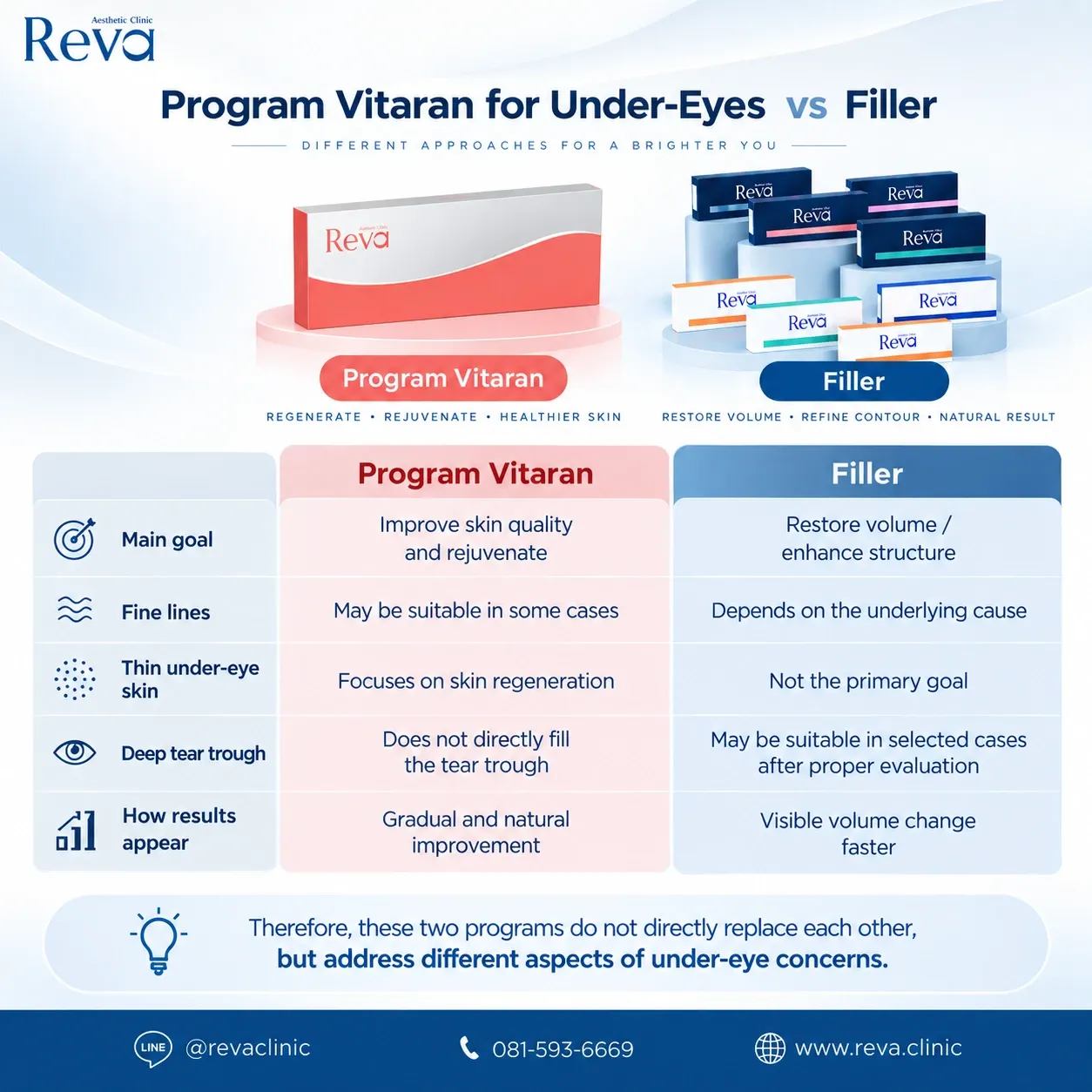
Unlike fillers, which are primarily used to restore volume or modify facial contours, PN treatments focus more on skin regeneration and skin quality.
Research on PN has discussed its potential roles in fibroblast activity, collagen synthesis, and extracellular matrix remodeling. This has led to its use in delicate areas such as the skin around the eyes.
What Can Program Vitaran Do for the Under-Eye Area?
1. Improve Fine Lines Under the Eyes
As we age, the skin under the eyes can become thinner and less elastic, making fine lines more noticeable.
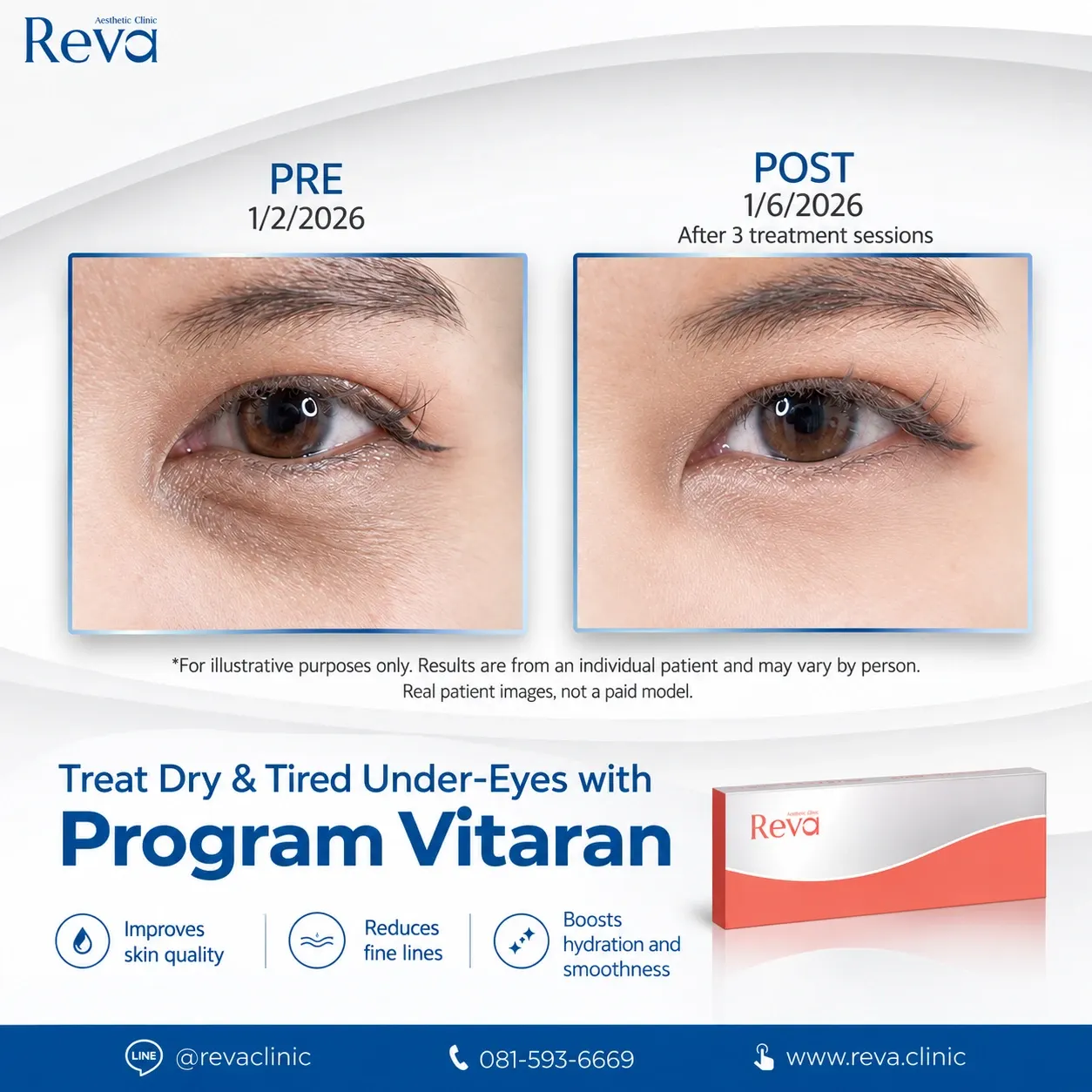
Program Vitaran focuses on improving skin quality and may therefore be considered for fine lines and early skin changes around the eyes, rather than for filling deep hollows.
A 2026 prospective observational study specifically evaluated PN injections for periorbital rejuvenation. The study reported significant improvements in lower-eyelid and crow’s-feet appraisal scores compared with baseline, with the greatest improvement observed approximately 3 months after two treatment sessions.
Important: The product used in this study was another PN product, not Program Vitaran. Therefore, these findings should be considered supporting evidence for Polynucleotide (PN) treatments as a category, rather than direct clinical evidence for Program Vitaran itself.
2. Improve Under-Eye Skin Texture
For some people, the main concern is not a deep tear trough but rather skin that looks crepey, wrinkled, or uneven.
In these cases, improving skin quality may be more relevant than simply adding volume.
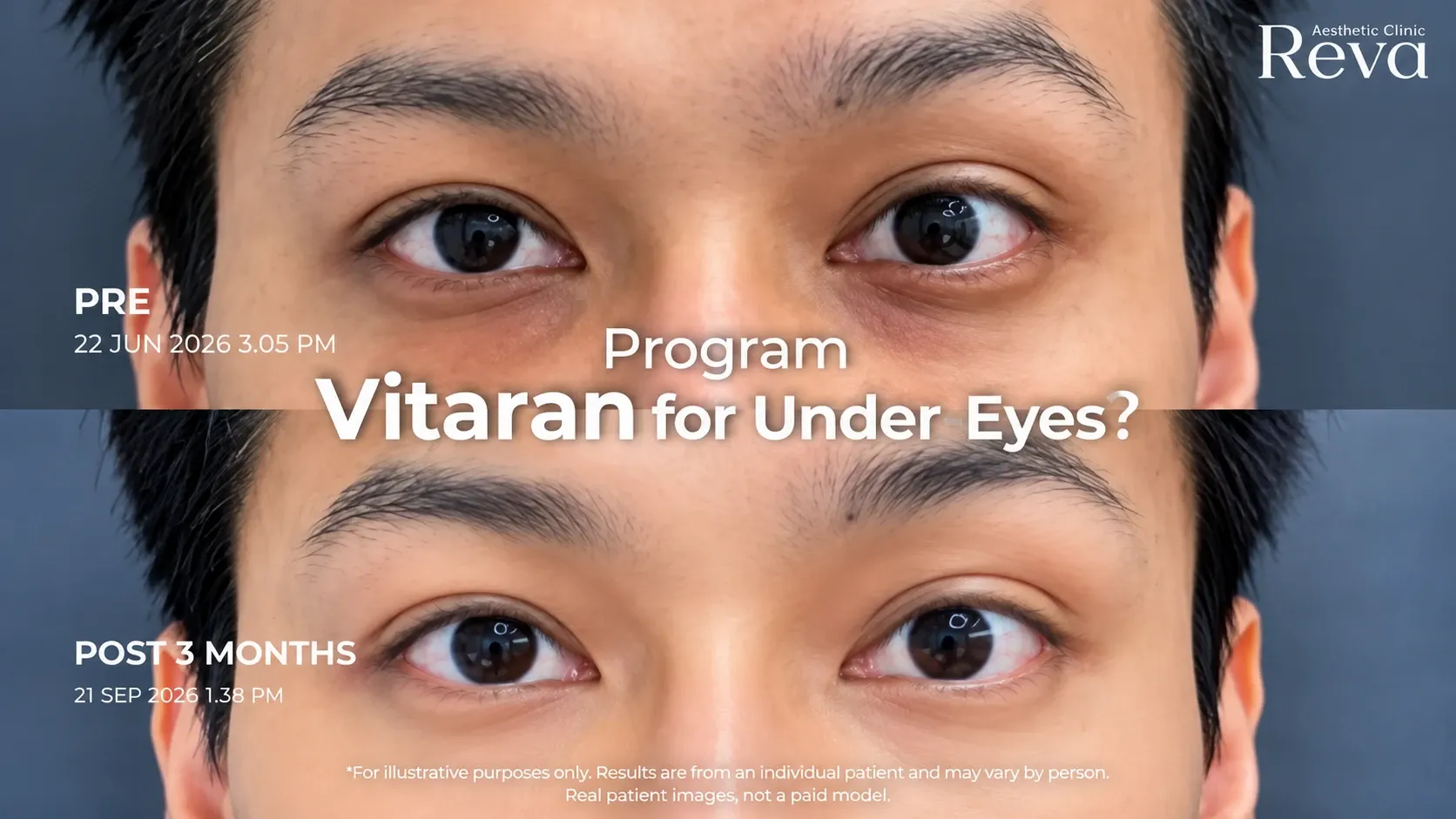
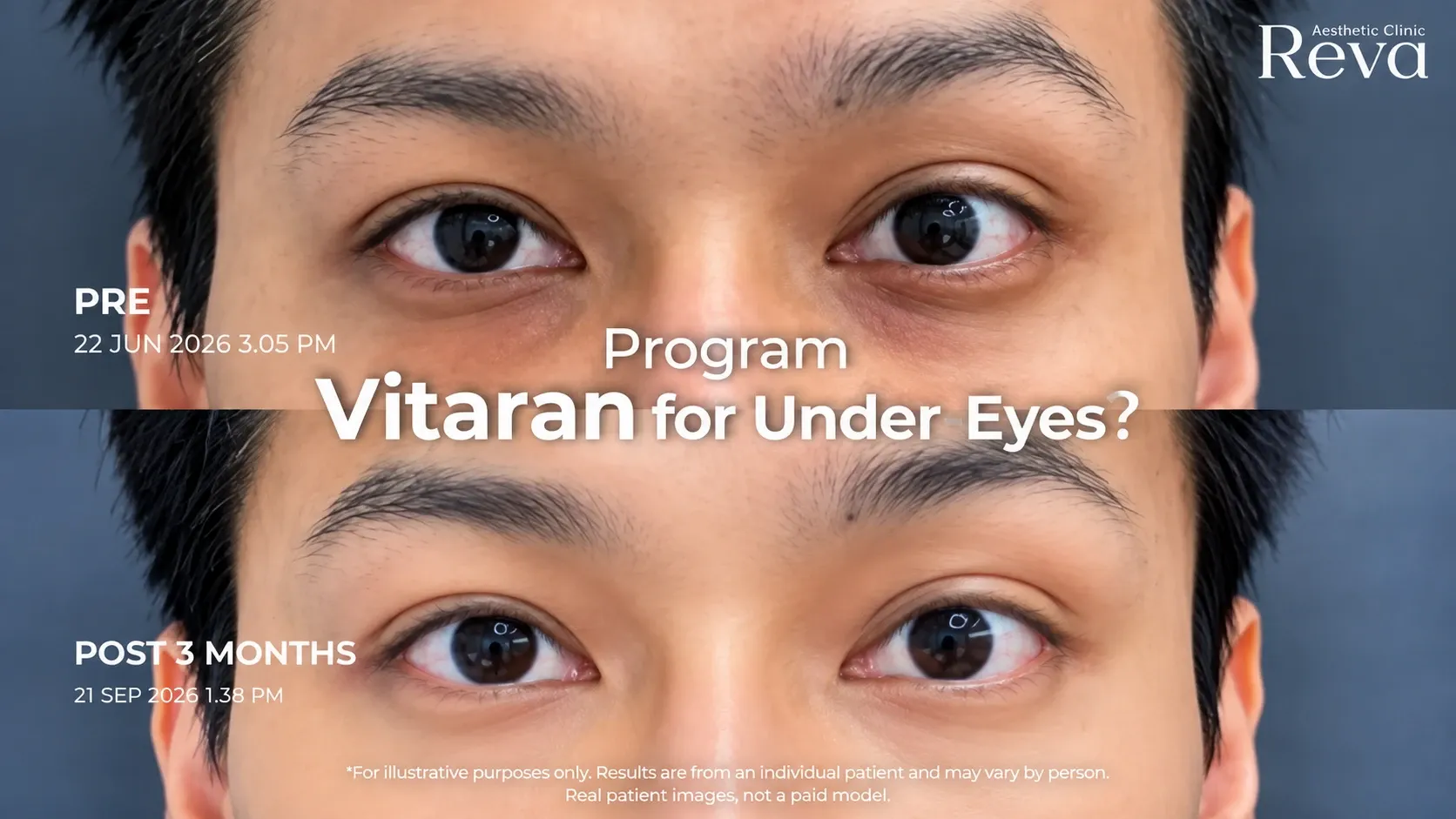
Clinical photographs presented in the 2026 study showed improvements in infraorbital skin texture and fine wrinkles at 3 months after two PN treatment sessions.
Program Vitaran may therefore be an option for someone who feels:
“My under-eyes are not deeply hollow, but the skin looks thinner and more wrinkled than before.”
3. Support Thin, Aging Under-Eye Skin
The under-eye area naturally has thin skin. As skin quality declines with age, fine lines and uneven texture may become more visible.
PN is considered a regenerative or biostimulatory approach rather than a volumizing treatment.
Existing research discusses its potential effects on fibroblast activity, collagen synthesis, and extracellular matrix remodeling. This means changes are expected to occur gradually rather than through immediate volume replacement.
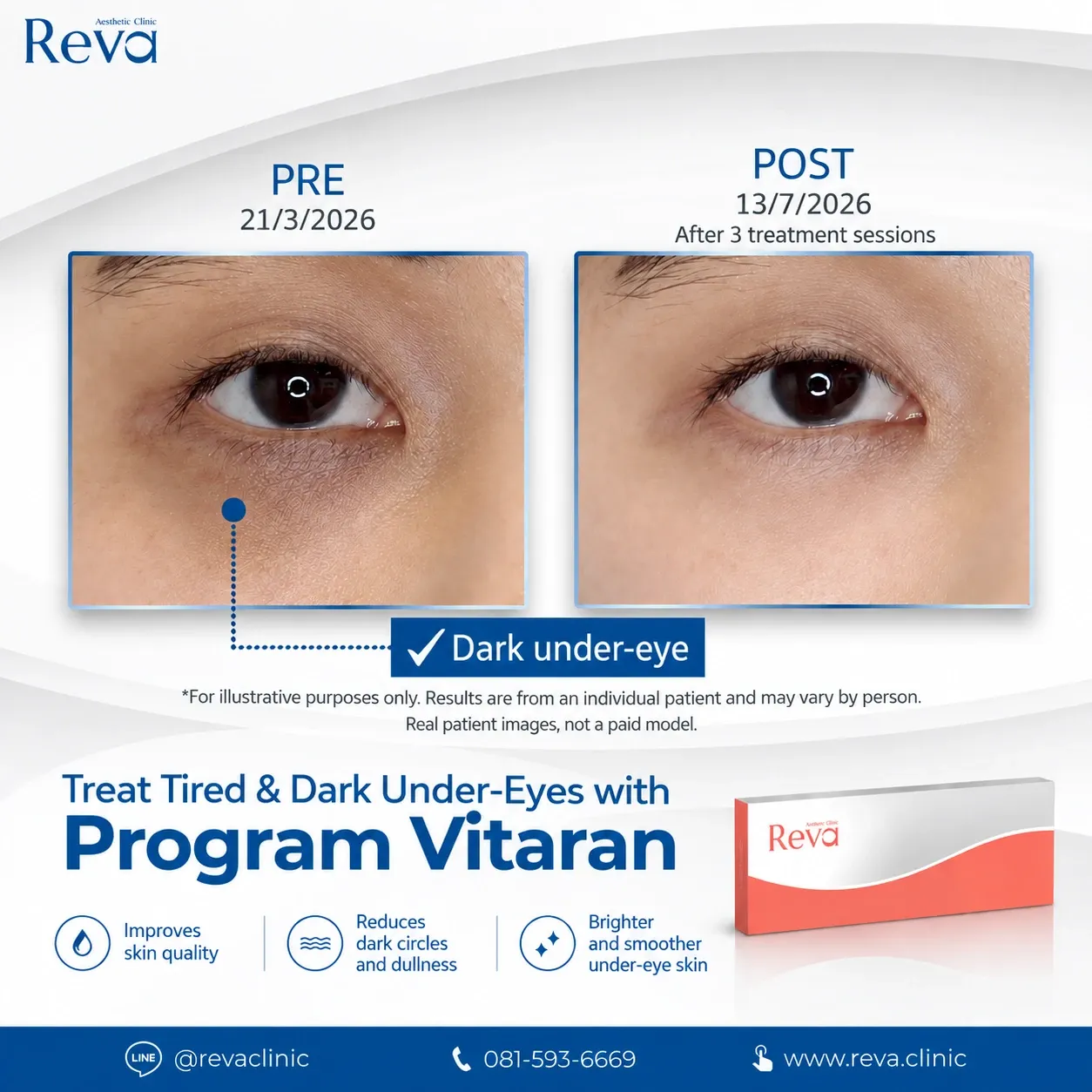
4. Can Program Vitaran Improve Dark Circles?
The answer depends on what is causing the dark circles.
Dark under-eyes can have several contributing factors, including:
The 2026 PN study included a clinical example showing improvement in pigmentation, skin smoothness, and fine wrinkles after two treatment sessions.
However, the study was not specifically designed to evaluate PN as a treatment for dark circles.
Therefore, Program Vitaran should not be described as a treatment that can correct every type of dark circle.
If darkness is mainly caused by pigmentation, a deep tear trough, or structural shadowing, improving skin quality alone may not fully address the problem.
Can Program Vitaran Improve Tear Troughs?
It is important to distinguish between under-eye skin quality and a deep tear trough.
Program Vitaran focuses primarily on improving skin quality. It is not designed to provide the same volumizing effect as a filler.
For someone whose main concerns are fine lines, thin skin, or uneven texture, Program Vitaran may be considered.
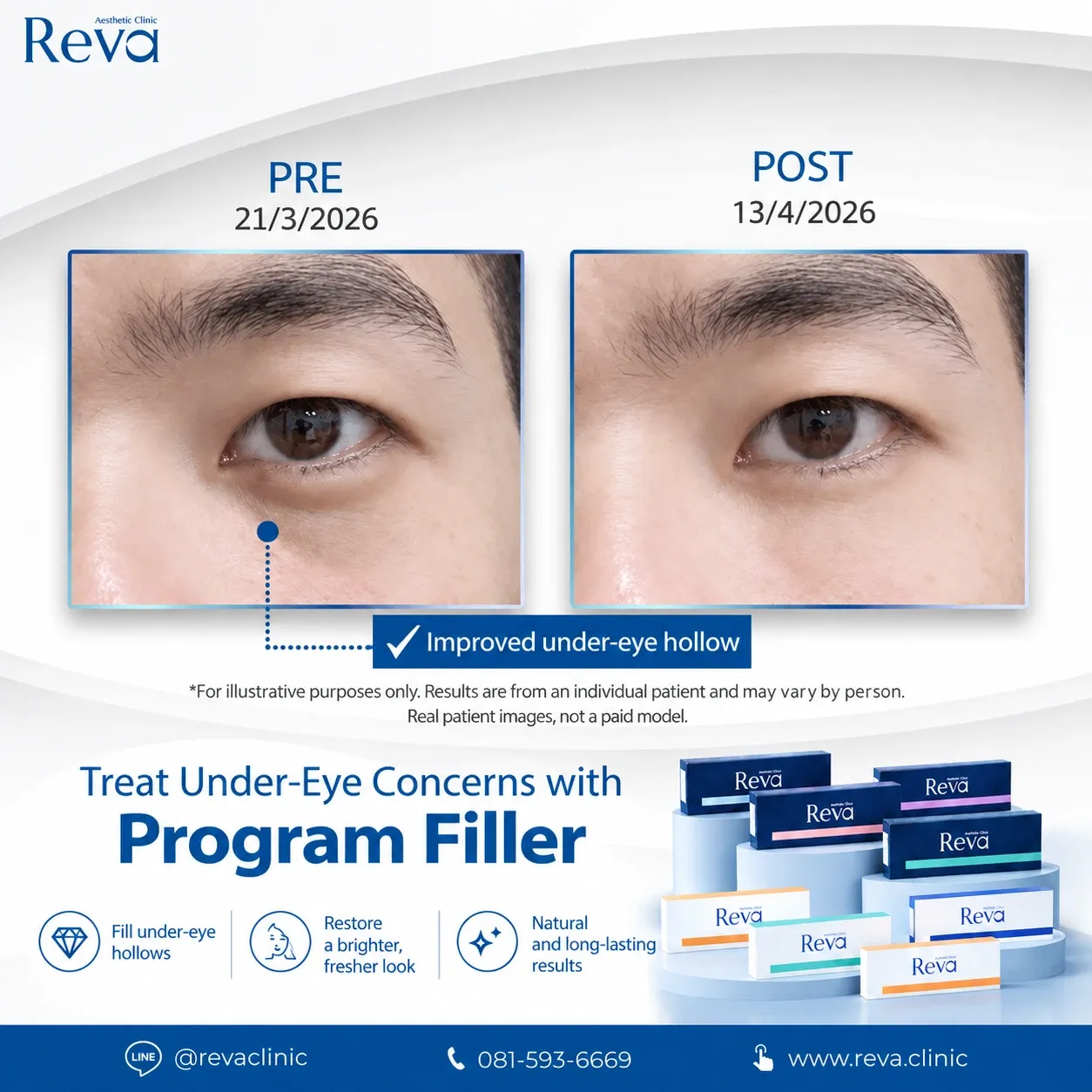
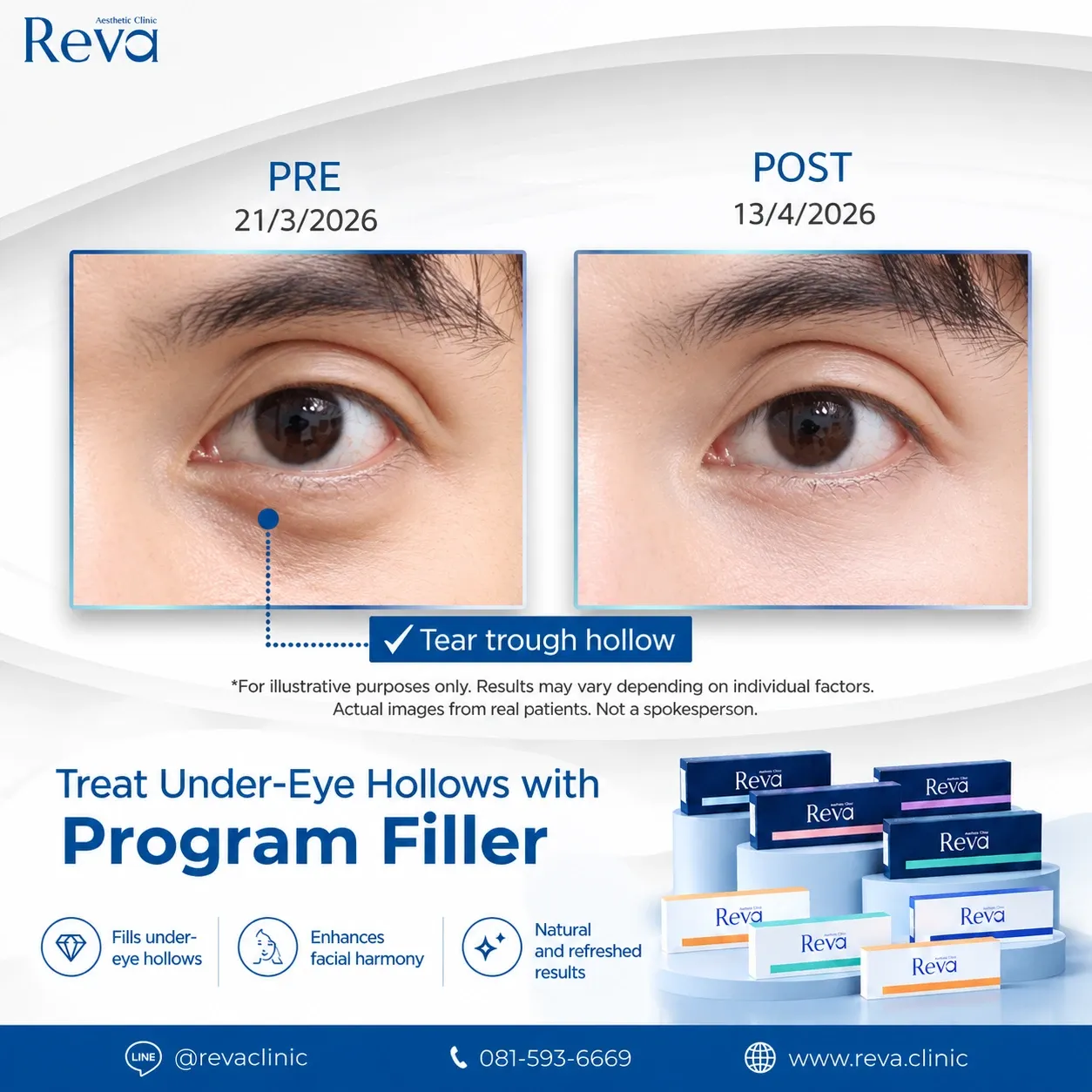
However, if the main concern is a deep tear trough caused by volume loss or facial anatomy, another treatment approach may be more appropriate.
Who Is Program Vitaran Under-Eye Treatment Suitable For?
Program Vitaran may be considered for people who have:
Fine lines under the eyes
Thin-looking under-eye skin
Crepey or uneven under-eye texture
Age-related decline in skin quality
A desire to improve skin quality rather than add volume
No significant deep tear trough as the primary concern
For patients with prominent eye bags, deep tear troughs, or significant dark circles, the underlying cause should be assessed before deciding whether Program Vitaran is appropriate.
How Many Program Vitaran Under-Eye Sessions Are Needed?
PN treatment is generally intended to produce gradual skin-quality changes rather than immediate volumization.
In the 2026 study, patients received two PN treatment sessions spaced 3 weeks apart. A third session was performed in selected patients who continued to have moderate-to-severe wrinkles after the second treatment.
Improvement was observed after the first treatment, while the greatest improvement occurred around 3 months after two sessions. Some reduction in effect was observed by 6 months, although outcomes remained improved compared with baseline.
For Program Vitaran specifically, the number of sessions and treatment interval should be individualized according to skin condition and the physician’s assessment. The protocol used for another PN product in a clinical study should not automatically be applied to Program Vitaran.
How Long Do Program Vitaran Under-Eye Results Last?
The 2026 study cannot be used to state exactly how long Program Vitaran results last, because the product studied was not Program Vitaran.
However, in this PN study, improvements remained evident compared with baseline at 6 months, although the effect had decreased somewhat from its peak at 3 months.
Individual results with Program Vitaran may vary depending on age, baseline skin condition, number of sessions, and treatment plan.
Does Program Vitaran Cause Swelling Under the Eyes?
Temporary swelling, small bumps, redness, or bruising may occur after injections around the under-eye area.
In the 2026 PN study, the most commonly reported early symptoms were mild swelling and discomfort, with some cases of minor bruising. No delayed or persistent treatment-related adverse events were observed during follow-up in this cohort.
The type and duration of post-treatment reactions can vary between individuals and products.
Program Vitaran vs Filler for Under-Eye Treatment
The two treatments therefore address different aspects of under-eye aging rather than simply being alternatives to each other.
Is Program Vitaran Good for the Under-Eye Area?
For people whose main concerns are fine lines, thin-looking skin, crepey texture, or declining under-eye skin quality, Program Vitaran may be one treatment option to consider.
Updated research published in 2026 provides additional evidence supporting the potential of Polynucleotide (PN) injections for periorbital rejuvenation. In the study, improvements in lower-eyelid and crow’s-feet appearance were observed, with the greatest response after two treatment sessions.
However, Program Vitaran is not intended to correct every under-eye concern. Eye bags, deep tear troughs, pigmentation, and structural shadows may require different treatment approaches.
At Reva Clinic, the physician evaluates skin quality, fine lines, volume loss, tear-trough anatomy, and the possible causes of dark circles before recommending a personalized treatment plan.