
Chin Dimpling & Mentalis Strain: Can Chin Botox Help? | Reva Clinic
What causes chin dimpling and mentalis strain? Learn how chin Botox works and why a short-looking chin may not always need filler.
October 9, 2026 - Read 6 mins



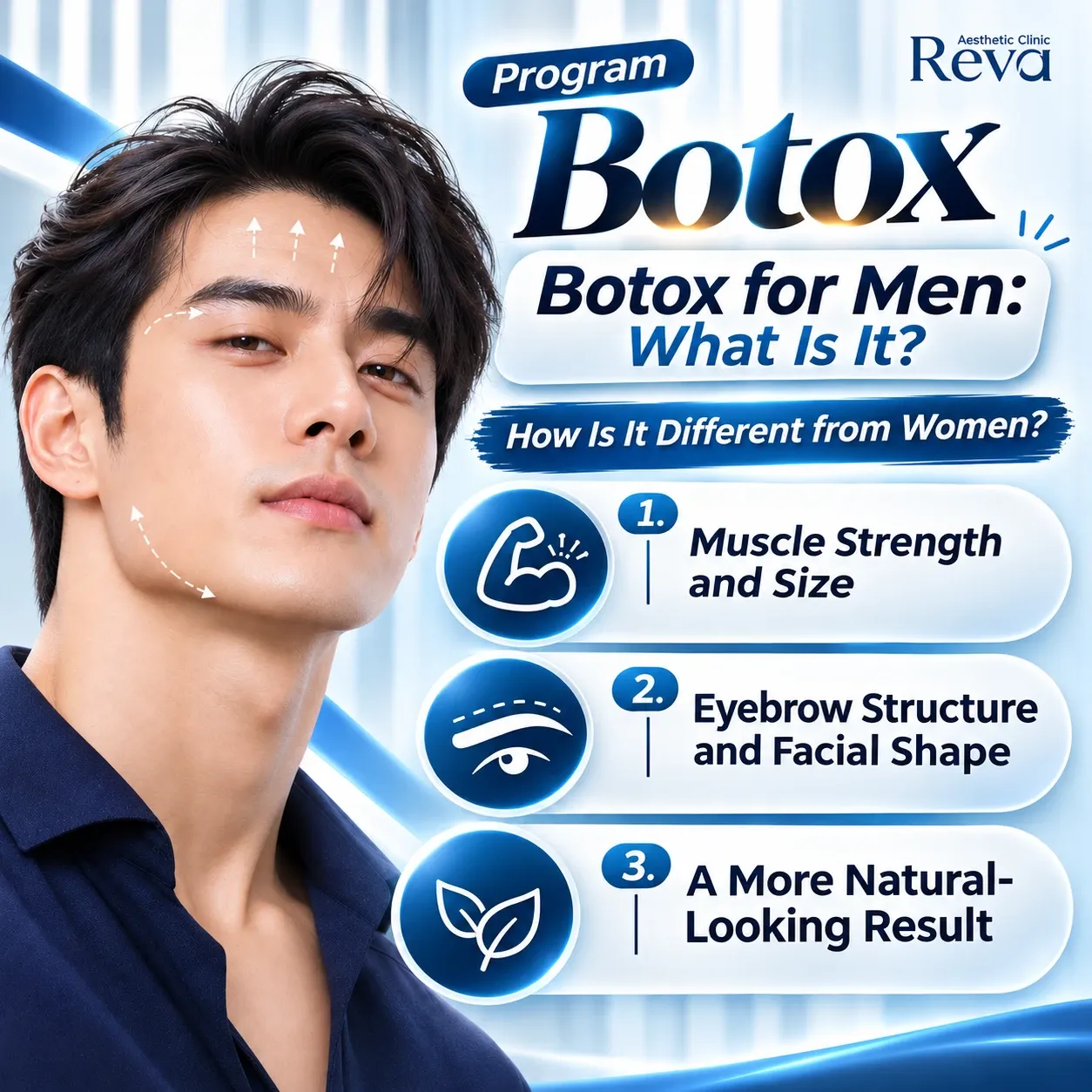
Now, aesthetic treatments and skincare are no longer exclusively associated with women. More men are paying attention to their appearance and facial aesthetics, particularly concerns such as dynamic wrinkles, frown lines, forehead lines, and prominent jaw muscles.
One aesthetic treatment gaining interest among men is Program Botox, which uses botulinum toxin type A to temporarily reduce muscle activity in targeted treatment areas.
For men considering aesthetic injectable treatments for the first time, several questions may arise: Which areas should be treated first? How many units are needed? How should they choose the right product? Will the treatment make their facial expressions look stiff or noticeably change their appearance?
Therefore, Program Botox for men should begin with a thorough assessment of individual facial anatomy and treatment goals, rather than choosing a treatment based solely on promotional offers or the number of units administered.
Program Botox is an aesthetic treatment that uses botulinum toxin type A to temporarily reduce muscle activity in targeted areas. It works by inhibiting the release of acetylcholine, a neurotransmitter responsible for transmitting signals from nerves to muscles at the neuromuscular junction.
By reducing the contraction of muscles responsible for facial expressions, Program Botox may help soften the appearance of dynamic wrinkles. Although its mechanism of action is the same in men and women, treatment planning may differ depending on individual facial anatomy and muscle characteristics.
Some men have larger and stronger muscles in areas such as the forehead, between the eyebrows, and along the jawline. As a result, injection sites and dosages may need to be adjusted accordingly. However, this does not mean that all men necessarily require higher doses than women.
Men often have relatively straighter and lower-positioned eyebrows compared to the eyebrow shapes commonly seen in women. Therefore, treating the forehead and glabellar area requires careful consideration of the balance between the muscles responsible for raising and lowering the eyebrows.
Inappropriate reduction of muscle activity may affect eyebrow position and natural facial expressions.
Some men want to reduce the appearance of wrinkles while preserving their natural facial expressions and existing facial contours.
Therefore, physicians should discuss each patient's expectations before developing a personalized treatment plan, as achieving an appropriate result does not necessarily mean eliminating every wrinkle.
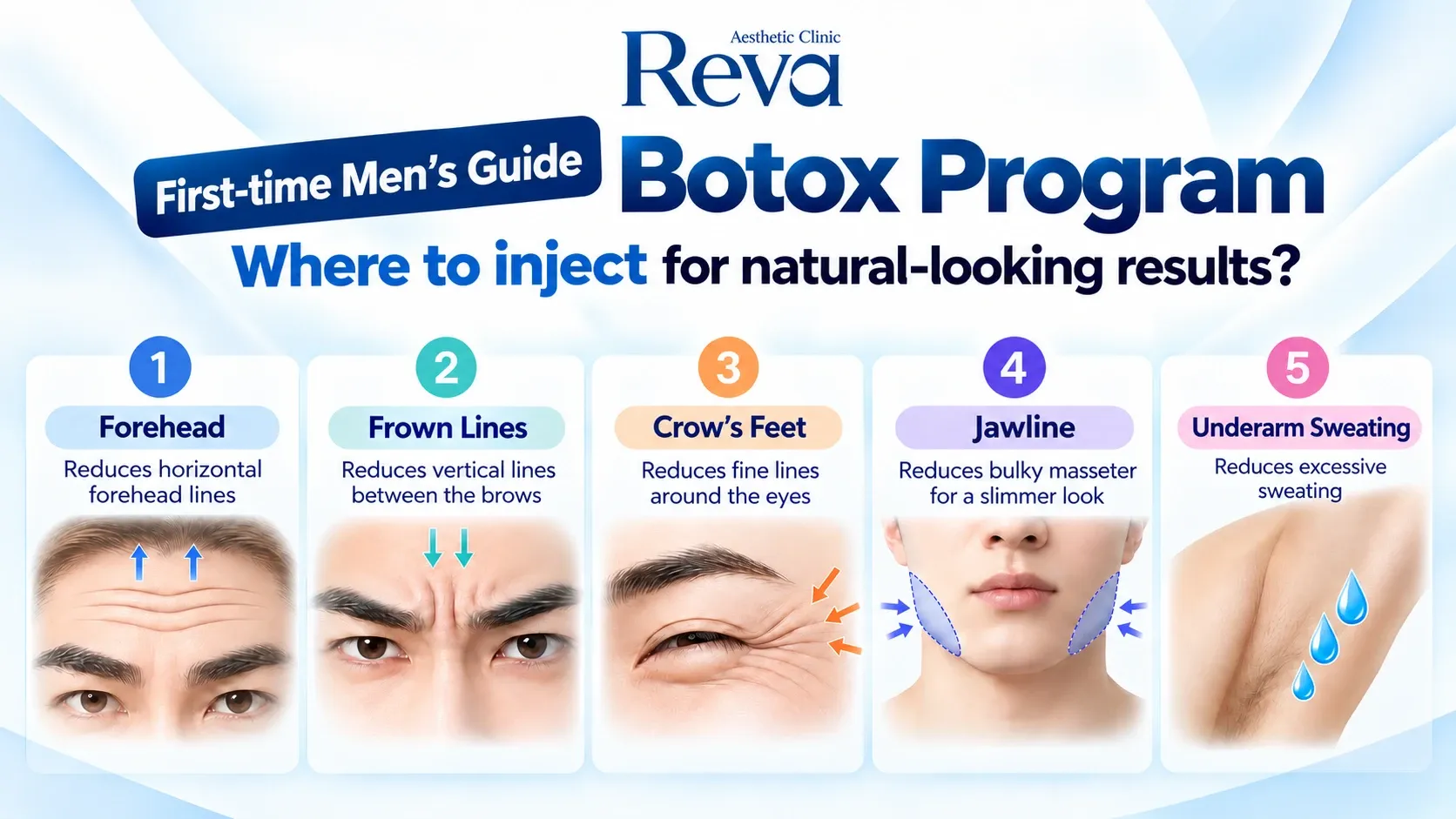
Forehead lines are caused by the activity of the frontalis muscle, which is responsible for raising the eyebrows. Repeated eyebrow movements cause the forehead skin to fold, making wrinkles more noticeable with age.
Program Botox for the forehead may help reduce the appearance of dynamic wrinkles caused by repeated muscle contractions.
Frown lines are a common concern, particularly among individuals who frequently contract the muscles between their eyebrows. These lines can make the face appear tense or serious, even when the person is not intentionally making an expression.
Program Botox can help reduce the activity of the muscles responsible for frowning, potentially softening the appearance of dynamic wrinkles between the eyebrows.
Crow's feet are fine lines and wrinkles that develop around the outer corners of the eyes due to the activity of the orbicularis oculi muscle. They often become more noticeable when smiling or laughing.
Program Botox may help reduce muscle contractions in this area, softening the appearance of dynamic wrinkles around the eyes.
The masseter is one of the primary muscles responsible for chewing. Some men have enlarged masseter muscles, which can contribute to a wider or more square-shaped lower face.
Program Botox injections into the masseter muscles may help reduce muscle size in suitable patients, potentially altering the contour of the lower face.
However, it is essential to determine whether a wide jawline is primarily caused by muscle enlargement, bone structure, or facial fat before considering treatment.
In addition to treating facial wrinkles, certain botulinum toxin products are approved for the treatment of excessive underarm sweating, medically known as axillary hyperhidrosis.
This treatment works by temporarily blocking the nerve signals that stimulate sweat glands in the injected area, helping reduce excessive sweat production.

The first step is to identify the primary concern you would like to address, such as:
Forehead Wrinkles: Assess the frontalis muscle and eyebrow position.
Prominent Frown Lines: Evaluate the muscles between the eyebrows (glabellar muscles).
Crow's Feet When Smiling: Assess the muscles surrounding the eyes.
Enlarged Jaw Muscles: Evaluate the size of the masseter muscles and determine whether treatment is appropriate.
Excessive Underarm Sweating: Assess the underlying cause and determine whether the treatment is medically indicated.
The most appropriate treatment areas should be determined through an individual assessment by a qualified physician, rather than relying solely on before-and-after photos or the number of units included in promotional offers.
There is no standard number of units suitable for every man, as the appropriate dosage depends on several factors, including:
Treatment Area: The specific area being treated.
Muscle Size and Strength: The size and activity of the targeted muscles.
Wrinkle Severity: The depth and severity of facial wrinkles.
Eyebrow Position and Facial Anatomy: Individual facial structure and eyebrow positioning.
Desired Results: The patient's aesthetic goals and expectations.
Product Type and Approved Indications: The specific product used and its approved indications.
Some men may require higher doses in certain treatment areas due to larger or stronger facial muscles. However, the appropriate dosage cannot be determined based on gender alone.
Important: The potency units of different botulinum toxin products are product-specific and cannot be directly compared or converted between brands.
Before undergoing treatment, consider which facial wrinkles or muscle-related concerns you would like to address. This will help you clearly communicate your concerns and aesthetic goals to your physician.
Inform your physician about any underlying medical conditions, current medications, known allergies, previous botulinum toxin injections, and other aesthetic treatments you have received.
Individuals with neuromuscular disorders or a history of swallowing or breathing difficulties require particularly careful medical evaluation before treatment.
Before treatment, verify the product name, origin, Thai FDA registration number, and relevant details of the product being administered.
Program Botox should only be administered by a qualified physician in a licensed medical facility.
If your goal is to reduce wrinkles while maintaining natural facial expressions, discuss your expectations with your physician before treatment.
A personalized treatment plan should consider not only the location of facial wrinkles but also individual facial anatomy, muscle activity, and overall facial balance.
Mild Side Effects: You may experience temporary redness, swelling, mild discomfort, or bruising at the injection sites. These symptoms generally resolve on their own.
Avoid Lying Down: It is commonly recommended to remain upright for approximately 4–6 hours after treatment, following your physician's specific instructions.
Follow Post-Treatment Instructions: Follow your physician's aftercare recommendations and avoid unnecessary pressure, rubbing, or massaging of the treated areas immediately after the procedure.
Monitor for Unusual Symptoms: If you experience unusual symptoms, such as drooping eyelids, changes in vision, or muscle weakness, contact your physician promptly for evaluation.
Seek Immediate Medical Attention: If you develop difficulty swallowing, speaking, or breathing, seek emergency medical care immediately.
Possible side effects may include:
Swelling, redness, or bruising at the injection sites
Injection-site pain or headache
Drooping eyelids (ptosis) or eyebrows (brow ptosis)
Changes in facial expressions
Facial muscle asymmetry
Weakness of nearby muscles
Other adverse reactions as described in the prescribing information for each product
Individuals with an active infection at the proposed injection site or a known hypersensitivity to any component of the product should not receive injections with that product.
Therefore, a thorough medical assessment is essential before every Program Botox treatment to identify potential contraindications, evaluate individual risk factors, and determine whether the procedure is appropriate for the patient.

What causes chin dimpling and mentalis strain? Learn how chin Botox works and why a short-looking chin may not always need filler.
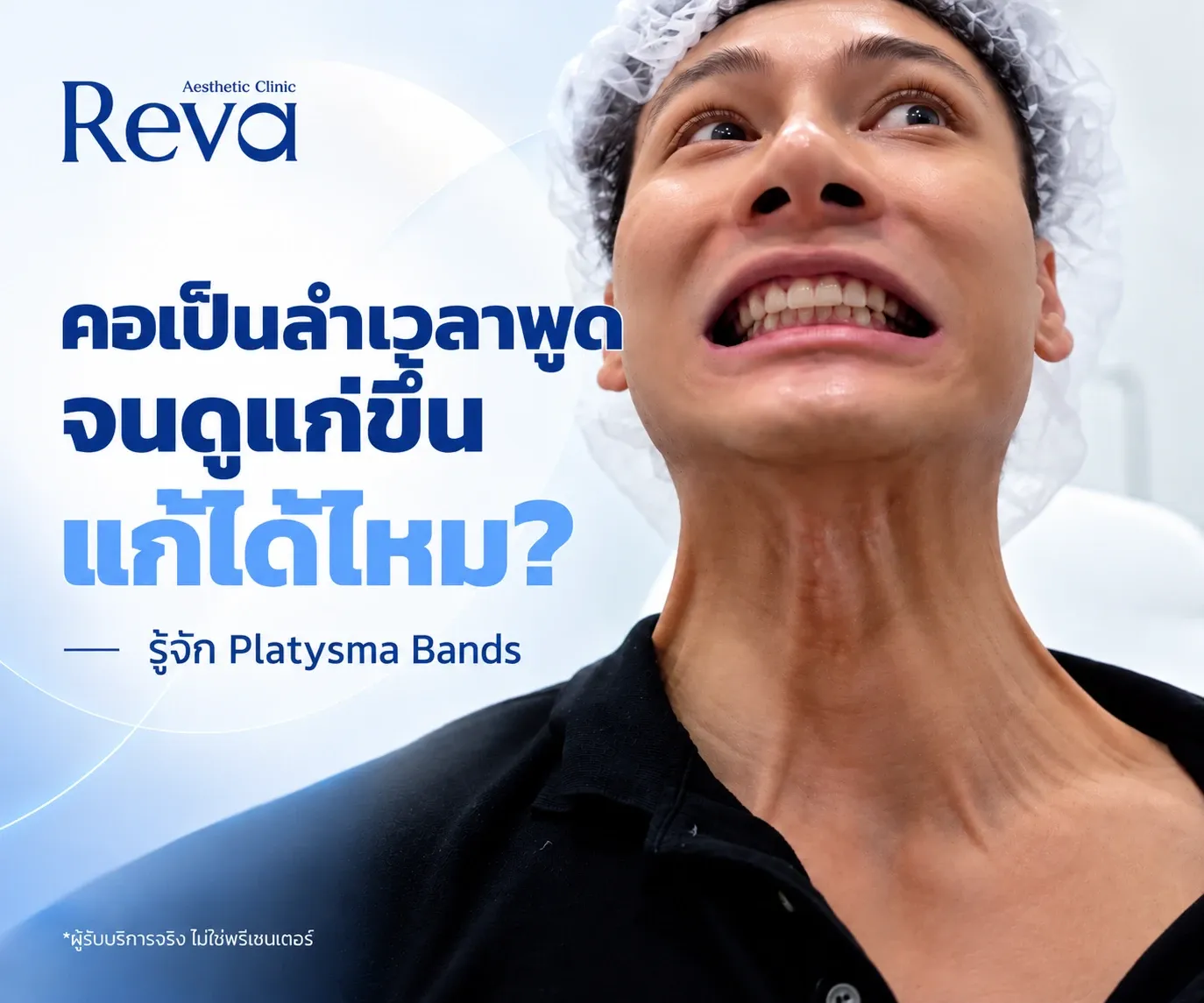
What causes vertical neck bands that become more visible when talking or tensing the neck? Learn about platysma bands and treatment options including Program Botox and the Nefertiti Lift.

What is Program Xeomin? Learn about incobotulinumtoxinA, complexing proteins, Botox resistance, and how personalized treatment can balance wrinkle reduction with natural facial expression.

What is Xpression Beauty? Discover the See More Me concept, how natural-looking Botox is designed to preserve facial expression, and the role of Program Xeomin.



Why do your eyelids feel heavy or your forehead feel tight after Botox? Learn how dose, frontalis anatomy, injection points, and technique affect natural results.
Consult a dermatologist at Reva Clinic. We’re here to provide personalized guidance, helping you understand your skin and care for it with confidence.


