Post-Acne Hyperpigmentation (PIH): What Is It and How Is It Different from PIE? | Reva Clinic
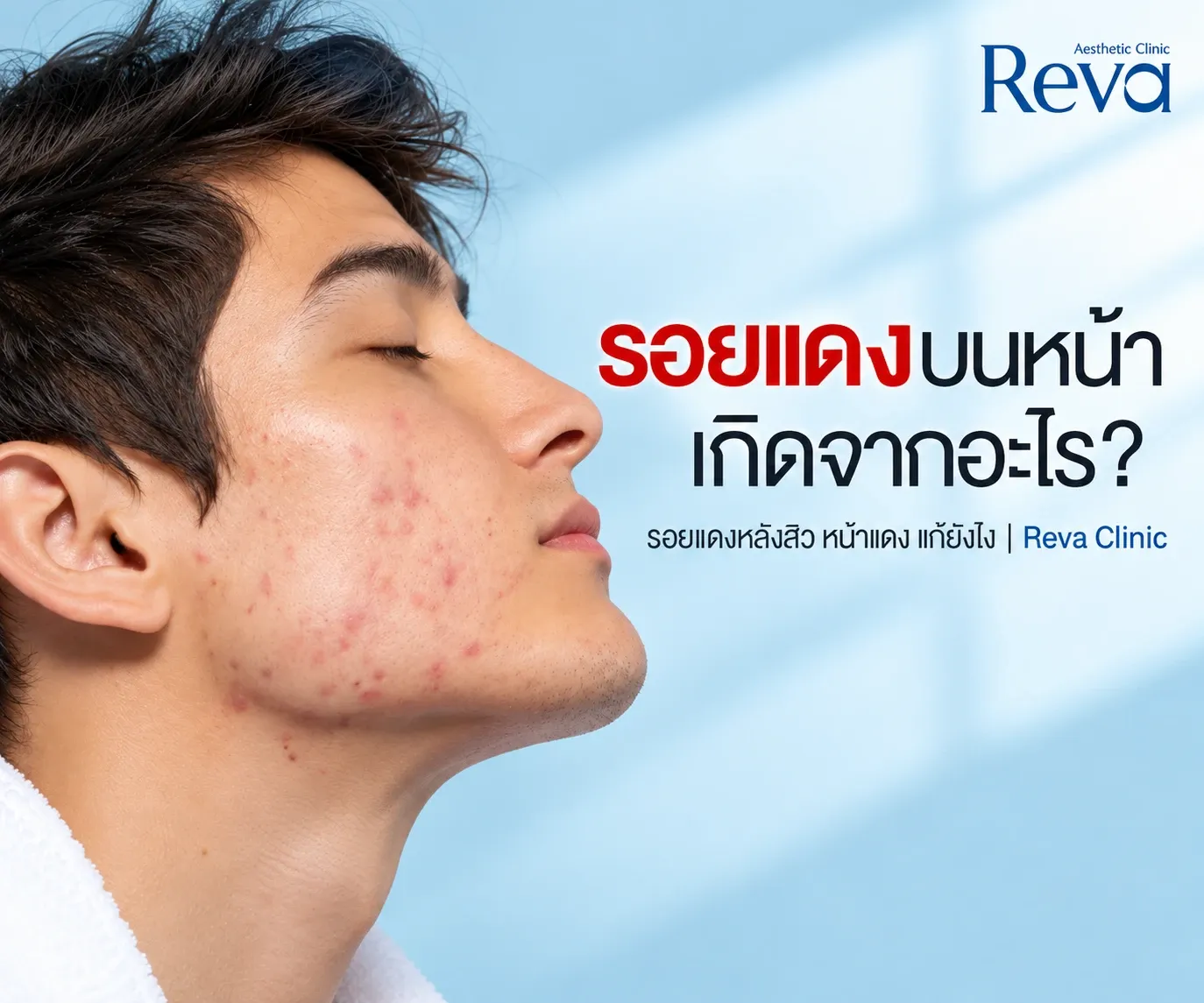
Acne may be gone, but the marks it leaves behind can remain for weeks or months. These marks are often grouped together as “acne marks,” but two of the most common types are PIH (Post-Inflammatory Hyperpigmentation) and PIE (Post-Inflammatory Erythema).
Although both can appear after acne, they develop through different mechanisms and may require different treatment approaches.
Key Takeaways
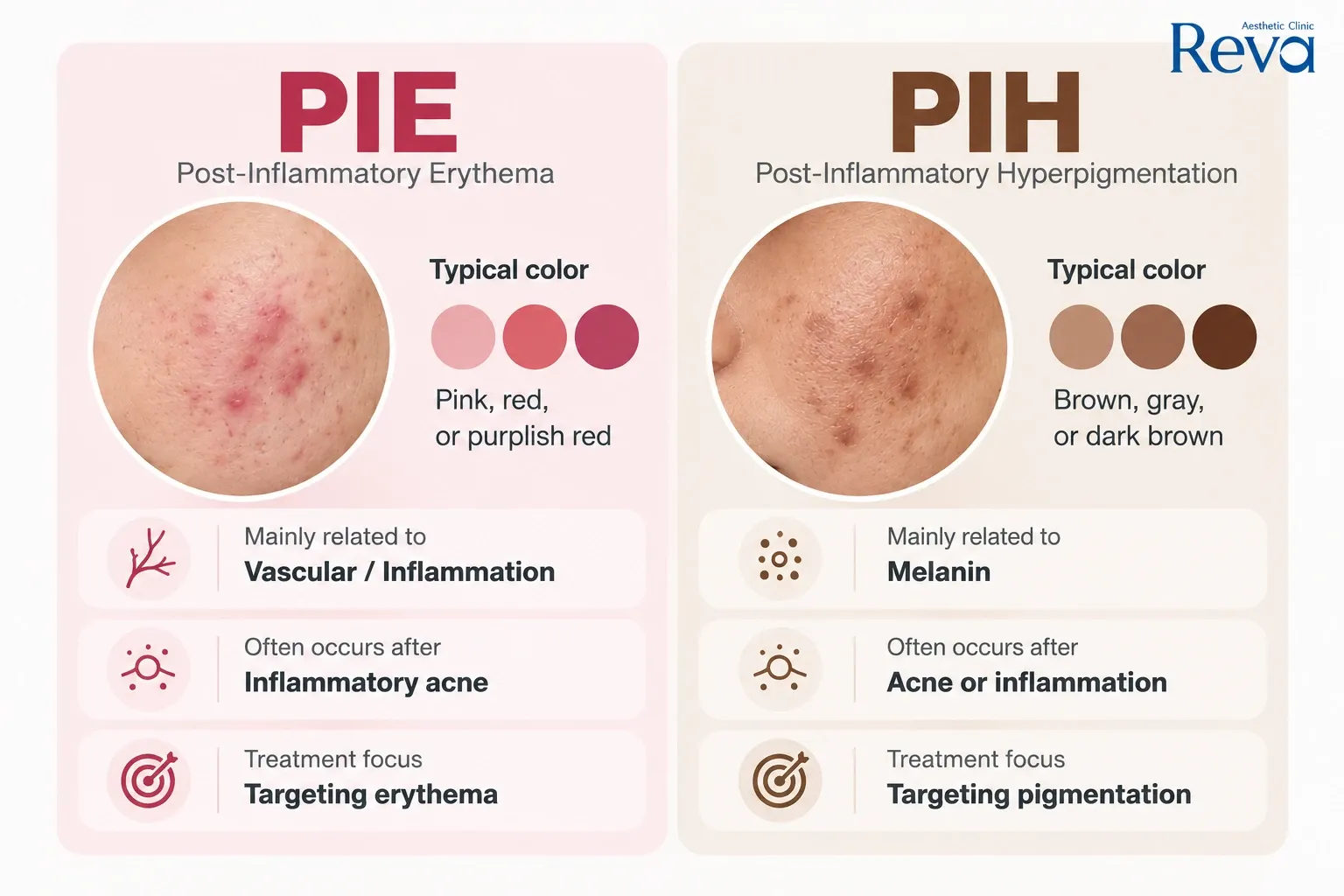
PIH (Post-Inflammatory Hyperpigmentation) appears as brown, dark brown, or sometimes grayish marks and is mainly related to melanin.
PIE (Post-Inflammatory Erythema) appears as pink, red, or purplish-red marks and is mainly related to blood vessels and inflammation.
It is possible to have PIH and PIE at the same time.
Identifying the type of acne mark first can help determine whether skincare, medication, or energy-based treatments may be more appropriate.
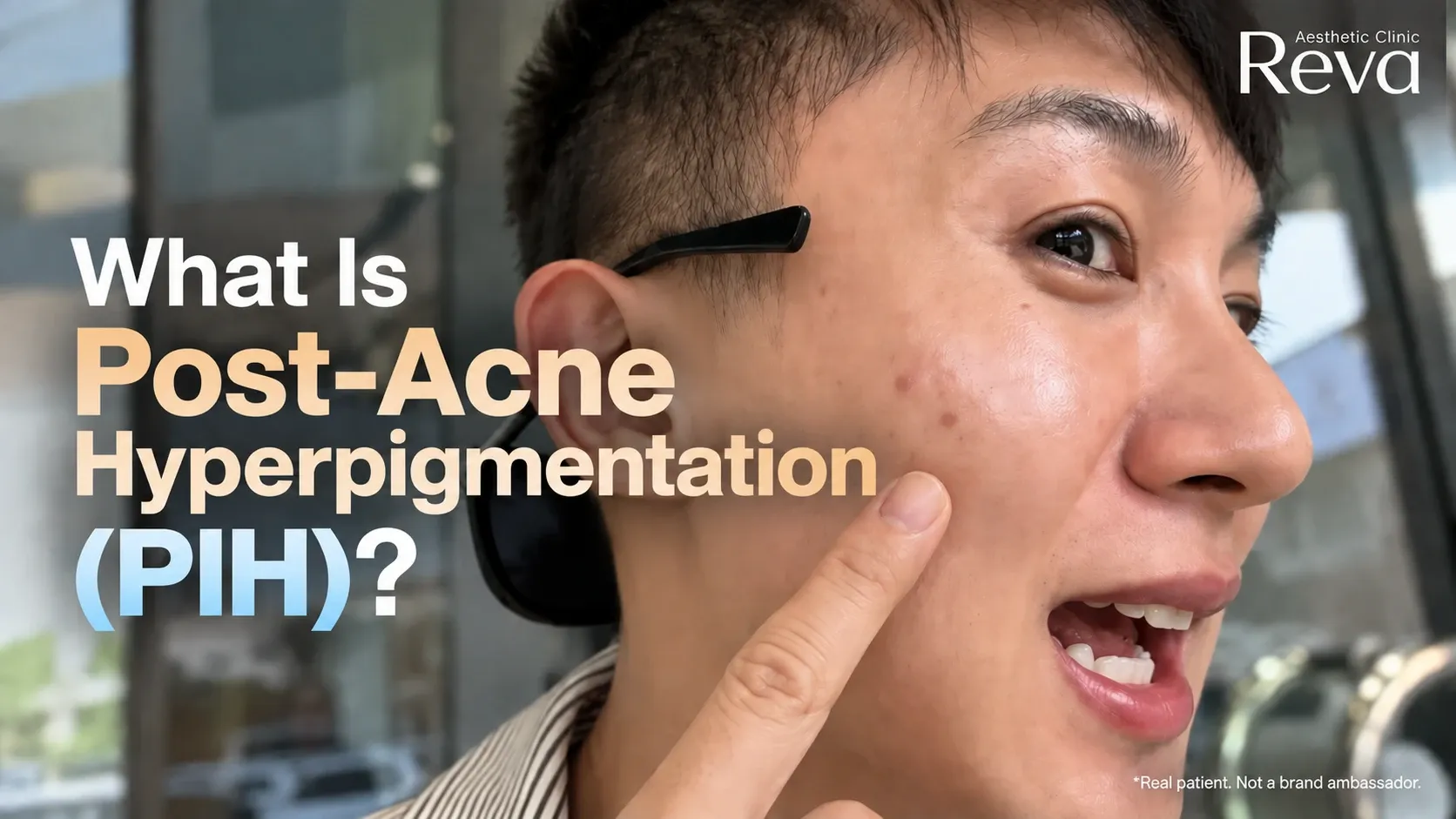
What Is Post-Acne Hyperpigmentation (PIH)?
PIH, or Post-Inflammatory Hyperpigmentation, is darkening of the skin that develops after inflammation, such as inflammatory acne or skin irritation.
When inflammation occurs, it can stimulate melanocytes, the cells responsible for producing melanin. Increased melanin production may remain visible even after the acne lesion has healed, leaving behind brown, dark brown, or grayish marks.
PIH can be particularly noticeable in medium to darker skin tones and may persist for several months, especially when the skin is repeatedly inflamed or exposed to sunlight.
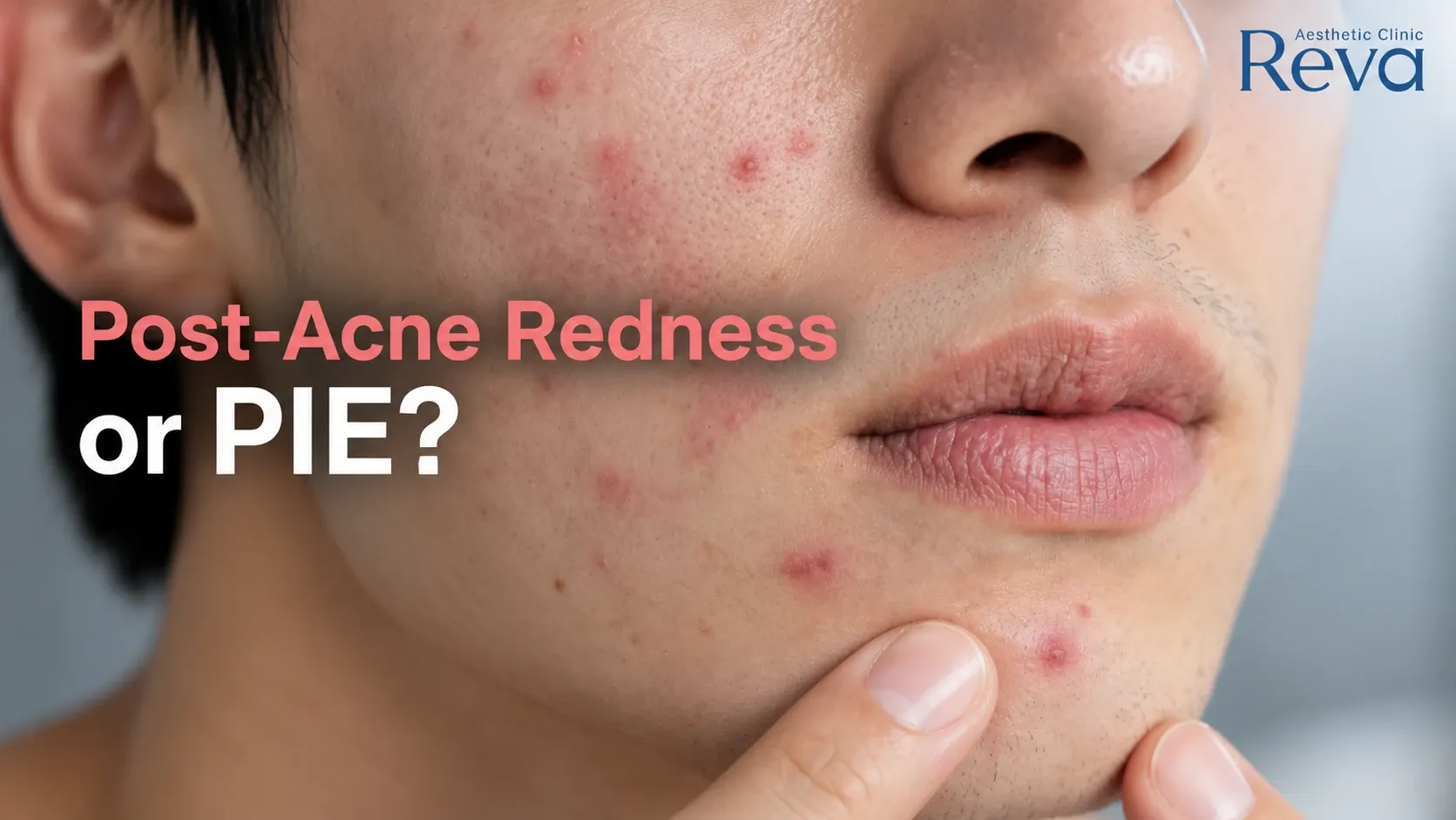
What Is PIE?
PIE, or Post-Inflammatory Erythema, is more closely related to vascular changes following inflammation rather than excess melanin.
After an inflammatory acne lesion heals, changes or dilation of small blood vessels may remain visible, creating pink, red, or purplish-red marks.
This means that although PIH and PIE can both occur after acne, the underlying causes—and therefore the treatment targets—are different.
PIH vs PIE: What’s the Difference?
A simple way to remember:
PIH = Pigment → Brown/Dark Marks
PIE = Erythema → Red Marks
Why Can You Have Both PIH and PIE?
A single acne lesion can cause both vascular changes and increased melanin production.
Initially, the area may appear predominantly red. Over time, brown pigmentation may become more noticeable. Some areas may also contain both red and brown components simultaneously.
This is why acne marks should not automatically be treated as one condition. The first step is determining what is causing the visible color.
How Is PIH Treated?
The general approach is to reduce excess pigmentation while preventing new inflammation.
1. Sunscreen
UV radiation and visible light can contribute to pigmentation, particularly in people who are prone to PIH.
Consistent sun protection is therefore an important part of managing post-acne pigmentation.
2. Skincare and Pigment-Reducing Medications
Depending on the skin condition and individual needs, ingredients that may be considered include:
Using more active ingredients does not necessarily produce faster results. Excessive irritation can increase inflammation and potentially worsen PIH.
3. Laser and Energy-Based Treatments
For more noticeable or persistent pigmentation, a physician may consider laser or other energy-based treatments targeting pigmentation.
The appropriate treatment depends on factors such as the type and depth of pigmentation, skin tone, active inflammation, and overall skin condition.
What If the Marks Are PIE Instead?
If the marks are predominantly red rather than brown, treatments that target melanin alone may not address the main problem.
In PIE, the vascular and inflammatory components should also be considered.
If active inflammatory acne is still present, controlling the acne and inflammation is usually an important first step. Otherwise, new PIE and PIH may continue to develop.
Can Picking or Squeezing Acne Make PIH Worse?
Yes. Picking, squeezing, or repeatedly irritating acne can increase inflammation and skin injury.
This may increase the likelihood of developing PIH, PIE, and potentially acne scars.
When acne is still inflamed, controlling the inflammation and avoiding unnecessary manipulation of the lesion are important.
Can PIH Fade on Its Own?
Some PIH can gradually fade after the inflammation has resolved and the skin naturally renews itself.
However, the time required varies significantly between individuals.
Superficial pigmentation may fade faster than deeper pigmentation, while sun exposure, recurrent inflammation, and skin irritation may cause the marks to become darker or take longer to improve.
Summary: Identify the Type of Acne Mark Before Treating It
If the marks left after acne are brown or dark brown, they are more likely associated with PIH and melanin. If they are pink or red, they are more likely associated with PIE and vascular/inflammatory changes.
Some people may have both at the same time, which means more than one treatment approach may be needed.
At Reva Clinic, the physician evaluates the color and characteristics of the marks, pigmentation, inflammation, active acne, and overall skin condition before developing an individualized treatment plan.