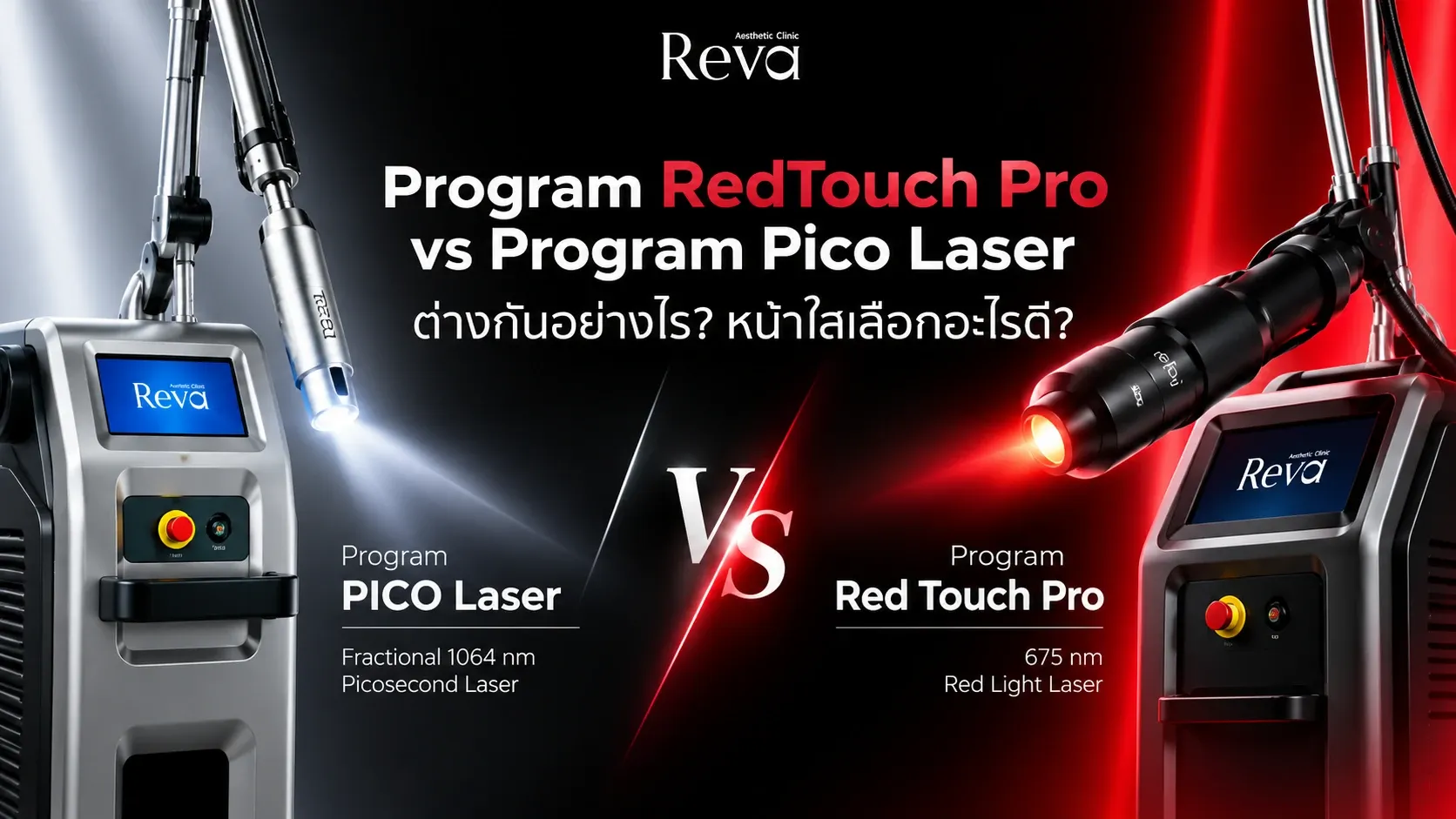
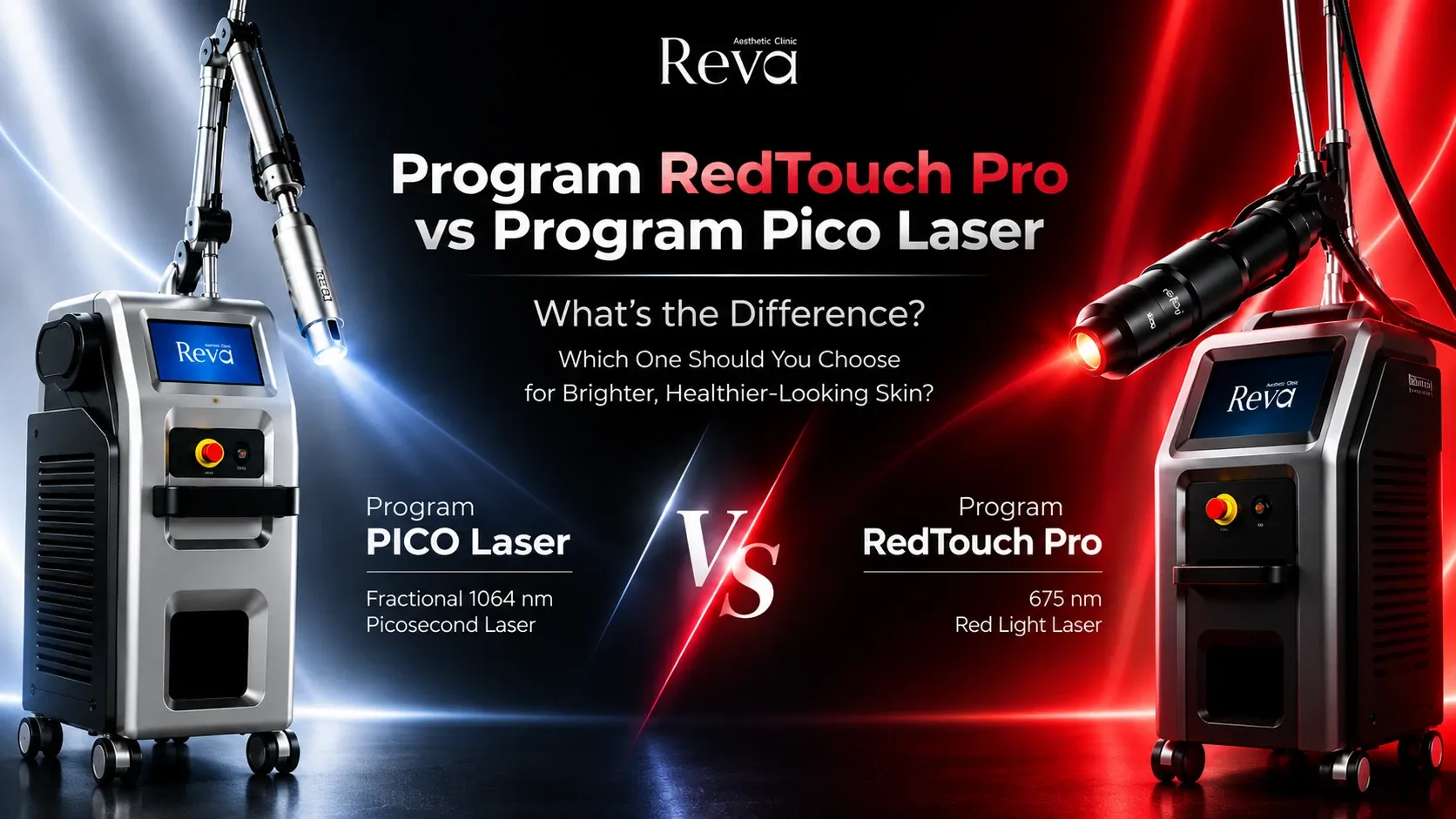
Program RedTouch Pro vs Program Pico Laser: What’s the Difference? Which One Should You Choose for Brighter Skin?
Both Program RedTouch Pro and Program Pico Laser are often chosen by people who want brighter, smoother, healthier-looking skin.
But although they may appear to address similar concerns, the two technologies work differently and do not necessarily have the same primary targets.
The more useful question is therefore not:
“Which one is better?”
but:
“What is the main skin concern you are trying to improve?”
Key Takeaways
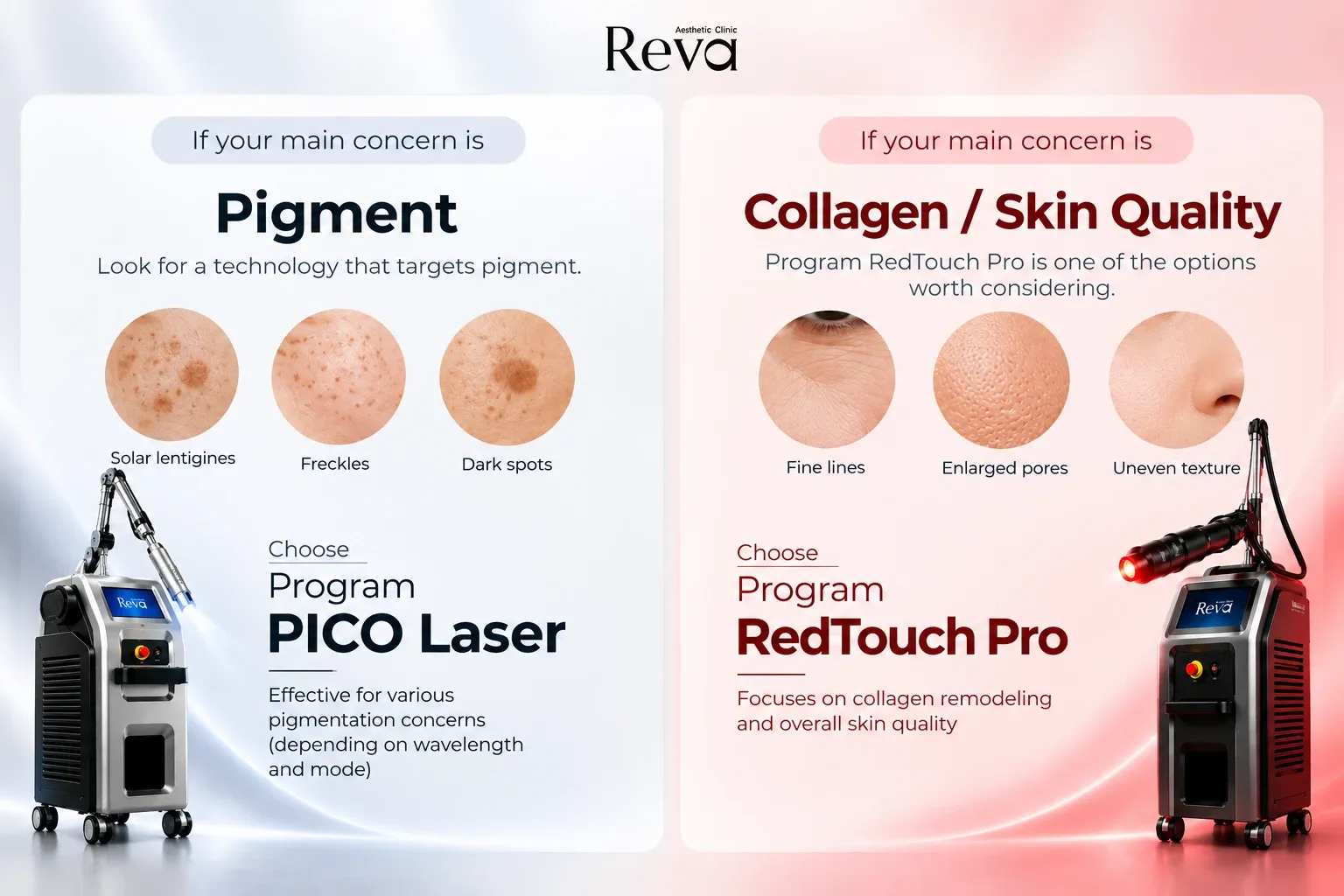
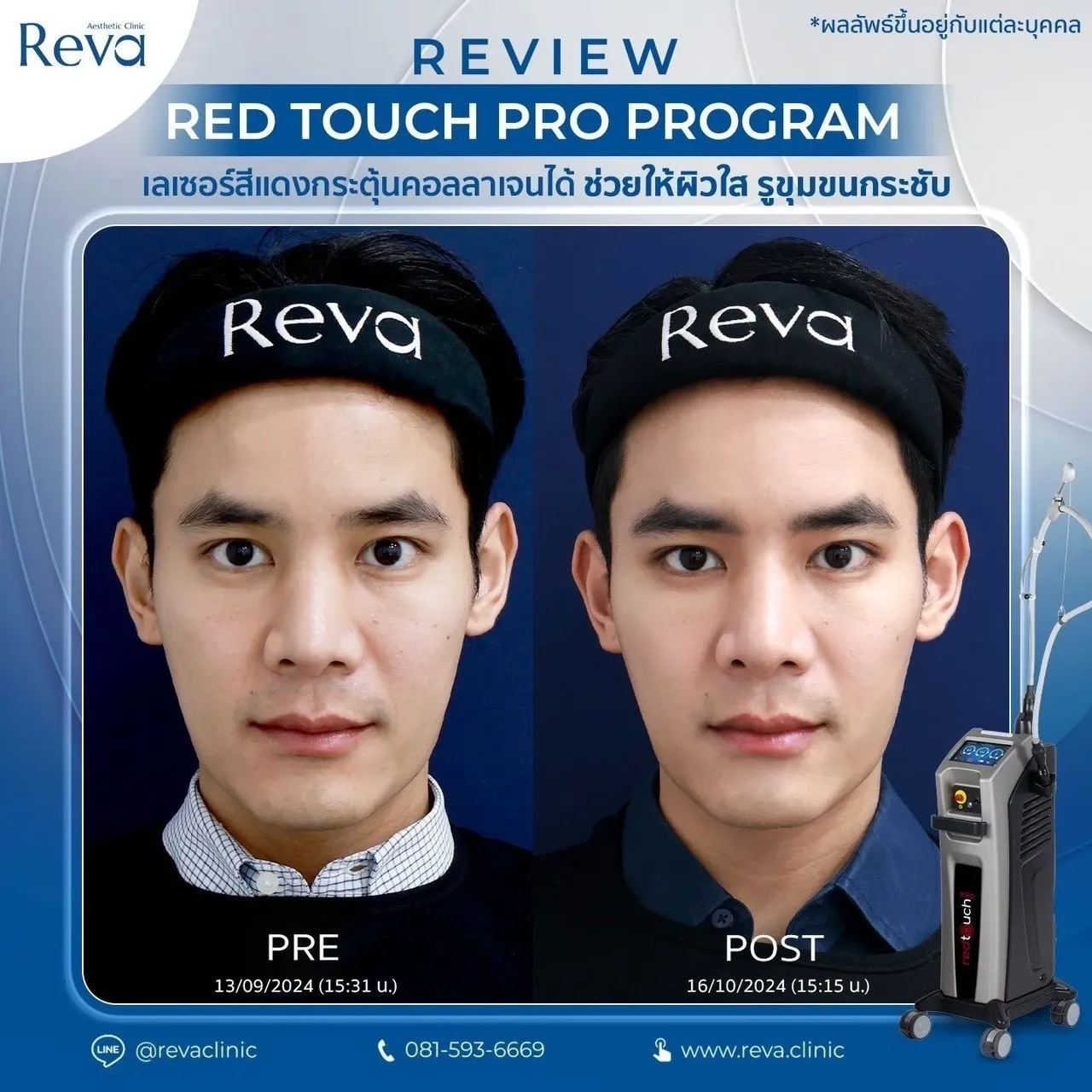
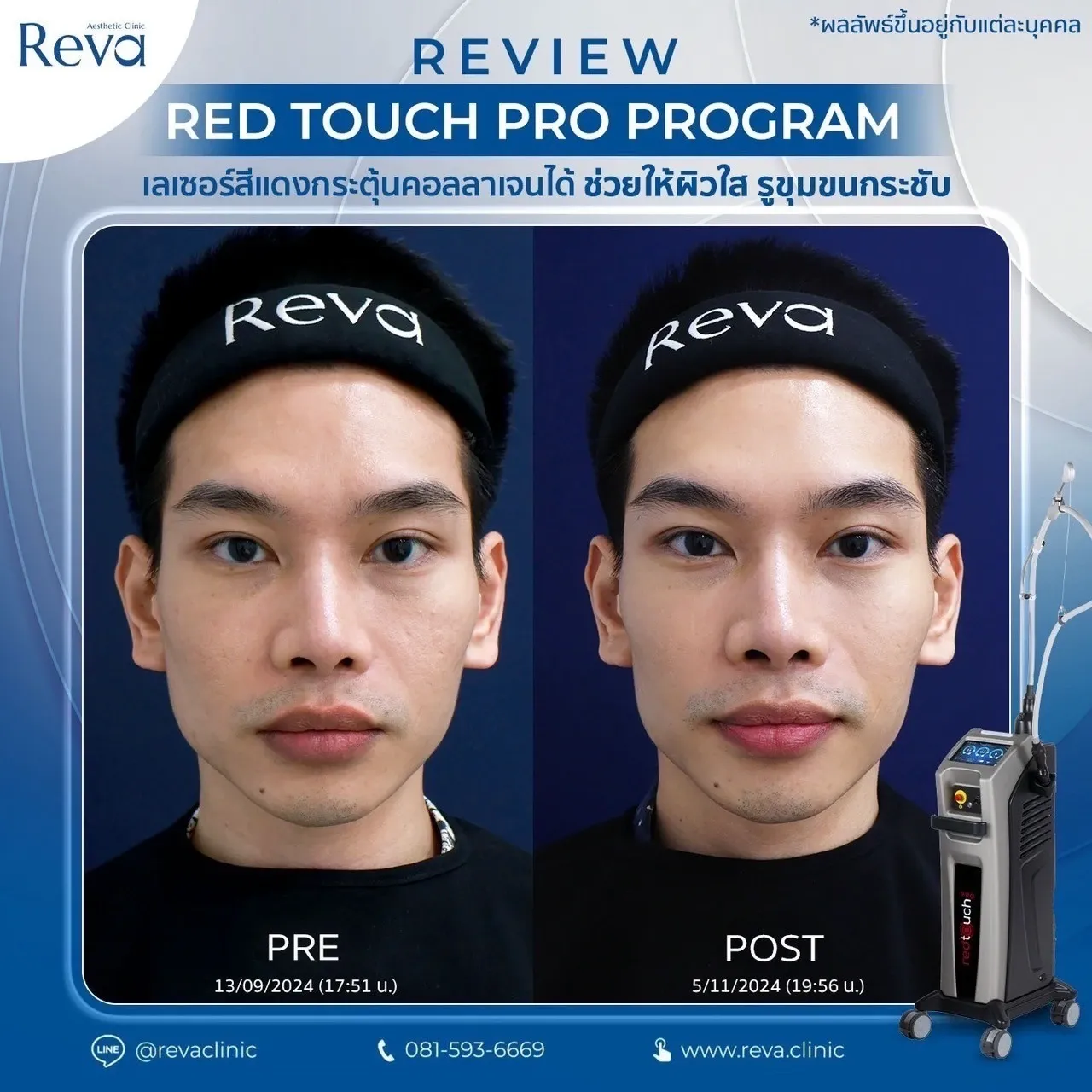
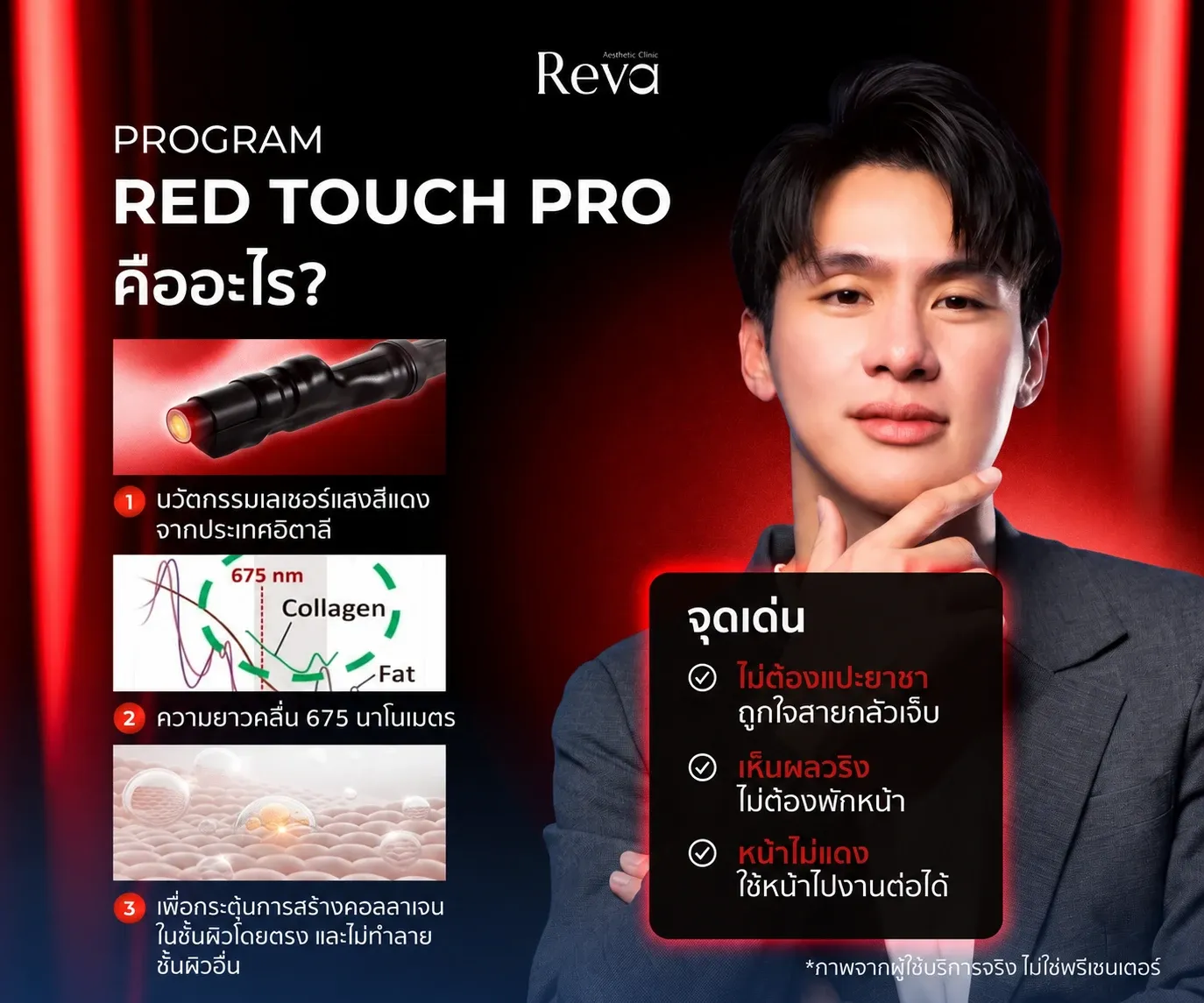
Program RedTouch Pro uses a 675 nm laser with a particular focus on collagen remodeling and overall skin quality.
Program Pico Laser uses ultrashort picosecond pulses and is commonly used when pigmentation is a major concern. Its effects depend on the wavelength, handpiece, and treatment mode used.
For fine lines, collagen loss, skin texture, and overall skin quality, Program RedTouch Pro may be an interesting option.
For pigmentation concerns, Program Pico Laser may have advantages depending on the type and depth of pigment.
Program RedTouch Pro is designed to provide treatment with relatively low discomfort and minimal downtime.
Neither treatment is universally “better.” The appropriate choice depends on the patient's skin concern and treatment goal.
What Is Program RedTouch Pro?
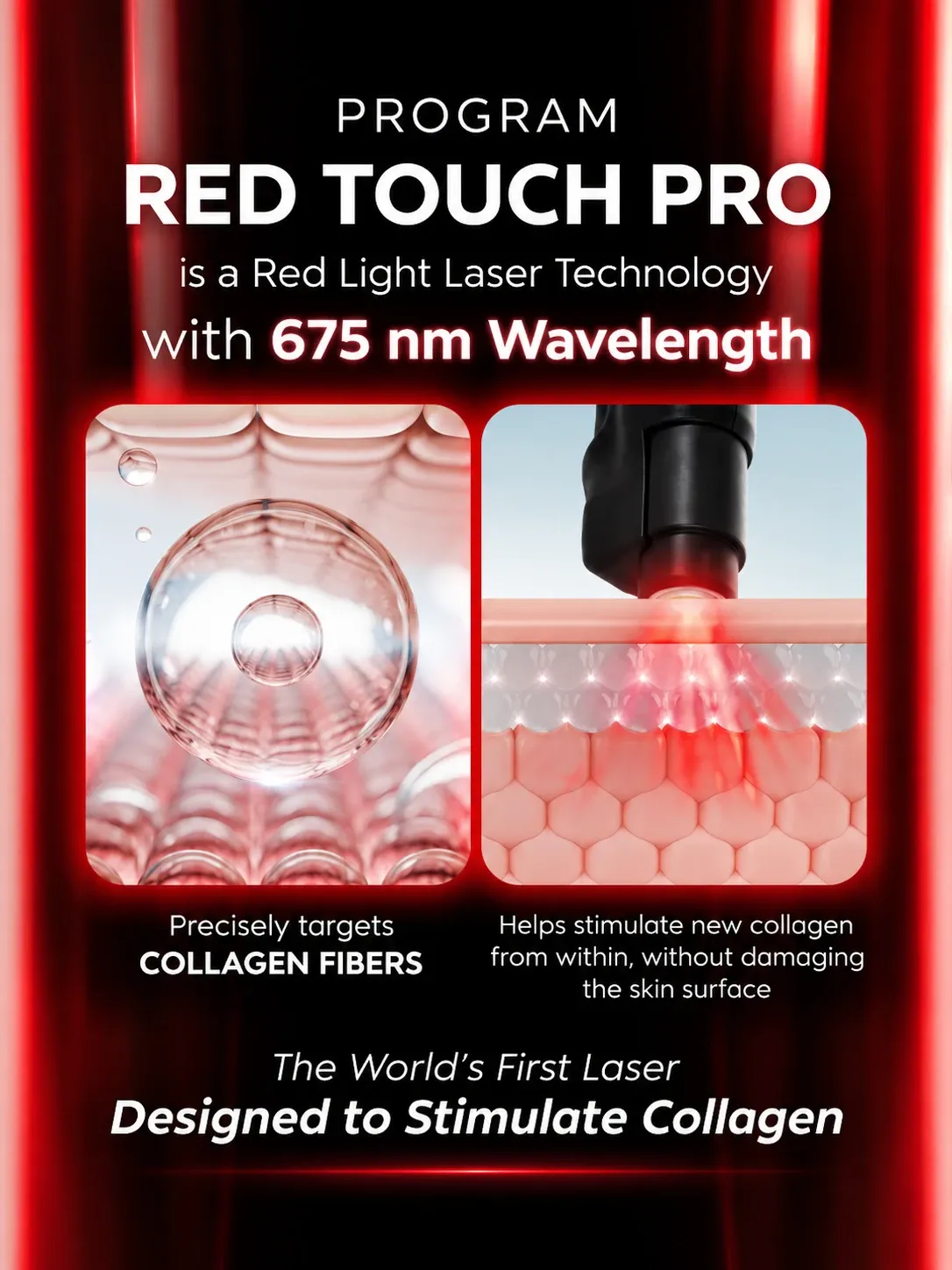
Program RedTouch Pro at Reva Clinic uses a 675 nm laser wavelength.
One of its key characteristics is its interaction with collagen-rich structures within the skin. The treatment is designed to promote processes associated with collagen remodeling and new collagen formation while minimizing disruption to the epidermis.
Rather than focusing only on pigmentation, Program RedTouch Pro is particularly relevant when the treatment goal involves overall Skin Quality, such as:
Fine lines
Uneven skin texture
Enlarged-looking pores
Early signs of collagen loss
Skin firmness and elasticity
Overall smoother, healthier-looking skin
Because Program RedTouch Pro is non-ablative, it does not aim to remove the outer layer of the skin, which contributes to its relatively low downtime.
For more information about the technology and treatment modes, see the Program RedTouch Pro service page at Reva Clinic.
What Is Program Pico Laser?
Program Pico Laser refers to laser treatments that deliver energy in extremely short picosecond pulses.
Unlike Program RedTouch Pro, however, the term “Pico Laser” does not refer to one single wavelength or one standardized treatment.
Different picosecond devices may use different wavelengths, handpieces, fractional optics, and energy settings. These differences influence what the treatment is designed to target.
One of the best-known applications of Program Pico Laser is the treatment of pigmentation, as picosecond pulses can deliver energy to pigment particles in a very short period of time.
Depending on the device and treatment mode, Program Pico Laser may also be used for concerns such as skin texture and acne scars.
This is why it is important not to assume that every Program Pico Laser treatment produces exactly the same effect.
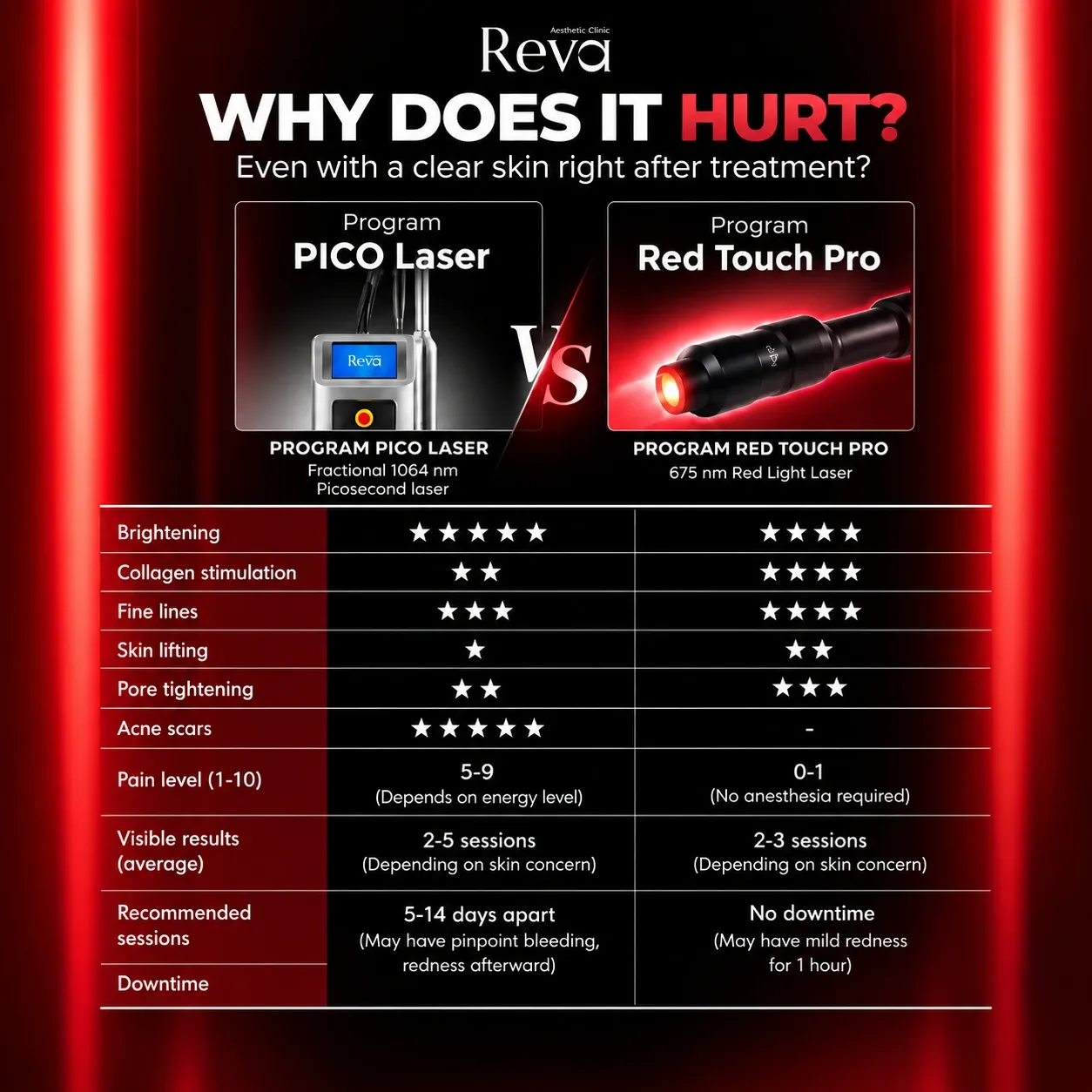
Program RedTouch Pro vs Program Pico Laser: What’s the Main Difference?
The simplest way to understand the difference is to look at the primary treatment target.
The table should not be interpreted as a score showing that one technology is superior to the other.
They simply have different strengths.
If You Want Brighter Skin, Which One Should You Choose?
This depends on what is making the skin look dull in the first place.
The word “brightening” can actually describe several different skin problems.
If the skin looks dull because of pigmentation or uneven pigment, a pigment-targeting Program Pico Laser may be more relevant.
But if the skin looks tired because of rough texture, enlarged-looking pores, fine lines, or declining skin quality, Program RedTouch Pro may be more aligned with the treatment goal.
In other words:
Pigment problem → think about pigment-targeting technology.
Collagen / Skin Quality problem → Program RedTouch Pro may be worth considering.
For patients who specifically want better-looking skin but are concerned about recovery time, you can also read our article on Want Brighter Skin Without Downtime? Discover Program RedTouch Pro.
Which Is Better for Collagen: Program RedTouch Pro or Program Pico Laser?
If collagen remodeling is the primary objective, this is where the distinction becomes clearer.
Program RedTouch Pro was specifically developed around a 675 nm wavelength with a particular affinity for collagen-rich structures.
Clinical studies using 675 nm laser technology have demonstrated changes associated with new collagen formation and improvements in signs of skin aging.
Program Pico Laser can also influence collagen remodeling, particularly when fractional handpieces or specific treatment modes are used. However, this depends considerably on the particular picosecond device and protocol.
Therefore, when the primary concern is Skin Quality, fine lines, or collagen loss rather than pigmentation, Program RedTouch Pro has a particularly relevant treatment profile.
Which Is Better for Pigmentation?
For pigmentation, Program Pico Laser often has the clearer role.
Picosecond technology is widely used to target pigment, but the appropriate wavelength and treatment parameters depend on the type, depth, and cause of pigmentation.
Not every dark spot should be treated in exactly the same way.
Program RedTouch Pro can also be used for selected pigmentation concerns, including targeted treatment with its Dark Spot approach, but pigmentation is not the only or primary reason we consider this technology.
If a patient's main complaint is pigment, the physician should first determine what type of pigmentation is present before deciding which laser is appropriate.
Which Is Better for Pores and Skin Texture?
This is where the answer becomes less black-and-white.
Both treatments can potentially improve the appearance of skin texture, but they approach the problem differently.
Program RedTouch Pro may be considered when pores and uneven texture are associated with declining skin quality and collagen support.
Certain fractional Program Pico Laser techniques can also be useful for texture and may have a greater role when acne scars are part of the problem.
Therefore:
Pores + Skin Quality + Fine Lines → Program RedTouch Pro may be particularly relevant.
Texture + Acne Scarring → a fractional Program Pico Laser or another scar-focused treatment may be more appropriate.
The correct choice depends on what is actually causing the uneven texture.
Which Hurts More: Program RedTouch Pro or Program Pico Laser?
This is one of the most common questions patients ask.
Program RedTouch Pro incorporates a cooling system designed to protect the epidermis and improve comfort during treatment.
Published clinical data on a 675 nm laser have reported relatively low discomfort during treatment.
For Program Pico Laser, however, it is difficult to give one universal pain score.
The sensation can vary significantly depending on the device, wavelength, fractional handpiece, energy setting, treatment indication, and individual pain threshold.
Therefore, rather than saying:
“Program Pico Laser hurts and Program RedTouch Pro does not,”
a more accurate conclusion is:
Program RedTouch Pro is generally designed as a relatively low-discomfort treatment, while discomfort during Program Pico Laser varies considerably according to the treatment protocol.
What About Downtime?
Program RedTouch Pro is particularly attractive to patients who prioritize minimal downtime.
Some patients may experience temporary redness or warmth after treatment, but the treatment does not aim to ablate or remove the epidermis.
Downtime following Program Pico Laser is much more dependent on how the treatment is performed.
A relatively gentle pigment-focused treatment and a more intensive fractional treatment should not be expected to have identical recovery periods.
Therefore, it would be misleading to assign one fixed downtime to every Program Pico Laser treatment.
Can Program RedTouch Pro and Program Pico Laser Be Combined?
Potentially, yes.
Because the two technologies can address different components of the skin, they do not always have to be viewed as competitors.
For example, a patient may have both:
Pigmentation + declining Skin Quality
In this situation, the treatment plan may need to address pigment while also considering collagen, texture, and overall skin quality.
However, whether the treatments should be combined, alternated, or performed separately depends on the patient's skin condition, treatment parameters, and physician assessment.
Why Does Technique Matter?
The name of the machine is only one part of the treatment.
With Program Pico Laser, wavelength, pulse characteristics, handpiece, energy, spot size, and treatment endpoint can significantly change the effect.
The same principle applies to Program RedTouch Pro.
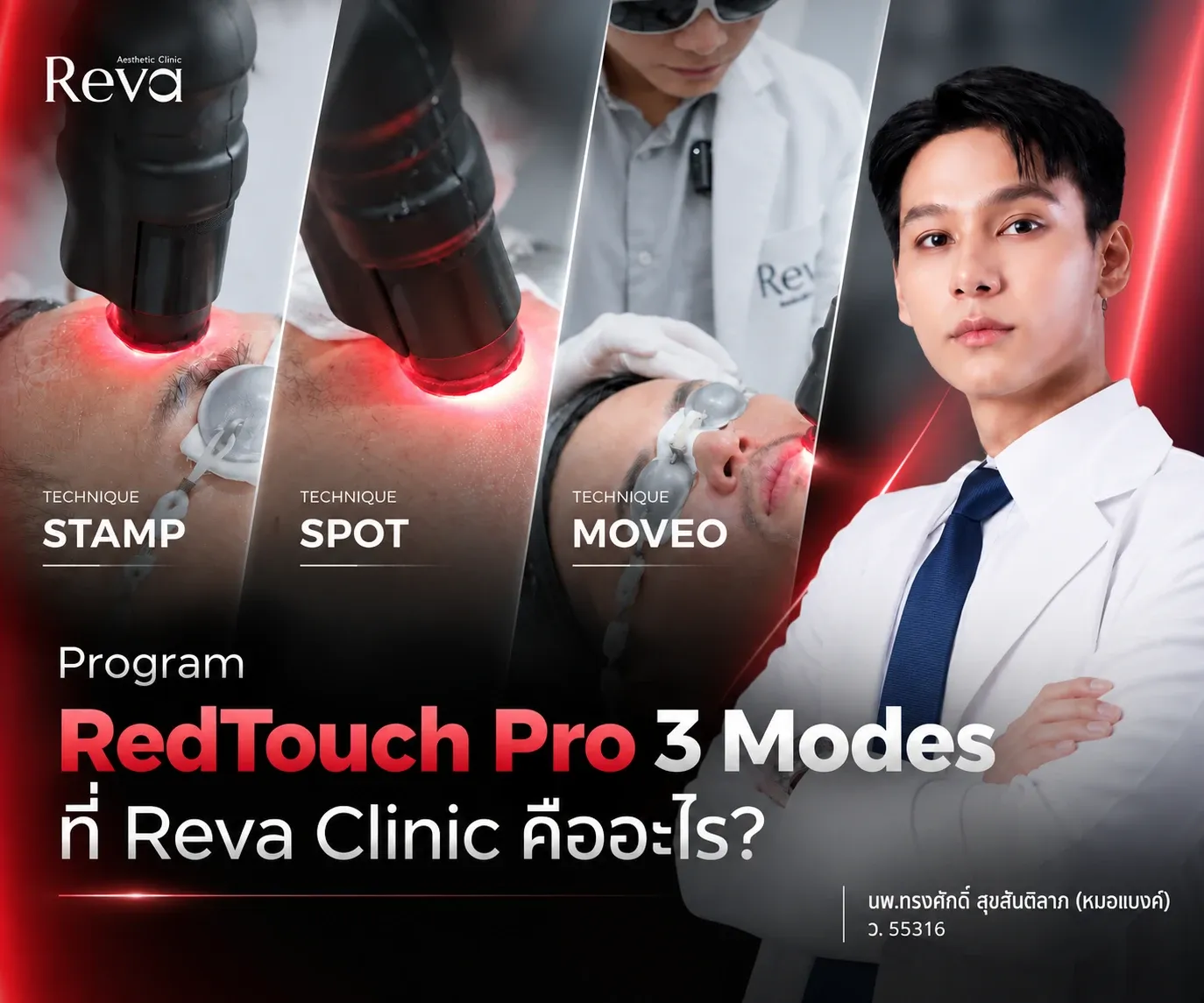
At Reva Clinic, Program RedTouch Pro can be customized using different treatment approaches, including MOVE, Stamp, and Dark Spot modes, according to the patient's concern and treatment area.
This is why comparing treatments only by machine name can be misleading.
The more important question is:
“How is the technology being used for your specific skin problem?”
You can also read Where to Get Program RedTouch Pro in Bangkok? 5 Things to Consider Before Choosing a Clinic for more information about treatment planning and choosing a provider.
Program RedTouch Pro vs Program Pico Laser: Which One Should You Choose?
There is no single answer for everyone.
If your main concern is pigmentation, Program Pico Laser may be the more relevant starting point, depending on the type of pigmentation and the wavelength used.
If your main concerns are collagen loss, fine lines, pores, texture, or overall Skin Quality, Program RedTouch Pro may be particularly suitable.
And if you have several concerns at the same time, the answer may not be choosing one machine over another at all.
The goal should be to identify what is actually causing the skin problem first, then select the technology that matches that target.
At Reva Clinic, treatment planning therefore starts with an individual skin assessment rather than simply asking which laser is “better.”
Learn more about Program RedTouch Pro at Reva Clinic.
Frequently Asked Questions
Is Program RedTouch Pro better than Program Pico Laser?
Not necessarily. The two technologies have different strengths. Program RedTouch Pro has a particular focus on collagen and Skin Quality, while Program Pico Laser may have advantages when pigmentation is the primary concern.
Which is better for brighter skin?
It depends on why the skin appears dull. If pigmentation is the main problem, Program Pico Laser may be more appropriate. If texture, fine lines, pores, or collagen loss are contributing to the appearance of the skin, Program RedTouch Pro may be considered.
Which has less downtime?
Program RedTouch Pro is designed as a minimal-downtime treatment. Downtime after Program Pico Laser varies considerably according to the device, mode, energy, and treatment indication.
Which is better for acne scars?
For true atrophic acne scars, certain fractional Program Pico Laser treatments or other scar-specific procedures may be more appropriate than Program RedTouch Pro. Treatment should be selected according to the scar type and severity.
Can I do both Program RedTouch Pro and Program Pico Laser?
In selected patients, both technologies may form part of a treatment plan because they can address different skin concerns. The sequence and interval should be determined after individual skin assessment.